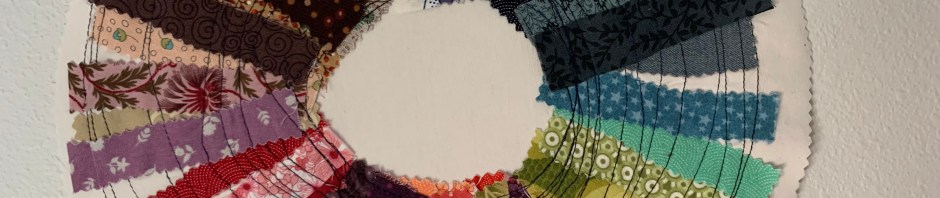
I spent the winter learning how to use my sewing machine again. Right before spring arrived on the calendar, I quietly turned 50, and made a commitment to myself to clear out some possessions from closets. I spent the spring creating a better storage system so that my working space isn’t a disaster of gear before and after a backpacking trip all summer. The calendar flipping to 2024 marks our 8th year in this condo, and I’ve yet to figure out how to manage my backpacking gear and all of the other things I store in my office closet. A part of me wants to buy a closet organizer of some sort, and then a larger part of me wants to make do with what I have and scale down. Another part of me wants to take most of the clothes and a few boxes of things and light them on fire Hendrix-at-Woodstock-style, but I know that’s not wise. I have things that could be used by somebody else.
Truth be told, I also got incredibly curious about the clothes I have not worn largely because of the pandemic and due to the glorious fact I only travel for work once a year these days. As I was going through what I call “My Adjunct Era” and “My Tech Era” clothes in the very back of the closet, I sat with memories of who I was, the grief of who I will never be, and the utter astonishment that I used to wear some of these clothes. I don’t have a huge wardrobe, mind you, but about half of what hangs in my closet, I have not worn for over five years.
Then I came across my sewing machine.
A sturdy off-white factory second from Brother that I have not used since I lived in Seattle (somehow 15 years ago) sat on the shelf a tad dusty. Next to the machine, I found a small box with a cookie tin full of thread, bobbins, needles, a few folds of fabric, and the manual. I dusted off the machine, sneezed five times, plugged it in, and smiled when the little light turned on. The machine hummed in expectation as I pressed on the pedal.
When I started this closet inventory, my goal was to create more space by getting rid of clothes, gear, memorabilia, and craft supplies. I wasn’t sure I wanted to donate this machine even as I put supplies in a box from crafts I no longer want to do (candle making, stain glass making). I decided I’d give sewing a shot. A few of my skirts and dresses I cannot part with are handmade, and I always love wearing them. Aside from one sewing class in the early aughts, I’ve never really committed the time to learn how to sew with a machine.
I glanced through the sewing machine manual very quickly, and decided to test my memory on whether or not I could thread the machine and get it started. I wound the thread through the machine, and muscle memory took over. I watched the bobbin fill and loved the sound of it working. I got a warm feeling of joy when I put some fabric under the needle and the feed dogs worked. My first test row stitched up beautifully. Then I got the idea of mending some jeans that are really hard to sew by hand. I sewed up some patches on the mister’s Carharts. And then an idea to make a comforter or quilt for our van bed came into my mind as I stared at the yellow glow of the sewing machine light.
My husband built a platform in our van for a bed, a bench, and space to fit gear and bikes where two rows of passenger seats would normally be. We opted to leave the seats with the van dealership even as the salesperson warned us we won’t have seats for children or other passengers. “That’s perfect,” we said almost in unison.
The bed on the platform is roughly the size of a double bed with six inches of memory foam. Quite cozy, inexpensive, simple, and lovely. He bought a bright blue blanket to cover the foam, and I have to admit that I really dislike the brightness of the cobalt blue. He purchased the blanket on the cheap, and he’s much more devoted to the utilitarian aspect that a thing does the job than the aesthetic (unless we’re talking about bicycles or guitars, that is).
This blanket he bought for the van was simply to finish the job of building the bed, and I’ve never really liked the clash of the cobalt on the deep dark navy blue of The Van. I gave up naming it, by the way, it’s just The Van. There was always somebody in my life or on the socials who claimed they had that same name for their vehicle or their child or their dog, and I just got exhausted with the feedback. We named our Subaru “Warchild” so that’s enough. Makes me laugh every time we discuss that car. If we are flipping through the channels and Point Break is on, we will watch it every time. The scene where Patrick Swayze saves Keanu Reeves from getting jumped by a small gang of surfers that includes Anthony Kiedis playing “Warchild,” we laugh until we cry. Every time. Film is truth twenty-four times a second, indeed.
“Warchild is leaking on the passenger side, have you noticed? I think it leaks during atmospheric rivers.”
“Warchild struggled to start while I was at Lowe’s.”
These are observations that made the winter for me.
Rest in peace, P. Swayze, a true renaissance man. A spiritual guide. Speaker of the best lines of all 80s, 90s, 00s cinema:
“Back off, Warchild” (Point Break, peace keeper)
“Nobody puts baby in a corner.” (Dirty Dancing, feminist ally)
“You just don’t stop living because you lose somebody.” (The Outsiders, grief counselor)
“There’s always barber college.” (Roadhouse, career counselor)
“Is that all the gusto you can muster?” (Donnie Darko, change management guru)
“I don’t see you running up to daddy to tell him I’m your guy” (Dirty Dancing, blue-collar defender)
So, okay where was I? Back to quilting.
I started looking into what I could make with this sewing machine. A bedspread? A duvet? A sheet with some applique? The internet was an endless scroll of ideas, and I started to feel that old sense of overwhelm and disgust about the commercialism of the web, so I shut down the Magic Machine and headed to the shelves of the public library. I scanned the crafty shelf, and discovered three rows of books on quilts. Delightful! I found a book on hand-sewing a quilt that I loved after a quick flipping through, so I checked it out. At home, I started my quilty research in earnest with a cup of tea, a stack of books, a journal, and a pen. I knew I needed to start with the end product in mind. What did I want to have at the end of this project? What did I need to learn to do it? What can I conjure up about what I learned about sewing in third grade and during a brief stint in my early 30s?
Always the instructional designer, I suppose.
What, if I may digress for a minute, does it even mean to be an instructional designer these days? This question has always been at the heart of the profession since I’ve known of it, and in the days of robot learning engineering and data-driven algorithms, the role of the ID seems even murkier to translate. My favorite response came from a road-worn teacher during the pandemic who described an ID as a person her dean is making her talk to because, and I quote, “he needs some heady shit and tech buzz words he can plagiarize for his accreditation report or so he can get a promotion to work for another college.”
I believe she said this to me for three reasons. 1] I am completely blessed that teachers seem to trust me. 2] I don’t have a PhD thus I cannot wear the crown of learning science engineering researchy things, 3] I can share my adjunct story to empathize about any fuckery of their profession; I’m always on their side. And 4] I asked her what she thought an instructional designer did before I launched into why I thought I was there to consult with her. An old bartender trick, really. Ask folks what brings them to the bar, and then you can suggest top-shelf drinks. Never start with the special or the up-sell. Understand what brings them to drink first, listen, and then propose a remedy with a smile.
Fast forward to the age of AI, I’m not exactly sure how that same conversation would go. I mean, I’m going to continue to ask what people struggle to learn and what people struggle to teach because I am sincerely (still) interested in these very human struggles. In an era where Clippy Digests The Internet (A Memoir), folks worry it’s either going to fulfill the MOOC promises of taking all our jobs or we’re heading towards Skynet. I mean, who can really predict fuck-all anymore after we’ve lived through a pandemic, seen a return of the Cold War, lived through not one, but two recessions, Iggy Pop attending a fashion gala, a Studio 54 hanger-on with a spray tan who wants to be king leading our presidential race, and witnessed the rise of the word “literally” to mean “really.”
All you can do is take it day by day, man. (Said with a shake of the hair and a piercing look in the eye, like a good oiled up Patrick Swayze character).
Alert: heading into jobby job territory when I wanna write about my new hobby job. May all the gods bless those of us in and adjacent to all things related to the education of our fellow citizens. “But look at it, Johnny. Look at it! It’s a once-in-a-lifetime opportunity, man! Just let me go out there. Let me get one wave before you take me. One wave. I mean, where I am I gonna go, man? Cliffs on both sides, I’m not gonna paddle to New Zealand! My whole life has been about this moment, Johnny. Come on, compadre. Come on!” (Point Break, administrator support circle leader).
Last Swayze quote, I promise.
Now back to the hobby job:
I am a quilter! No shit.
So. My first sewing project, I decided is going to be a cover for the bed in the van, and I was going to use this winter to teach myself a craft I’ve been interested in since attending the Piedmont Art Festival in Atlanta in the early 1990s. I remember wandering around looking for the dude rumored to be selling Red Stripe beers out of a cooler to underage sweaty folks like myself. I separated from my friends, started roaming around, and I came across a tent display of beautiful quilts blowing the hot humid breeze. There were people pointing to quilts and telling stories about the images sewn into the fabric. I overheard a woman talking about how abolitionists would hang these quilts in their yards to communicate to folks who were on the run to the North. What looked like triangles and stripes to me communicated messages about safe houses and directions when they were hung out on clothes lines. Clever messaging for people helping other people escape the horrors of slavery, and I have no doubt women thought of this complex system. As a teenage girl, I looked closely at the careful stitches and I forgot all about my Red Stripe quest, and I listened to these folks share stories woven into the textiles of people long gone. Fascinating history as told by textiles.
When I fired up my old machine, I had made a commitment to give sewing another chance or I was going to donate it to somebody who would use it. As I perused books from the library written in the last five years, I noticed a change in the story about sewing quilts from books written in the 80s, 90s, and 00s. The Youngers were writing about Fast Fashion and saving textiles from the landfill and sewing as a political act for Climate Change. I don’t like the casual use of the phrase “self-care” because of the way it’s being commodified in the Wellness Industry as a bandaid to the gaping wound we call Healthcare. I liked, however, the chapters on “sewing as self-care.” It’s basically the idea that making something with your hands can help you slow down. Meditate. Be intentional. You can’t multitask while you’re sewing. I broke up with the cult of busyness and the ambitions of striving quite some time ago, but it has not been an easy road for me.
If you want a smarter take on the usefulness of sewing, I suggest not wasting your life here and check out a great article by writer/hero of mine, the always delightful and insightful Lee Skallerup Bessette. I also really benefitted from reading Mending Life A Handbook for Repairing Clothes and Hearts, and Patching to Practice Sustainable Fashion and Repair the Clothes You Love, Farm and Folk Quilt Alchemy, A Year in Practice, and weekly visits to The Ragfinery.
As I sat down at our kitchen table and started sewing squares to other squares, everything slipped away except for what was rolling underneath my needle. Hot damn, I thought, this is exactly what I’ve been looking for. And, I discovered that working with textiles, fabric, and thread just might help me learn color theory as a painter.
When I look back on the sordid decades that I now call My Education Era, I’m so sad for my younger self because she only took two art classes. Had I known that Skynet Clippy was coming for all of our jobs, I would have taken more studio art classes. In the 12 years I spent in college classes as a student, I only experienced 13 weeks in art classes. Pretty pathetic. Given the STEM-ification of our current education system, I imagine most students are spending even less time in any course that looks remotely like the humanities, much less the studio arts. I’m not very good at drawing and that’s stunted my painting ability, and I’ve struggled with learning color theory. Perhaps sewing a quilt could help me understand color theory and stretch my artistic endeavors in ways that writing and knitting have not.
For example, I love color wheels. Posters, puzzles, pages in books…love me a color wheel. I find everything about the history of colors fascinating (and horrifying, like all history), and I tend to love the names of colors sometimes more than the shades and hues themselves.

I do not, however, easily understand “cool” versus “warm” with color. And I do not understand complimentary and contrasting colors in the same way that some of my favorite internet painting teachers describe them. When we talk about “cool colors” I understand the physics of light, but I do not understand them as feeling “cool” as in temperature. I find “cool” colors very cozy, and blues, purples, and green are my favorite. Straight up hygge. I side-eye and wince at reds, oranges, and yellows. I love these colors on flowers, but it’s hard for me to love them in pigment.
Complimentary colors? Makes no sense at all, like Bob Mould says.
Red and green? Too much like Christmas, only for the holidays.
Purple and orange? Gross. Why?
Blue and yellow. Too much like American football team colors. Why ruin blue with yellow?
I feel “warm” when I’m surrounded by “cool” colors and I feel irritated by warm colors.
So. Color theory does not work with my brain, and I need a new way to think about colors if I am going to improve as a painter. Mixing colors has been tough to learn. Perhaps sewing small pieces of fabric together can help me learn.
Another true confession? I needed something to get me through another winter of dealing with the fuckery of menopause and another season of not figuring out how to finish writing a book. I do a lot of writing for my jobby job, and for that I’m very thankful, but it’s hard to crack open the laptop for a hobby job after a full day of writing on and/or talking to a screen.
I created a few big questions for my own learning this winter. And as the spring struggled to welcome summer, here are the questions I lived for:
- Could quilting help me understand color theory better?
- Can I learn to quilt using the public library and Youtube videos?
- Can I learn this craft using only recycled textiles and still make something beautiful?
- Will sewing save me from The Winter Dark Corners (my nickname for seasonal depression)?
- Will journaling about this process help me find my way back to the hobby job writing again?
Yes.
And let me be clear. When poets and writers describe color, I’m right there. Give me the story of the color, and I get it. Warm, cool, contrast, and complimentary? I need a storyteller to help me understand.
Barbara Kingsolver has a beautiful example:
In my own worst seasons, I’ve come back from the colorless world of despair by forcing myself to look hard, for a flame of red geranium outside my bedroom window. And then another: my daughter in a yellow dress. And another until I learned to be in love with my life again.

 Spoke & Hub
Alyson,
I am so thrilled that you have resuscitated your sewing machine and turned to quilting as a way into learning about colour. I think you are going to have a blast and find your own way to work with colour.
I am going to restrain myself to a few comments/questions, any/all of whch you can ignore.
First, did you come across the FemEdTech quilt ? it got many of us through Covid-19 lockdowns. The resulting four quilts are still in my house but there is a digital version where you can explore the squares and their stories.
I love your stitched colour wheel. It reminds me a little of the work of Patricia Kelly, and artist from Fermanagh, Ireland. She uses colour sparsely and I just love her stitching.
One of the approaches I have loved using is the colourwash technique, dreamed up in the 1970s. I use it for making baby quilts 11 x 13 2.5 inch squares (143), each in a different fabric. It’s described as painting with fabric, and I think of the small squares as fabric pixels.
Last but not least, check out Angela Walters on Youtube. She does just the best videos on free machine quilting (my passion). I love the way that she discourages a focus on “perfection” and encourages you to live the imperfections of the stitching craft you are learning. It resonates with my own views on pedagogy/andragogy and the need to tolerate “good enough” whilst you may still aspire to “better”.
But you will find your own way Alyson. I just wanted you to know delighted I am at what you are doing.
LikeLike