I’ve been thinking and talking about leadership quite a bit lately. It’s somehow bringing all of the research I’ve done on teacher burnout, motivation, educational technology, mentoring, adjuncts, and faculty learning communities together. Who knew?
Somebody called me a “thought leader” and I had to look up what that meant. Was it an insult? Compliment? A Monty Python joke I should get? A movie reference from Blade Runner? A song I should know? Merde. My mind went instantly to Orwell’s thoughtcrimes and thoughtpolice. Oh dear, that’s not me.
Then I said to a friend, “Ever heard of a thought leader?” She asked why and I explained.
Huge explosion of laughter.
She now uses this phrase when we’re trying to make a decision, say, like where to go for dinner.
She’ll say, “I don’t know. Let’s ask the Thought Leader.”
Me: Damn. All. Y’all.
Huge explosion of laughter.
Here’s another:
Me: “Where should we hike on Saturday?”
Friend: “Don’t know, Thought Leader, why don’t use the fancy-pants Internets and find us a place?”
Huge explosion of laughter.
Me: [Eye roll] Large sip of beer. Middle finger points to the sky.
So here’s the thing: I’m not a thought leader. I just read a lot and I try to synthesize the ideas of people that I think are smarter than me.
I’m thinking there are three broad categories of leadership. So here goes:
You can be a Chump, a Champion, or a Chicken Little.
Let’s start with some low-culture and work our way up. All text below is from Urban Dictionary and Wikipedia.
Chump Someone who does not understand the basics of life on earth. Confused easily. ‘My friend Ali is such a chump. She talks a lot but nothing of any relevance comes out. In fact she is a world champion chump’.
Chicken Little The story is listed as Aarne-Thompson-Uther type 20C, which includes international examples of folktales that make light of paranoia and mass hysteria.[1] There are several Western versions of the story, of which the best-known concerns a chick that believes the sky is falling when an acorn falls on its head.
The chick decides to tell the King and on its journey meets other animals (mostly other fowl) which join it in the quest. After this point, there are many endings. In the most familiar, a fox invites them to its lair and there eats them all.
Alternatively, the last one, usually Cocky Lockey, survives long enough to warn the chick, who escapes. In others all are rescued and finally speak to the King.
Champion It is also possible to champion a cause. In an ideological sense, encompassing religion, a champion may be an evangelist, a visionary advocate who clears the field for the triumph of the idea. Or the champion may merely make a strong case for a new corporate division to a resistant board of directors. Such a champion may take on responsibility for publicizing the project and garnering funding. But in this case he or she is beyond a simple promoter. The word is thus used as a verb.
The Chicken Little story stuck with me because it makes a lot of sense if you help people who teach with and without technology. The sky is falling! The sky is falling! The acorn is a new LMS! The acorn is new software! The acorn is big giant budget cuts that are going to gut everything you’ve been doing! The sky is falling! The sky is falling!
It also applies to leadership because you can tell your team “Chicken Little don’t work here, y’all. I didn’t hire him. The sky is not falling. We just need to _________.” And they laugh. It helps to diffuse the pressure.
I read this “Chicken Little don’t work here” advice somewhere by some thought leader but I can’t remember who. Hence my problem as a researcher who cares little about attribution lately. I remember the idea not the person. Sorry.
A Champion is a bit more poetic. A bit more romantic. A bit more heroic. A bit more intelligent. A bit more versatile. Not quite religious. Not quite corporate. I’m thinking Knight In Shining Armor type-champion. Brienne of Tarth badassness. It’s a noun. It’s a verb. Thought Leaders champion ideas and people they like. Ideas and people they can trust. Ideas and people worth following. They look up and down to make sure it’s the acorn and not the sky. They don’t use exclamation points lightly. They don’t run around getting everybody all worked up.
Thought leader, as a phrase, just sounds a bit new-age-like. Too life-coach. Too touchy-feely. To me. Maybe I’m wrong. Maybe I’ve spent too much time with dystopian literature.
Here’s what I know: I’ve had quite a few Champions along the way in my career and I think it’s worth-while to champion for people and for ideas. When I spoke to the SBCTC New Faculty Institute last September, I asked everyone in the room to think about the champions who helped them get there. My audience was newly hired tenure-track and FT temps in the CC system. They got that rare full-time job. That even rarer tenure-track position. Here I was talking to the very people I had at one point in my career hoped to be. I stared down a room of teachers and asked them to think of their Champions. I saw some smiles. Nodding heads. Some furrowed brows lost in thought. I paused for silence.
It was the moment I felt a real connection in the room among the group. If there were thought bubbles above their heads, I would have seen photos of their Champions. And then I asked them to champion their colleagues who are adjuncts. Help them get here next year or some place else someday, I said.
And thus, don’t be a Chump. And don’t be a Chicken Little Thought Leader Chump. Don’t champion bad ideas.
Here’s a quick recipe for avoiding Chumpiness–Read people’s work you think have smart ideas. Read the people they think are smart. Think. Talk to people. Listen. Synthesize ideas. Talk to people. Listen. Read. Write. Listen. Look up. Look down. The sky is not falling.
Here’s my (choke, cough) *leaderly* thoughts/advice:
Don’t call yourself a Thought Leader if you are trying lead people with your thoughts. (That title is for others to decide about you. Don’t call yourself that. You sound like a Chump).
Talk down the Chicken Littles (they are reactive Chumps, not proactive leaders who think).
Be a Champion (somebody was for you, right?)
Don’t champion Chumps who lead like Chicken Littles. (A Memoir).
And if all else fails, I’ll quote this Pink Floyd song.
When I dare to be powerful, to use my strength in the service of my vision, then it becomes less and less important whether I am afraid. ~Audrey Lorde
Dear Readers,
I am going to return to recent events in a few days, but I need to finish this post first. Nothing is sweeter is to my ears than the Baltimore accent calling me “Hon”–male or female. You should read about the Bali Nine. Thank you in advance for reading my thoughts when there are far greater things to think about today.
Up until recently, I thought my husband had taught me the marketing phrase “shrink it and pink it.” When I mentioned it to him, he said, “No, I learned that from you. Remember when you got kind of pissy at a bike shop when everything was pink and pretty? Don’t you remember going off about the ways they shrink and pink things for women?”
I don’t remember. Too many times to count I’ve been pissy about this very thing. Now I have no idea where I learned the phrase–quite possibly when I worked for REI for a short ill-fated couple of months. Or from a friend who works in marketing. Don’t get me wrong. I love pink. I love pretty. I’m small in stature. Shrinking and pinking gear does not offend me so much that I won’t buy it. I just would like more choices. Nonetheless, “Shrink it and Pink it” is marketing term for athletic gear made specifically for women. If you just make it smaller, then women will buy it. If you make something pink, then it’s instantly for women. Viola!
Since I’ve become a lady in leadership (such as it is). Below are comments that have been said to me within the last three years. I’ve italicized the things I wish I had said or things I thought but didn’t say.
Clearly you haven’t dealt with your gray hair yet, but you will.
I like my gray hair. Dying my hair at this point in my life feels pathetic and not very late-in-life punk rock. Roots look like too much maintenance. Wait. What?
You can only get that much accomplished because you don’t have kids. Let me guess, you’re a “child-free” person who isn’t “childless.”
Maybe that’s true, but then why are some of my most successful colleagues mothers? Why is my choice to not have children any of your business? Clearly I’d rather be asshole-free in life but there isn’t any “control” for that.
If your husband does all of the cooking then what the hell do you do?
I am the breadwinner in my household and my husband’s a better cook than me. What is this 1950? We could switch at any time and that wouldn’t make him more of a person to me. It just is the way the shitty cards have landed for us. Our situation sucks for humanity and education–especially my adjunct husband. Every time we go out to eat and I pay, the waitresses and waiters always give him the card to sign the bill. Clearly he looks more like an Alyson than I do.
Who is his dissertation advisor? I might know him.
It’s a goddamn HER. A HER. SHE. Here’s a shocker, he sought HER out because she’s a genius. SHE was his first choice as an advisor, and I love her work. HE applied to that school because of her scholarship. SHE selected him because she respects his work. Wait. What?
Don’t you think that outfit is kind of wild for this meeting?
I’ve never once heard this type of comment about a male’s outfit. But thank you.
You need to not be so nice. People will just walk all over you.
True, I’m willing to deal with that. I like myself less when I’m mean.
Being charming doesn’t hide the fact that you think you’re smarter than the rest of us. You can be such a snob. Nobody likes a smartass.
Sigh. I didn’t realize I was charming and if you’d ask me, I’d say I have a lot to learn from the people in the room. Always. And for the record, I love smart-asses.
It’s not rocket science, sweetheart.
True, but I don’t think very quickly when it comes to numbers. I need more time; that doesn’t mean I’m stupid. Hearing you call me sweetheart made me blind with rage for about ten seconds. It wasn’t the complexity of the numbers.
When you’re older and jaded like the rest of us, then you’ll see it’s not worth it to work that hard. You’re a bit too bossy for my taste.
If I ever become like you, I hope I retire and get out of the way. Saucy Bossy: A Memoir of Retirement.
People might take you more seriously if you wore more make-up and dealt with your nails.
I also feel like look like Dee Snyder when I wear more make-up. It’s expensive and I think I look like harlot. Every man I’ve ever loved has always preferred me with less make-up. They look at my face more than me so I took the hint that less is more circa 1991. Fake nails? For fuck’s sake.
All of those comments have been said to me by women. Not men. By women. Not men.
So I write these responses not just to get it off my chest or to take back the night, but to point out that Lady Leadership never gets away from the “Shrink It & Pink It” labels in the workplace and in reality. These comments are tailored made for women. By women. The more exposed you are as a “Leader” the more people feel the need to express their advice it seems. I’ve done a fair amount of research on mentoring and when I talk to some people about these ideas, there usually creeps in some advice that maybe I can use. Those comments listed above are some of the main ideas I’ve been told in the last couple of years.
And here’s the most dangerous that I have to express: The people who have been the worst to me as a “leader” have been women. They’ve given me dirty looks, said nasty things, written gross insults, said horrible things behind my back–and I’ve had very few men mistreat me. In fact, my greatest advocates have been male. So what do I do with that?
Maybe men have been rude to me but I’m so not-shocked by that kind of behavior from them. In fact, I can laugh it off or I can insult them back. Or I can destroy them in my mind. It’s business as usual.
I expect more from women, and I think that’s wrong of me. I expect that if you are part of the sisterhood and that you should support me. When you don’t, I get very confused. I think you’re ice-queen asshole. It makes me sad. It makes me want to run from leadership.
And here’s another thing that’s dangerous to express: My biggest advocates who are female are either widely-loved or widely-hated. There is no middle-ground with these women, and I dig it. They’ve made unpopular decisions and they are articulate. If I am their “Mini-Me” then you’ve already judged me before I even open my mouth. Thank you for your feminism. (That’s sarcastic, I know how unbecoming it is).
I’m writing all of this because there were a lot of amazing posts via Twitter last week because of #et4online. There was a panel about being a woman in educational technology. There were lovely photos of Lady Leaders looking happy. Thoughtful men wrote words of encouragement. Here’s the thing; I’m relatively new to this gig, and I honestly didn’t know that the lack of women in this field was an issue. Most of my ed. tech friends are male. All of my male colleagues in the WA State system are truly cool. Like BFF material cool. I’m lucky to work in the system that I do. We have strong Lady Leaders that I’ve looked up to for years.
I don’t even think about being one of the few women (that’s dangerous to admit too). It’s just like the cycling scene. Being a snowboarder. Being a hiker. Being sporty.
I’m usually out-numbered by men. And here’s the thing–the guys that I think are assholes are usually thought of in the same way by my male friends. Being an asshole has very little to do with the penis, the vagina, or gender identification–it just comes naturally for some folks.
And it makes me very sad to think this is not the case for many women in this field. It makes me sad we have to have a panel about this very issue in 20-fucking-15. It makes me sad that Audrey Watters gets harassed so I can’t comment on her blog because she removed that feature. It makes me very sad for my male and female friends and colleagues who have daughters and they want a very different world for them. I’d like to say things will be different for them. I’d like to invite them over to Aunt Alyson’s house for stories about feminist success. My husband would cook us dinner. He reads more feminist theory than I do these days, so we could listen and learn while he stirs the sauce.
So let’s pause for one story that I think can give you hope about generational differences that shows some progress. This is a story I need to remind myself.
My great-grandmother was a high-school dropout who had 12 children (poor, not Catholic). Of the 10 who survived, one child was a female. That’s my grandmother. She too is a high-school drop-out who had my father at 16. He likes to brag he’s the product of the 1950 sock-hop dance and a big backseat. My mother graduated from high-school and shared with me that marrying my father at 20 helped her move out of her mother’s house. They are still together, so I know that love was also a factor. Going to college was never an option for her. She did very well on the corporate ladder until she needed a college degree to advance. At that time in her life, she was worried about how she was going to pay for me to go to college. I later learned the phrase “glass-ceiling” in a Women in Literature class and I knew exactly what it meant without looking it up. I had seen my mother hit the glass ceiling. I got a B+ in that class, by the way, because I was working two jobs and I didn’t own a computer. I always got hit by the red pen because of errors on my papers that I knew I would have caught if I had more time with my typed work. If I had owned my own computer.
I got lucky. My parents moved to an area where I had access to friends who were way above my class status. Their older siblings were worldly, interesting, and college-bound. I learned the value of reading and writing from people I thought were smart. Cool. I travelled a bit and realized how stupid I was and tried to fix that the best that I could. I didn’t get married until my late 30s. I’ve chosen to not have kids. I’ve done a lot things that the three generation of women who spawned me could have never, ever done. I got lucky in the life lottery. My struggles are nothing compared to theirs. My great-grandmother washed diapers by hand for almost two decades. My grandmother packed boxes to move from rental to rental her entire life. My mother trained college graduates who were younger than her daughter to do the job she should have been promoted to do. And I feel guilty complaining about what I’ve got. What I don’t have. What I wish my life was like.
So here’s the thing: I care a great deal about educational technology. About education. About technology and how it’s used to teach. About learning. About teachers. About your daughters. About your sons. About students who don’t have computers. About students who have the same or worse class background than I do.
So I’m writing today to not add my voice to that hashtag but to maybe connect with somebody who feels a bit outside of that conversation. Pull up a seat. None of those ladies in leadership are going to say the crap that I’ve listed above–they won’t. Trust me. If you want to comment on their blogs, you should. Write what you would say to Audrey Watters if you could comment on her blog. I do.
I had a lovely conversation with Amy Collier and I shared with her this phrase: Shrink It and Pink It. And I got to share with her that one of her posts really helped me at a time when I was feeling a bit down about the judgmental sisterhood. About events for Ladies in Leadership. About the direction I was taking in life. She asked me good questions in turn.
So seeing all of the smiling faces involved in this panel really got me thinking. I have to work harder on being more inclusive with women. I want to make sure they have a voice with me whether they have fake nails or not. Whether they dye their hair or not. Whether they have children or not. Whether their husbands have gotten a raw deal in their careers or not. Whether their clothes are wild or not. That’s their call. Rock on your own sense of fashion, just give me your ideas. That’s all I care about really. Just give me your ideas. That’s what feminism taught me. That’s the sisterhood I want for your daughters.
If you could shrink and pink that feeling, I’d buy it.
If I could shrink and pink that feeling, I’d make it open source and I’d share it with everyone.
Like a lot of what I’m writing about lately, this post started in Ward Cunningham’s federated wiki. When I claimed my site, everything that I write is always, already open source. If you want it and have a site, you can fork it. In turn, I’ve kind of stopped caring about being published in the traditional sense. Note my cowardly use of “kind of” in that sentence. I know. How very wishy-washy. But it’s a huge transformation for me.
I’m a bit exhausted by all of the justifying, explaining, listing, substantiating, and defending OER this week. Advocating for #Notyetness, my friends, is hard work. So completely worn out was I on Wednesday night that I rearranged my friends entire record collection. She cooked me dinner while I sneezed through her record collection helping with her with meaningful organization to provoke conversation. File the bad ones in the closet. Showcase the good ones near the record player. She’s single, so she’ll thank me the next she has a dude at her house. But I digress into the meaningless–I have a point here.
Here’s what I want to do with this post. I want to show how a note written in the fedwiki turned into a longer more meaningful conversation about open education and publishing for me. As a writer. As a thinker. As a big batch of sloppiness in the human form. As a result of busting out one page of thoughts about my experience, I’ve had very meaningful conversations about OER. What I have in the fedwiki is kind of sloppy. Kind of messy. Kind of rambling. Kind of how I think. Kind how I talk. Kind of how I am.
So here it is. Maybe it will interest you. Maybe not. Surely you’ve read something better. Maybe you’ve written something better. All I know is I’m going to click “Publish” right now and let this one go into the interwebs. It’s the only way I’ll get on with it, so to speak. It’s the only way to flip the record over and move on. (And now I can add “A Memoir” to the title, so truly, it’s now published in the way I like it).
Faculty Transformation Unpublished: A Memoir
Like many early adopters, my history with OER materials began out of desperation upon realizing that many of my students could not afford the textbook(s) I had assigned. As a teacher who taught courses in several modalities during the same quarter, I noticed that my online students struggled the most to complete assignments during the first three weeks of the quarter. Because many of the students chose online classes so they would not have to travel to campus, they could not access the materials I would put on library reserve. Unlike the digital reserves that were becoming popular in the university systems statewide, our community college library budget limited our digital resources for online students.
I had to do something.
My own adoption of OER grew from a commitment to improve my courses. This uncompensated time for curriculum development eventually helped me qualify for a grant to complete a quarter-long curriculum redesign. Since I was an adjunct, I unfortunately lacked the agency to promote the widespread use of OER in my department. My experience as a faculty member gave me insight on how to scale down a year-long process into a two-quarter timeline. By collaborating with others in our state consortium and with The Alternative Textbook Committee, I have been able to sustain a small, grass-roots OER movement on our campus. Three years later, I am the Director of eLearning and Instructional Design at a suburban community college outside of Seattle with a keen interest in open learning policy.
This professional development has been pedagogically transformative for my faculty. My personal experience is often echoed in the words of faculty that I now support through this process. As educators we discuss the rise of tuition and excessive fees for our students and we have come to the conclusion that we lack power to fix a growing problem for our working class/working poor students. OER, however, has allowed us to help our students, and we have seen immediate improvement in retention and grades.
All of what I am summarizing here has been documented elsewhere by other scholars in the movement. My experience is not unique. However, I detail my personal journey as an OER educator in order to disprove the notion that OER adoption does not lead to faculty transformation.
True, we have not created a sea change or revolution on our campus. We have not delivered a total redesign of entire degree programs in the same way that Tidewater Community College has with their Z Degree. We have, however, communicated to our faculty that OER adoption is a worthwhile time investment for them, their departments, and their students. We have a long-term strategic plan to transform how we teach and learn at the institutional level.
If you define “transformation” in terms of reorganization or renewal, then our story disproves the hypothesis that OER adoption is akin to simply adopting a new textbook from a publisher. When faculty members decide to use a textbook from a publishing company, they have to make the textbook work, so to speak, with their own curriculum and pedagogy. They assign chapters out of order by adopting certain pages and not others. Students have to follow a course outline that does not make sense initially, and the teachers are often dissatisfied with their textbooks and thus, the design of their courses.
When teachers create their own textbook by curating content already available to them, the first thing they talk about is how easy it will be to change and revise their content in the future. They use words like “flexible” and “freeing.” All of them have a pride in ownership that they have created a personalized learning experience for their students based on their own expertise and interest. Certainly this is a transformative process.
For example, an online film teacher recognizes that the only respectable textbook on the market is written for junior-level students. He’s teaching an introductory film course for non-majors with no prerequisites to first-year community college students. He assesses that this textbook is over the head of the learners he was teaching at the community college level. The audience for this textbook is future film and/or English majors. It’s also a $150 textbook. In three months, without compensation, he wrote a shorter, more foundational set of OER materials based on notes from his own research and previous lectures. Using the LMS, he built topical modules and keyed the to the films under discussion. Ultimately, he plans to license his work and share it with other educators.
The transformation in this work was not exclusively a matter of extending cost savings to students, but was effected by creating a “textbook” that can be revised at will for use in future courses and that can be shared across open networks with fellow teachers.
Having now worked with faculty who teach IT, Biology, American History, Art, GED/ABE, English, Math, Chemistry, Engineering, Film, Nutrition, and College Success, I have witnessed firsthand how OER adoption has transformed their pedagogical practice. OER has made it easier for them to transform their courses. As an administrator, I see the return-on-investment in this professional development model because the idea of continuous improvement and lifelong learning is embedded in the process. Therefore OER is faculty-driven student-centered professional development. In short, I have witnessed teachers transformed by the experience of creating a personalized course based on their expertise. Educators contribute knowledge to their fields while saving students money.
Why wouldn’t you invest in a transformative practice that improves both teaching and learning?
I wish I had the energy to do the funky chicken all night long. Truth be told: I really need a nap. You see, I deleted this post after publishing it over a month ago. A few hours after I clicked Publish, I got a few unsolicited emails of advice about my career. Found some not-so-nice references to my ideas. Went to a meeting where my ideas got shot down. My inner coward took over, and I deleted the post titled “Hot Pants.” The stats revealed that a few readers stumbled onto it, but I didn’t think it was anyone I knew. Turns out, a good friend read it and I was shocked when he referred to my Hot Pants post over dinner. That encouraged to return to these ideas. In short, if I can teach a group of educators hopped up on wine an alternative to the middle finger using sign language, then I can finish this post. Let’s be clear about my blogging-style, such as it is, I’m not judging you; I’m judging me. My academy. Your academy. My academy.
My brain is so tired and full–I’ve been talking to educators nonstop this week. My jobby job allows me to do the very fun work of presenting my ideas to people who care about teaching and learning. Lately my world has connected to the ideas of people I’ve studied, read, and admired for years. For years. Now that I know how very cool and how very down to earth they are, I wish I had tried to connect with them earlier. It’s just beyond stupid that I didn’t reach out to these folks before I got this weird jobby job title. Here’s a bit how it feels to connect with people–to call people your friends–that you’ve admired, found interesting, fascinating, and beyond generous with their ideas. Let me tell you a little story involving some music and then I’ll connect this story to bike riding. I promise there is a point I want to make. Let’s see if you can make it, readers.
Let’s go back to circa 90s at a music festival in San Francisco. It was all night affair and I attended with two people were super straight edge. Like no party animal fibers in their bodies, but they had exceptional taste in music. These were not people who would drink with me until memories of the night fade away. Not my usual pals. So, I was a bit out of sorts surrounded by people doing lots of partying and drinking. Without me. I was going through a phase of trying to figure out whether I could be a total straight-edge-city-girl. (Failed Life Experiment filed under: Never Again).
So I love live music but I hate the crush of a crowd. I get claustrophobic and kind of weirded out. I’m short, so I end up looking at the backs of people; I’m more of a stage left by the wall kind of fan. But I was seeing Jane’s Addiction. Perry Farrell, for anyone under 30, was really, really cool once. I promise. The band came on stage with a burningly loud version of “Ocean Size” and wow, my friends, it was electric. Perry was in purple sparkly hot pants! Everything was beauty. Then the crowd surged. I got lifted off my feet. Pushed without walking. The very feeling that makes my heart race like it’s going to explode. Can’t stand it.
So I told my straight-edged music lover friends: I’m going back to the stage in the middle of the floor. They had used the center stage earlier for juggling and hoola-hooping (it was the 90s remember that context). I was safe again. Away from the crowd. My love at the time–who was very tall–kept throwing me the chin-up-flirt–oh my, it’s “Up The Beach,” hear the bass chords?–yes, flirty me too looks. Then the lights go dark. Blackness. Lighters up. The crowd parts at the back.
The band is suddenly on the stage right in front of me. Right into “Classic Girl.” Oh-my-heart-I’m-like-a-foot-away from Perry Farrell in purple fucking hot pants singing the song most cited on mixed tapes of romantic dudes. Suddenly I’m right there. Front Row. The crowd surges, but my ribs go into the stage instead of somebody’s lower back. I’m right there. I can brace myself. I’m right there. I can see a run in Perry’s panty-hose. I’m. Right. There.
By mistake. Not by design or intention. Not by planning. Serendipity. Silly random forks in the trail of my own madness I call life. No map got me there. A series of accidents. Bad choices. Good choices. Love. Friendship. Desire. Silliness. Happenstance.
So that’s a bit of how my career feels right now. Holy, Happenstance, Bat Man! I was just elected to be the Chair-elect of the eLearning Council for the SBCTC. What? Me? Wow. I need a few days to process this reality, because I’m still thinking about how I left one stage for another. The concert, so to speak, has shifted completely. Everything went from truly awful to a lot better. Really fun. Really cool. Being an adjunct in English was a horrifying experience that has left me a bit bitter. Being a waitress before that didn’t help me see the glass as half full in life either. Yes, I know, it’s so gauche. So boring to hear me complain. When will I ever get over having a personal problem that I know is a public problem yet nobody wants to talk about it? Thankfully, there are other writers to take me out of my own head. This is where being an English major was actually good training for coping and dealing with the different stages of life.
And yet, when I find a remark disgusting, or have my hands, shoulders and hips held for uncomfortably long periods of time by men I don’t know, I have to suppress my natural reaction. I try to ignore it, or feign amusement, all for the sake of the guest’s experience, my job security and the chance of a good tip. It’s easy to have ideals, but reconciling them with the need to pay rent is a more difficult task in a town with few professional opportunities.
I try to be funny about my waitressing days, but I just realized this morning while reading Bronson’s piece, that I still have a lot to process from those years. At one point, I thought that becoming a teacher would save me from the fate of being a 40 year old cocktail waitress, and it did. But now, I’ve given up teaching for financial stability, and I feel like I’m still paying dues. I still struggle with the terror that I’ve made a huge mistake.
Because I love. I mean love. Love. Love. Love. Teaching people. People who teach are my favorite beings on the planet. If I can make you laugh and make you think, then everything comes together like an outfit involving purple sparkly hot pants.
And I have to remember that I’m in a different field now. Part of a different crowd. It’s hard because some people in the English major field were/are so bloody pretentious. Full of themselves. Unkind. Really full of themselves and their ideas that nobody understands or reads. It was such an inhospitable community–if you could even call it that. It always felt like you were being weeded out instead of included. I did not make the cut.
The people I have met *so far* in Ed. Tech are the total opposite. Some of them have made it into this field by getting degrees in the Humanities, I’ve learned. It makes them smarter readers, writers, and educators who use/analyze/create technology. They are generous with their ideas, their thoughts, their ideas, their work. It’s endlessly shocking to me. A whole room of people said “Yay” without one “Nay” when they voted me into the chair position, and I was shocked. Honored. Fought the urge to get weepy. Fought the urge to not walk around the room and hug 33 people.
And that’s sad, right? What does it say about me that I am shocked by the kindness of strangers in higher education. But it’s true. English major types are the Perry Farrells who look down on you in his hot pants from the stage. Doesn’t look you in the eye because you aren’t worthy. Sings past you. Doesn’t acknowledge you.
Ed. Tech Perry Farrell says “Oh, you like my hot pants? Awesome, here take them. They might look better on you anyway. Come up on the stage take mic. You want to sing ‘Then She Did”? Why the hell not? Maybe you can rock it harder than me. Add some lyrics of your own. I’ll watch. Own those hot pants. Have you heard about OER, btw? That’s how you really rock the hot pants.”
And that’s the spirit of these people for what they are passionate about–I’m truly inspired. And the spirit of the women who are a part of this field! All I can say is Wowwie Wow Wow. Can they hang the moon any higher for me? Bring it on, they say. That’s where it’s at. Tell me more. Take it to the bridge. (For the record, I know Brown was a womanizing sexist pig, but dammit, I have to separate the art from the artist’s life. I was an English major after all).
I have a dream to blast this song at the start of cyclocross bike race of all dudes. Someday. The lycra shorts of cyclists serve a purpose to eliminate draft and skin chaffing, but to a non-cyclists they look like hot pants.
Thank you, Marc Lentini, for reminding me of who I’d like to be and thus encouraging me to finish this post. (And thank you for reminding of the word, Pisan).
But Facebook, good ol’ Facebook, almost the grandpa of social media now, is a kind of “not-yetness” on my campus. (Not to mention it has a nearly flat-line learning curve which is important for a 10 week quarter). The idea of opening a class to social media of any kind is not-yetness here. The use of Facebookgroups is not-yetness here. The connectedness of letting outsiders participate with students in a class via Facebook is very not-yetness here.
It’s learning.
It’s connecting.
It’s kind of messy.
And it’s definitely not-yetness. Here. On my end of the continuum.
Okay. This is brilliant, right? My little corner of North Puget Sound has more in common with Walla Walla than Seattle–yet we get lumped in with the “west-side of the North Cascades” colleges. In reality, we have a huge spectrum of NotYetness in our consortium of community colleges. We’ve got a lot of NotYetness in this system. There is a lot of NotYetness everywhere in education.
Do you know that saying “This is an idea with legs?”
I think NotYetness on a continuum of emergence is an idea with legs wearing hot pants.
Recently, I met Amy Collier because she was one the keynote speakers of a conference, and during her talk, which I thought was so amazing, I realized that others heard a different kind of message. Because she’s from Stanford, some folks can’t filter the association with a Big Research School with the practicality of her ideas. And that’s the danger when you are affiliated with one of those schools. Somebody hears [enter R1 school here] and they instantly dismiss the ideas because of their budgets, their prestige, their grants, their initiatives, and they think, “they don’t understand my world. It’s different for me.”
Maybe I am bit Pollyanna here, but I think there is space for the R1 and the rural community college to care about the same things. If I have learned anything in the last year, it’s that folks at the R1 and the university level are frustrated by the same things. The truly good ones care about rural community college students making it to their schools.
We’re all jealous of somebody’s else hot pants. Desperate to wear somebody else’s hot pants. To do the funky chicken dance all night long. But there’s somebody above us saying no, we need to wait. We need more time. Data. Information. Policy. Money. Direction. This won’t work here. Not yet. Let’s wait and see.
Here’s the thing that holds us back: it’s all about Perceived Exertion.
The Borg Rating of Perceived Exertion (RPE) is a way of measuring physical activity intensity level. Perceived exertion is how hard you feel like your body is working. It is based on the physical sensations a person experiences during physical activity, including increased heart rate, increased respiration or breathing rate, increased sweating, and muscle fatigue. Although this is a subjective measure, a person’s exertion rating may provide a fairly good estimate of the actual heart rate during physical activity* (Borg, 1998)…
Try to appraise your feeling of exertion as honestly as possible, without thinking about what the actual physical load is. Your own feeling of effort and exertion is important, not how it compares to other people’s.
So whether you are doing Jazzercise (high-five, Amy, that’s rad, btw) or riding your bike up a mountain, conquering your own perceived level of exertion is how you improve. At the point when something is so hard your body is sending you signals to stop, you need to push harder. That’s how you get better. Stronger. That’s how the exercise gets easier next time. It’s an individual effort. It’s the body resisting the mind. It’s hard. Really hard. Subjective. Exhausting.
If you really step onto the cycling dork train, you can measure the data by tracking your hate rate. I’ve committed to a training regimen to see if I can trace the data of my actual level exertion and my own perceived level exertion. And I hate it.
Supposedly, I’ve been told, if I commit to some training discipline, then my race season in the fall will be better. I’ll improve. Actualize my potential. Honestly, the whole idea takes the fun out training and racing for me. Plotting lines on a chart to track my heart rate monitor feels like too much work. The whole time I’m riding hard, I don’t need the monitor to tell me how I already feel. My brain tells me enough to shame my fitness. The perceived level of exertion is what kills my momentum. I don’t need the weather man to tell me which way the wind blows.
Yet. I need to give the training a chance because I’ve seen other people improve this way. They’ve inspired me. I’ve been saying not yet about this kind of training for a few years. I need to step up and try it. Not yet, I’ve been saying. It’s too hard. I don’t like it. Too much work. Not yet. Someday.
And I think that attitude is the same thing that happens on the continuum of emergence of NotYetness in teaching and learning. Something that sounds like “more work” or “really hard to do” or “really behind the times compared to [enter school here]” or “not worth the effort” doesn’t gain traction. Whether it’s technology or a certain pedagogical theory, there’s room on a continuum that’s worth trying. That’s worth plotting on a chart. That’s worth comparing. That’s worth fighting for. That’s worth talking about. My level of perceived exertion may be your easy. My messy may eventually be your order. Your R1 research may make my community college policy easier to write. My community college failure could be a data point on a larger graph of progress at your university.
My hot pants may fit you. Take them. Dig that mess.
Greg LeMond once said about cycling. “It never gets easier, you just go faster.”
I blurted out a comment this week that sounded way more negative than I meant it to, and the reaction of the people in the room got me thinking. This was an informal meeting, we were talking about renaming a teaching and learning center, and somebody pitched the idea of a “Center for Faculty Excellence.” I said, “Excellence? Ick. I’d be happy if we just got to mediocrity first then we could talk about excellence. Who the hell ever feels like they are excellent? I thought only Bill and Ted said that. Ick.”
Silence.
Shoot. I know that silence. That happens when I say something that I meant to be funny and it was taken as bitter sarcasm. Or that people don’t get my pop culture reference. Or it sounds like negativity. Bitterness. Kinda mean. Unnecessarily hostile. Elitest. Choose the insult, and I’m sure it’s been said about me or my ideas. For the record: If I was surrounded by people from the Northeast, they would have fired back three retaliations to belittle me and/or my ideas. We’d laugh. Drop a couple of F bombs. Insult eachothers’ mothers. It wouldn’t have been a thing. Just sayin.
Then the word “Innovation” came up. Double Ick. And I have to tell you, I’m awfully sick of this word. I’ve ranted about it. I’ve thrown my fist up to the heavens about it. And then I saw this beauty of a post from Tim Klapdor, Innovation and the Novelty Factory.
What scares me about this trend is that now innovation is being talked about in government policy, institutional strategies and every goddamn mission statement known to man – and yet, I don’t think there is any understanding about what innovation is: what it really means, what it entails or the implications of adopting it actually are.
Horace Dediu posits a taxonomy which I think is extremely useful to help discern innovation and reduces some confusion:
Novelty: Something new
Creation: Something new and valuable
Invention: Something new, having potential value through utility
Innovation: Something new and uniquely useful
People don’t want to invest in innovation because change is really hard. It’s complex, expensive and risky and more often than not takes time – years if not decades. It requires behaviours and mindsets to adapt to entirely different concepts, inputs and environments. It requires people to leave behind what they did, what they built reputations on, what they trust and tacitly know, and replace it with something strange.
Innovation is about trust and relationships more than anything else.
It’s about building, shaping and learning not just coming up with ideas.
High-five, Tim! Thank you, Internet! This is exactly what I needed to read today. Yes, maybe it’s invention that we should care about, and like Tim, I’m worried about this constant focus on innovation for innovation’s sake. It’s like this bad smell in the refrigerator that we can’t get rid of when we start talking policy and strategic planning. I worry that what we say we are doing isn’t what’s happening at all, yet that’s what we’re selling, so to speak. I’ve got issues with that. I’ve broken off the last two sentences and bolded the font to emphasize what I loved most in Tim’s post. Those two sentences are forked into my heart. I can make those sentences mine. (Shout out to The Fedwiki Neighborhood, you know what I mean).
And the ideas in this post are on my mind because I left a card game last night to read a blog post in the guest bedroom. My friends–for the record–were super pissed that I left their amazing wit for a blog post. I said, “But it’s Amy Collier, y’all, I have to read this.”
“I don’t care if it’s the Queen of Frickin’ England. You’re reading blog posts instead of hanging out with us! What a gigantic loser!” they said.
They were talking about the wainscoting and paint colors, mind you, so yes, I left to read Amy’s post. I didn’t think they’d miss me, honestly. I’m kind of more in love with NotYetness than I am with shades of kitchen paint. When somebody like her puts something into the world, I have to check it out. Read this:
…our focus as educators should be on emergent situations, where complexity gives rise to ‘new properties and behaviours… that are not contained in the essence of the constituent elements, or able to be predicted from a knowledge of initial conditions’ (Mason 2008, p.2).”
So what does all of this mean for educators? Here are some ideas. Embracing not-yetness means making space for learning opportunities that:
promote creativity, play, exploration, awe
allow for more, not fewer, connections, morepersonalization (true personalization, not necessarily what has been offered to us by adaptive learning companies)
transcend bounds of time, space, location, course, and curriculum
encourage students to exceed our expectations, beyond our wildest outcomes, pushes back on “data science of learning” focus
do not hand over essential university functions and important complexities over to private industry
The ill-defined, the un-prescribed, the messy can lead to the unexpected, the joyful.
Noel Gough (2012) writes, “complexity invites us to understand that many of the processes and activities that shape the worlds we inhabit are open, recursive, organic, nonlinear and emergent. It also invites us to be skeptical of mechanistic and reductionist explanations, which assume that these processes and activities are linear, deterministic and/or predictable and, therefore, that they can be controlled (at least in principle).”
So much to say here that I don’t even know where to begin. All I can say is yes. Yes. I am so far gone into NotYetness that it could file for a restraining order because of my stalking. I especially love Amy’s attention to the messy and playful. The unexpected. The unknown. The joyful.
So maybe we need a Faculty Funhouse. No scary mirrors or clowns. Just a place to spice it up and feel appreciated doing it. Just a spot on campus to have a bit of fun with what you do for a living. Maybe a place where you can dream a bit and feel okay if you fail trying something new.
Whatever we end up naming it, it shall heretofore be known as the Faculty Funhouse to me. And these posts come at a time when I’m a bit worried about a new project that we’re brewing up in eLearning. If what I’d like to try is the right thing to do. The right thing to try now. The right thing. Right. Now.
So speaking of Notyetness, Fun, and Invention, my Instructional Designer and I have a joke about the whiteboard in his office. We call it The Dream/Reality Whiteboard. He sketches The Dream, I add to it, and then we revise it down to what we can actually make happen now. Reality. We sent a call to faculty to learn about Backward Design, and I expected maybe seven or eight to respond and we got 20! I’ve heard from 25 faculty the last time I checked my email. Who knew?
And here’s the thing: We don’t know what we’re doing because The Dream can’t be done (yet), so our scaled down version is really sketchy. Reality is unknown. This so NotYetness because we’ve never tried anything like this here. We’ve never tried. Here. Elsewhere. Yes. Perhaps there is a center of excellence that has pulled it off.
So here’s what we wrote to faculty about what we’re inventing. Our little Funhouse we’re creating. Here’s the description that I sent the faculty and I got back so many Woohoos! and Love This! and I’m so excited to do___! Basically, we’re going to try a bit of (funded) connected-learning with a cohort of 20 faculty. We’re setting “a class” and we’ve made it flexible on how they connect with us. We’re hoping they will help us and eachother, and they are so game. Who knew?
Here’s what I sent them:
We are building this airplane as we fly it, so we hope you’re up for an adventure. We going to try an online asynchronous flexible professional learning opportunity with lecture capture and backward design. What does that mean? We are going to build OL modules that will teach you a bit about Backward Design while supporting you through the process of creating videos for your course. Ideally, we’ll create short engaging videos where you will incorporate meaningful content and assessment using our lecture capture tool.
The purpose of this pilot is to invest in your learning of a valuable productive tool in educational technology. We want to learn from you on how we can improve our support of your teaching. In short, the success of Backward Design courses is contingent on creating good questions–what is often called The Big Questions in a thematically organized course. This is something you already do as a teacher, so let’s see what happens when we focus on the Big Questions using videos.
We’d like to debunk the myth that you have to be these two take make something worth watching.
We have to debunk a lot of myths in education. There are a lot of things we’ve yet to try.
That’s why we need the Faculty Funhouse, NotYetness, and Invention.
On Mondays, I change the CDs in my car for the week’s commute. Yesterday there was a huge pile-up on the highway and I got stuck in my car for almost two and half hours. I got to listen to a lot of music.
Week 1 Set List
In Raindows Radiohead
Manos The Spinanes
American Recordings Johnny Cash
89/93 Uncle Tupelo: An Anthology
Drunken Angel—Lucinda Williams
Kingston Advice: Live in Jamaica–The Clash (I haven’t taken this one out in 4 months.)
Usually I listen to part of a song or I fast forward. Sometimes I listen to the whole CD. Sometimes I don’t even realize that I’ve listened to an entire CD and a new one has started. And more often than not, I listen to the same song several times. Here are my three favorites from this week’s set list. Lines that give me chills are italicized. They are so good.
“Entire”—The Spinanes You call it in colors/And she bows to you/An archer, come sparrow/It’s a place I can’t get to
“No Depression”—Uncle Tupelo In this dark hour, midnight nearing/The tribulation time will come/Storms will hurl in midnight fear/Sweep lost millions to their doom
“Drive On”—Johnny Cash But my letter read from Whiskey Sam/You’re a walkin’ talkin’ miracle from Vietnam
All of these songs tell a story. Reminds me of people and places. Gives me something to think about. Takes me out of my head. Away from my own story. I know all of the words. I hum the songs later when I’m cleaning the kitchen. Getting dressed. Petting the dog. Whenever I notice I’m humming. Most of all I think of the lyrics. The words. The lyrics. The words. Always the words.
This past week was the start of the quarter, and now that it’s in the rearview window I can think about a few other things. The start of the quarter, if you support teachers and students, is incredibly exhausting. I have to find the energy to keep the spirit alive for the the other things I love–even though I want to go to sleep at 7pm because the day was so hard.
Instead I lost sleep during the week nights. I watched a movie, read a book, had a happy hour that turned into a cab ride home at 1AM, wrote lists, planned projects, talked to interesting people, and dreamt of other paths than the one I’m on right now. The jobby job I’d like to do, but I shouldn’t write about that. Let me tell you a story instead.
It’s spring in the NW, and my yard is beginning to sprout and bloom. But here’s the thing, it’s not my yard. I’m a renter, and we get a deal because of my gardening skills. Landscaper is on my resume, and I know a thing or two about plants. Our landlords’ previous tenant ripped out a whole row of hostas because she thought they were weeds (yikes!). When we looked at the house, I was quizzed by the landlord about what plants were and I passed the test. And you see, they have landscaped this house in a way I would not. Ever. It’s lovely, don’t get me wrong. It pulses with different shades of green when it’s in full glory, and I love it.
But I’m tired of tending other people’s gardens. I’m ready to plant my own garden and get so nutty with experimenting with landscaping design. I want to build a little forest with a bunch of different beds. I want to mix vegetables and flowers and let ferns get huge. The clematis would grow all over the railings. The daisies would grow over my head. Sunflowers would grow up to the roof and then slowly fall to the ground heavy with seeds. Then the birds would have a party eating the seeds. Then I’d clean it up. I’d have a whole front yard of tulips right now. I’d have one little patch of the grass for the dog, and the rest would be xeriscaped with plants and rocks. I’d grab a shovel and help the husband build his BMX pump track and then I’d landscape hardy plants around it. I’d sell the damn mower. I’d ditch the awful planters and buy handcrafted pots from art students.
In short, I’d let it get kind of wild and just see where it goes. Every spring and summer it would get better. I’d make sure everything was healthy, but I’d landscape it in a way where plants would benefit from being close to their friends—just like in a forest. I wouldn’t have to weed as much because I’d have every bit of land covered by plants or rocks. Right now there is a lot of weeding because the landscaping is that of a golf-course resort. It’s manicured. It’s tame. It’s predictable. It’s decidedly not me. Or the me I hope to be.
But I tend somebody’s else garden because that’s my job. That’s what I promised. That’s why I pay less rent. I thought this plan was only going to be a year and now it’s turned into six. And here I am back again at the point where the weeds of winter must be tended. Torn up. Manicured. Tamed. Again. Shaped into a design that I can’t change or control.
During the time that I’ve rented this place, I’ve learned a valuable lesson. When people say something like “Just do whatever you like. Treat this place like your own. Just call me when you’re making plans. I trust you.” That really means, I want complete control of this place. I want the final say. Don’t do anything without my consent. That’s called passive aggressive. Leadership and the philosophy of the micro-manager. I trust you, but never forget I control you. I trust you up to a point. Make sure you run it by me first.
And I learned this by mistake when I treated this garden like my own. I love the way daisies and tomato plants and mint look next to one another. You’ve got the shiny low leaves of mint. The furry tomato branches and the endless white above it all with the daisies. Yellow flowers that turn into red things you can eat! I think it’s gorgeous. I was pretty proud of the one bed. The landlord, however, was not as thrilled. She hated it.
She said, “Your taste is a bit more hippy than mine.” She had a look like she smelled something bad, and said, “I just think vegetables and flowers should be separated. Not like this. Definitely not like this.” and she waved her arm over my bed in disgust.
My sarcastic brain said, “Tomatoes are fruit, technically. If you’re going to critique my shit at least get your facts straight.” But I didn’t say that. I bit my sarcastic forked-tongue.
I panicked that she wanted me to tear it up. My little design was going to be manicured into the predictable. The boring. The same as everyone else in my neighborhood. The boringly beautiful. But that’s okay. I’ll own it–My tastes are a bit hippy when I think of my masterpiece.
Sounds so serious, right? I’m sketching out plans for future gardens. I’m not going grow old here. I’m looking for other gardens, so to speak. I’m going to build landscaping plans that I’d like to see and then I’m going to share them with like-minded hippies. I’m going to give them away. I’m not letting go of the dream of my little backyard forest. For now, I’ll weed. I’ll manicure, but I’m thinking of better gardens yet to be built. I’m writing it all down.
Lately I’ve been calling the book I want to write my “work of drafted of articles.” Uh-o. That’s a sign I’m giving up again. Alert! When I start call it a series of articles, that’s a sign I’m starting to lose sight of it. Dammit. Here I go again.
This time, however, I’m okay with that because I’ve another idea brewing that connects the hobby job and the jobby job. I’ve got plans to sketch out my little vision for OER. I’m going to give it away and let somebody else build the garden that I can’t make happen in my backyward. That’s right. I’ll give it away. I’m not going to try to publish it, and I think it could very well suck, but maybe somebody will dig it. Revise. Remix. Take it, I’ll say. You don’t have to call me. Just build it and send me a picture. Invite me over for a beer. I’ll get drunk next to your daisies and tomatoes. I’ll put some mint in my pocket. Well done, you.
I’ve been talking about how OER helps teachers improve their teaching practices, and I’m seeing it work. I’m seeing the goods of the work bloom. I need to write about it, so I’m going to do it. I just need it to be simple. It doesn’t have to be perfect.
This week I finished reading Mistakes I Made At Work: 25 Influential Women Reflect on What They Got Out of Getting It Wrong. Cheryl Strayed, the author of Wild is one of the people featured in this book. In the introduction to her chapter, the editor excerpts a book review by Dwight Garner. “This book,” he wrote, “is a as loose and sexy and dark as an early Lucinda Williams song. It’s got a punk spirit and makes an earthy and American sound.”
Oh. My. If only somebody said that about my work. My garden. That’s a review you can see, smell, and hear. You can feel it. Wow. I love it. And here’s the thing: I’ve been a vocal critic of Strayed’s work yet her chapter and the one by Kim Gordon were two of my favorites in this book. Listen to these Strayed quotes:
Doubt is a part of the writer’s life.
We’re all rough drafts. If you’re living right you’re constantly striving to make the next next version of yourself one notch better. Real success is rooted in learning how to turn mistakes into successes; loses into gains; failures in the things of value that propel you forward rather than hold you back.
Thanks, Cheryl. You deserve your success. Now that I know you were a waitress who hated the world because you wanted to be a writer, I like you even more. Now if you’ll excuse me, I need to go listen to Lucinda and do some weeding.
During the Teaching Machines Happening, I learned many things that surprised me, and on this post, I’d like to write about two of them–teaching and time. Let me get all hippie dippie on you first and then I’ll try to get academic. Time in the fedwiki, if you have been following this blog at all is something I’ve already written about metaphorically. This time around, I got interested in the actual or literal measurement of time. And what I learned during this Season.
Seasons, in the federated wiki, are the days, weeks, and hours tallied up as time spent reading and writing. Fedwiki Seasons do not align with the calendar we live our lives by day in day out. They don’t correspond with Course Outlines in classes. I’ve now marked a Season of four months. A Season of writing, reading, and thinking in the the fedwiki during my free time. Writing and reading have been the hobby job for me as long as I can remember during all seasons of my life. These activities are nothing new.
What’s new, to me at least, is the federated wiki and how it marks the Seasons of my thoughts. For all that it is or could become–it has taken me out of the doldrums of my own reading, writing, and thinking process. Sounds pretty hippie poetic, right? The doldrums of my thinking. Process of reading and writing. In a Season. Time.
Hippie. You know, kind of like this:
All in a hot and copper sky,
The bloody Sun, at noon,
‘Right up above the mast did stand,
No bigger than the Moon.
Day after day, day after day,
We stuck, no breath no motion;
As idle as a painted ship
Upon a painted ocean.
Truly surrealist and drama queen to cite this, right? What the hell is worth learning that happens in a Season? How to measure? How to state and craft objectives for such a Season? I see points of conversion that are really interesting and they are spicing up the usual winds under this painted ship’s sail on this painted ocean. In this Season.
I have no idea how many pages I have written in the fedwiki. I couldn’t really summarize if I’ve accomplished anything. I haven’t “published” anything during this Season (still waiting for rejection letter on one piece, so maybe. And I wrote a draft of it in the fedwiki, so there’s that). I’m not even sure what I’m doing in the fedwiki Happenings is even progressing towards what the creators working on it would want to see.
The doldrums, for me, have lifted. Scattered. Dispersed.
But here’s the thing: In my corner of the sea during this Season, I’m thinking about research, research writing, collaboration, and portfolio cataloging. I’m not thinking about it as the next big thing in educational technology. If you want to, be my guest. That might be your gig. Rock on. In this next Season, I’ve got two little ideas that I want to pursue.
I think I have found two ways I can use the federated wiki as a result of both of the Happenings. One is that I can teach other teachers how to use it. I would like to start with my lovely history teacher-friend’s class. I’ve got to get it together to have something coherent to say soon, so let me get bloggy with some ideas.
How to write sample assignments. Create timelines for assignments. How to avoid formative assessment rubrics. Challenge the need for perfect summative artifacts. How to strategize a long-term portfolio project that could be a success as the federated wiki evolves a bit. How do we take an academic year and think of it in terms of project based Seasons. The notion of the Season isn’t a quarter or the semester. It’s a bit of time that you’re using to work on a project. The doldrums of the clock and the calendar could lift a bit with a tool like the federated wiki.
Another Idea with Potential: A Memoir
I have an idea to write my online teacher certification class using the fedwiki and Canvas. The one truly lovely all positive part of my jobby job is teaching/facilitating the online teacher training course for my institution.
To call it a course is a bit generous. I’ve inherited the content from two other projects written by other people and it doesn’t come together the way I’d like it to. For the range of teacher experience I have to address, it feels like it fails. It could be better. I offer it once a quarter. I’m fully in charge of the content under the umbrella of professional development.
So here’s what I’m going to try to make happen. I’m going to put the content–what I now have on Canvas Pages into the federated wiki. It will be just like I integrated a textbook or handbook into my Canvas course. I’m wondering if I can get away with teaching teachers to use it without the factory at first. Just shift-click magic and read. For now. Why hadn’t I thought about that course? I could then share it on with other people who are interested in educating online teachers. Such as it is.
I got this idea playing around with the integration of Lumen Learning’s platform Candela, into Canvas. I then tried to think of using the fedwiki as an assignment connected to one of the readings. Perhaps a more useful start for me is to use my own little course with six-seven teachers at a time. Maybe I’ll just try to build something really small. I’m not sure if I can make this happen. There are some huge projects on the horizon for me until June. This Season is busy. Kinda of booked. Just an idea. [Pause to stare out the window].
Here’s another thing I learned in the fedwiki this Season. I was surprised by my Neighborhood of writers. So interesting! I was in full-on holiday mode for the first Happening, and this one has been busy. Not as much time to read and think big thoughts. No big questions. Two retreats, a webinar, and a conference really killed that time. I’ve been in full fedwiki-creation-mode. For better or for worse. And I write really stupid stuff sometimes.
So I haven’t done a whole lot of forking. Not a lot editing. I’ve done a lot reading outside the fedwiki that started from the fedwiki–so how would you assess that? I didn’t spend a lot of time reading what was posted by others. Also, our use of a Google Group and the Hangouts toned down the use of Twitter a bit from the first Happening, and I’m sure I posted way more than anyone about useless information in that thread. Apologies to folks in my Neighborhood. Maybe I should have shut up and read.
This weekend during this Season, I finally noticed some of the complaints about the fedwiki by some of the participants. Wow. What to say about that? I had no ideas such doldrums existed until two days ago. Honest. I had no idea what others were writing about during most of this Happening. Just a few folks with good titles. If I remember nothing of this Season, I know I’ll remember everything I learned about Wonder Woman for the rest of my days. (That’s a post for another day!)
I saw the doldrums in some comments from the Conversation Club. Lots of complaints about time.
They were corrective: “You should have.”
They were selective: “It would be nice to see X but not Y.”
They were a bit grouchy: “I can’t seem to engage with.”
They were lists of wishes: “Wouldn’t be good if we could add.”
There were bits of frustrated sounding language. Frankly, I missed your Season.
My Season, as the snowboarder brahs say, was motha fuckin’ righteous. Kinda bitchin. Beyond stoked. I realized that if you do not have really fantastic title, I don’t click on your work and read it. I don’t see your Season.
This Season I’ve generated thoughts that I can trace back by titles written by others. By me. There are no tags. No bookmarks. I can go back and trace my thoughts by days, weeks, a month, or a Season. Everyone doesn’t have to love or like everything I do. But really, I’ve got to be honest with you. If you complain about the federated wiki, here’s what plays in my head as I listen to or read your words:
Thanks, Iggy. You’d hang out in my Season. I just know it.
The federated wiki has been described as a curio cabinet, but it’s also my junk drawer. It’s my DIY zine of copied thoughts of others. It’s an easy tool that is somehow sounding way more complicated than it is. Perhaps it’s because we’re comparing it to products or software that we already use. If I want to diss on Google Docs to help me think about the federated wiki, then I will. Now that I’ve done it, maybe I should stop. I need to describe it as more of a tool that promotes a certain mindset. That’s what it is.
During a recent Google Hangout, somebody said that if we do anything with the fedwiki then we’d like to create more voracious readers. Yes. I’d also like to see more insatiable writers thinking about the things that they’ve read. Yes. That too. You can do both or either in a Season. That’s the life-long learning thing that sounds so hippie. So idealistic. So romantic. So truly hard to quantify with data-driven decisions. So hard to measure with standard measurements of time. So hard to please everyone. No fun, my babe.
What’s so appealing to me is that it’s easy to share information in the federated wiki. Easy to get interested in what’s posted. Or easy to change directions with your thoughts. Find out more about something else. Or another thing. Easy. There’s space to be creative with other people about information that is freely available on the Internet. Just by claiming your site, you are embracing open education’s notion of connected learning. You’re spending a Season with your thoughts in the mix with other people’s thoughts in a Season.
It’s a bit of a compass for research while being a roulette of other people’s thoughts (not the Russian type, Thanks Kate and your careful reading). Whether I’ve spent an hour, a day, a week, or a Season, I’ve learned something with the federated wiki. Why couldn’t somebody else love this style of learning?
Say that last paragraph out loud. Now you sound like a dreamer, right? Hippie dippie nonsense. Hippie Idealists. Fooled into thinking there is a solution in education in the Season of Snark. Well. Yes.
If you’re not looking for solutions in education, then here’s the other song title in my head when I think of your ideas:
Queue the Everly Brothers. I’ve already lost that vacation-mode feeling. I’m on day three back in the office, so woe unto me fair maidens. Vacation, did you ever happen? So it goes. So it goes. And speaking of so it goes, Nick Lowe! Thank you Kevin Cole at KEXP, you are my favorite DJ at that station. I love John and his mornings, and Cheryl is beyond cool, but Kevin, I want to kidnap your record collection. You can come over too and play them for me one by one. Even if it takes us years to listen to them all. I’ll sit like a yogi and listen. We’d have a grand old time, I know it.
On my commute home I get KEXP for about 35 minutes of my time in the car, and I love to catch the last hour of Kevin’s show (when I get out of the office in time). He’s been my favorite music historian teacher for almost a decade now. I’ve been known to pull over so I can write down notes of trivia and songs while he’s talking about bands. Yesterday he played some Nick Lowe, and I found this beauty on the YouTubes. Eat your heart out, Beyonce and Madonna with your silly costume changes. Watch Nick do it and learn.
I’m going to do some lunch break bloggery about a story I’m re-purposing on my BookFedwiki. I’m also brewing up some ideas to blog about concerning the federated wiki, but that’s got to wait. I’ll need it to cheer me up later in the week. It’s only Wednesday. Today I want to write about rainy mountains! Yay!
Rain Is Not An Emergency
Let’s be clear: I understand the risk of planning a backpacking trip in the Olympics. My hiking partner grew up on the peninsula, and before I owned the proper rain gear of a PNW citizen, I had been rained out of a trip in the Olympics many years ago. It is a rainforest after all. I know that.
I have spent twelve rain-free days in the Olympics, so I know miracles can happen. On this particular trip in 2013, the forecast was not promising.
Unlike the slow autumnal shift with its lovely display of changing leaves, the seasons were about to change quickly. And we were heading into the backcountry. The glorious long days of summer sunshine had switched to heavy winds. The greyish white ceiling of clouds and rain descended upon the northwest right at the start of our summer vacation. Having a tradition of backpacking in September comes with its risks of abrupt seasonal changes, but nothing prepared for me the two and half inches of rain that fell in 26 hours in the Olympics.
This experience in the rain was not the pinnacle moment of this backpacking trip, but it was an adventurous beginning. A sign at the ranger station stated that “rain is not an emergency” but I beg to differ.
The trip had started off lovely. We took notice of the lowering clouds as we hit the trailhead. A mist above the Hoh River was like a long flat cloud that hadn’t joined with the rest of the sky. By the time we set up camp, small drops turned into bigger drops. Rain had arrived. We hiked on knowing an emergency shelter lied ahead on the trail.
If you have never seen a emergency shelter in the Olympics, let me explain how rustic they are. And depending on your location in the park, the better the accommodations, so to speak.
Rest assured that several generations of small ground creatures have taken residence prior to your arrival. Emergency shelters are like unfinished cabins where one wall of the four is missing and there are two benches that you could sleep on if you were not deathly afraid of small ground critters in the night.
Tami told me a story of mice crawling into her sleeping bag on one trip, and that sealed the deal for me; we were going to pitch the tent in the shelter. I know I offended her hardcore peninsula roots, but there was no way I was going to chance some furry disease carrier crawling into my bag. I do not like rodents. Laugh at me all you want. I’ll take it.
We decided to hang out in the rain shelter. Once the rain picked up, we busted out the cards , the whiskey, and got cozy. As the light grew darker, a family appeared at the ranger’s cabin near our shelter turned hobo camp condo. By then, we had taken over the shelter with our drying gear.
In hindsight, it was incredibly rude that we didn’t share our space, but I held fast to the fact that we were going to be in the woods for twelve days, so we deserved the dry shelter. Sorry tourists, I thought, first come first served! Plus I was too lazy and bit buzzed to pack everything up. The family took the porch of the ranger’s cabin and another couple pitched their tent in the field. The rain continued.
Nothing is harder than getting out of your dry sleeping bag to a morning downpour; a persistent rain was going to stick around. After packing up the camp, we had some oatmeal and coffee, we were already very wet before hitting the Hoh River Trail. Everything weighed more. The trail had turned into a small tiny creek. There was no avoiding puddles: the trail was one long puddle! A mile and half later, we got to our first rain shelter and we took a much needed break from the rain. That’s when we met our first couple who was hiking out to head to the sunnier North Cascades.
We decided to march on to the Olympic Guard Station. Thankfully when we arrived nobody was there. Walking around the abandoned camp, we took pictures of the various animal skulls that decorated the emergency shelter. Ten inches of moss covered all the rooftops. As we sat looking at the map, Tami admitted that she was starting to doubt our plans. I, on the other hand, thought that we should claim the rain shelter and camp out until the rain lifted. We were on vacation dammit! We’d talked about this trip for a year. We’re doing it, Mother Nature. Watch me, I thought. Right as we put our packs down, the rain fell in sheets.
For four hours, we watched the rain move in waves from light to heavy to deluge. Having spent a decade in the South, I’ve seen soaking hurricane torrential rains, and but this was unlike anything I’ve ever seen. For hours. We only left the emergency shelter to pump water and use the outhouse. The next morning, after 26 hours of waiting it out, the mist above the river returned, and we saw bits of blue in the sky. Everything was damp and despite our shelter hogging, our packs were heavy and wet. It was 8.3 miles to Glacier Meadows, so we got to it stopping only for lunch.
A dozen tourists, none of whom were from Washington, joined us on the trail and every single one asked Tami about her fishing plans. Her fishing pole invites conversation. People were friendly, the terrain was green and lush. So quiet. So rainy forest rainforest.
My life back home felt far away. I felt my shoulders relaxing into vacation-mode despite the weight of my pack and the ever changing cloud-scape above. Vacation-mode. A skill I’m quite good at when given the chance.
Post-script special note to Tami: photo credits, all you. And I know some of this story is out of order but one of my paragraphs got rearranged by the federated wiki thanks to a bug we call The YHOD, but I decided to keep it. Thanks, fedwiki buggery, I thought, for the editor suggestion. Fuck it, I said, who will know? But then I remembered, it’s your story too.
And hikers, consult trail maps, books, and your friendly ranger. Don’t trust bloggers for hiking details. Suggestions, yes. Directions, no.
In the mountains, there you feel free. ~T.S. Eliot
When I can’t seem to write anything new, I like to go through old files. Thanks to the generosity of my federated wiki friends, I have my own federated wiki bookmarked and waiting for me to fork my own insane ideas. What I’m doing will not progress the potential of the federated wiki, I know that. But I have my own little digital writing studio that I’ve titled “BookFedwiki,” and that’s pretty fun for me. I’m going to reap just what I sow (thanks, Lou Reed).
Yesterday I got an outline done, and I went through piles of old work. Most of it is useless. All of it on paper printed from a dead hard-drive. Some of it interesting. None of it feeling like a book. The giant paperclip I’ve used to bind the folder together is starting to rust. Years ago, I titled this folder “Le Livre Maintenant”–literal ugly translation–the book now. I’m close to renaming it “Le Livre Jamais”–literal ugly translation–the book never.
But then I discovered this small installation that my friend Tami and I created for a Found Art Show at UW-Bothell. I never got to see the show in person, but Tami sent a shot of what it looked like on the wall. She also sent me shots of her favorite installations. What a gal, that pal of mine. It made me smile to think that this was already three years ago yet we’re still rhyming and scheming for our next backpacking trip. We might get to do two short trips and one long trip this summer now that my jobby job has chilled out a bit. And this year there are caches on our long hike so we won’t run out of whiskey and chocolate! I won’t have to ration coffee. Hot damn! I just put our application in the mail to hike The Wonderland Trail around Mt. Rainier this summer, so hiking is on my mind. If we don’t get our permits, we’ll head back into the Olympics. The hiking. This book. This book on hiking I want to write is on my mind.
The now that became never is once again perhaps.
Here’s our bit of found art. Tami Takes Photos, I Write The Words: A Memoir.
Backcountry Altar—Alyson Indrunas and Tami Garrard
One of the Ten Essentials of Backcountry Hiking is to “Leave No Trace.” This past summer on an 85 mile backpacking trip in the Olympic National Park, we discovered a most welcomed violation of the rules. After a long morning with 50 pound packs, we arrived at a rest spot near Cameron Creek excited to devour our lunch when we discovered a small shrine of berries, rocks, leaves, and a feather. Charmed by the artful display of nature’s artifacts, we left it as we found it for the next hikers—taking only this photo.
Later that day, we met two young hikers who were sketching plants while eating their own lunch along trail. After a short discussion about maps, the trail, and the weather, we noticed they had drawn designs on their faces with berry juice. “Did you by chance leave an altar at the last camp?” Yes, their nods indicated, that was us. When we said goodbye, we shared blue-teethed smiles stained by the abundance of summer berries.
My collaborative found art makes me think once again about le livre peut-etre. Peut-etre.–the ugly translation–the book perhaps/maybe. Perhaps it will be.
Found art. Words. Collaboration. Old files. Books. The fire. Bad weather. Snoring dog. Wind too wild for bike riding. Stay inside. Stay. Then later, a movie too. And then home. Oh, it’s such a perfect day. I’m glad I spent it with you.
Are you familiar with the Ignite format? It’s 20 slides in five minutes. And, let me tell you, they are hard to do well. I had a lot of friends in the preso audience, so they were very supportive. When you prepare for Ignites, you think about what you’re going to say, practice, and then you stress about the five minutes for days. It’s about timing, organization, brevity, quality transitions, and the substantiation of your ideas. The things I’m really quite awful with in my personal life, truthfully.
If you live far away from our great state, then put “Open Education” or “Open Learning” in your favorite search engine or check out the writers on the e-Literate blog–that’s where I started.
I am a teacup Chihuahua among the New Foundlands in this movement, but I think I can help the newbies with little inspiration. You know, the rest of us. The folks trying to parse it all. And all of the people I have referenced above, they care quite a bit about people like you. Like us. Like your teachers. Like your students. Especially your students. Don’t be shy.
In May, I am going to be presenting at the NISOD conference in Austin, TX and if you see the names Kim Thanos, Lumen Learning, or anyone from Tidewater Community College, go see them! Geez, I hope they don’t schedule me at the same time because I want to check them out. See you there. I’ll be front row all fangirl style. Hopefully in some new bitchin’ cowgirl boots.
My 20 minutes preso needs to become an hour, so I want to think about it here while it’s still on my mind. While I have so many emails from folks interested in what I did. What I said. How I said it. Thanks kittens, you’re the best.
I’m recycling this book nerd, tech geek title a bit this season mainly because it sums up my recent experience explaining to people what I’m up to. What I care about. What I’m passionate about. Obsessed with. FanGirl about. In love with. All that. Bleeding heart? Sure. I’ll own that. Here’s my NISOD blurb:
In my work as the Director of E-Learning (tech geek), people are often surprised to learn that my background is in English Studies (book nerd). Learn during this session how open educational resources (OER) provide pathways for student-centered success while fostering collaborative professional development among faculty members. The presenter [will share] strategies learned from starting a small grassroots OER movement on her campus that will help you avoid common pitfalls and failures.
So first of all, I’m going to keep the post-it note brainstorming. I’m a big fan of using post-it notes to collect ideas from people. Ideally people would Tweet, but they don’t, so I give them old fashion post-its. On one side, I ask them to write what their barriers are for implementing OER on their campuses. They usually jot down ideas quickly. I sometimes have to stop them because it depresses me how much they are writing. This usually only takes about 90 seconds. Then I ask them what they would do on their campus if nobody could say no to their ideas. If they could do whatever they want OER-related is best but you can dream big. Imagine! Time and money aren’t barriers. Everything you say will get a “Yes, and…” response. All green lights. Go. What would you do?
Think about that for a second. You have to dream big. The glass isn’t half-full, it’s overflowing! (Hopefully, says my stomach, with anything but birthday sambuca).
Here are some of thoughts people wrote down:
More time to share ideas ideas and methods with peers/faculty get support time/students create OERs/nobody pays for a textbook/high-speed internet for all of students and faculty/get more librarians/laptop checkout for all students/fund faculty professional development/show OER courses in class schedules/work with my departments to create OERs that we would then share with the world/every major learning activity would have the commonly expected outcomes documented/combine departments under the same people in ed tech who get things done/fire non-tech anchors/free on-demand printing/free online homework modules/require non-commercial textbooks/all students have good tech access/all courses would use 100% online resources accessible globally at no cost to students/implement a streaming solution/students would help build content/pay faculty to write texts/academic tech teams expanded/add instructional designers/more eLearning people, IT folks don’t get it/more time to share/more time like this/more time to dream/more time to think
I’m going to pull a few of these out to disagree with not because I think they are fully wrong; I just need to make a couple of points. This will help me with my future preso. I’m not looking for a fight. These sentiments above are from somebody’s dream, so I don’t want to kill anyone’s creative idea. George Siemens’ keynote made me think about things that I should worry about in Ed. Tech. After all, I did ask people to write on paper at technology conference, who knows. Maybe they are worried about something like me in Ed. Tech leadership. Whatevs.
The ideas below—I don’t want these ideas mixed up with my OER crush–I’m worried about that. If the OER movement was a dude that I had an endless crush on, these ideas would not help him put a ring on it. They’d chase him away. They’d chase him into another woman’s arms. He’d start having doubts. It would be over before it even got started.
1. faculty & staff get their COLAs from the last 7 years
Yes, I get it. Believe me, I get it. The recession has sucked the lifeblood of The People. My household routinely struggles to pay The Man. I bought into the idea that going to college was going to help me get into another tax bracket. Well, it did but didn’t. In fact, I’m worse off than anyone ever in the history of my family only my bookie is the federal financial aid system, not some mafia slime ball who made money off of me gambling. It’s cool, Big Fed Vinnie is only going to take a percentage of my income for the rest of my life. He won’t come hunting for me to blow out my kneecaps. Let me be very clear, I know how money changes everything. I learned that from Cyndi Lauper. But here’s the thing, the minute you start talking about labor and COLAs, you get away from talking about student success. Yes, I know they are intertwined. We know that. We just have to think about the folks that don’t get it. Talking about COLAs makes the dream about you, and OER is about students. Not about institutions saving money. Not about your paycheck. That’s a different discussion worth having.
Here’s my dream response: Be very careful with talking about labor and OER as a cost-saving measures for the institution. The taxpayers continue to defund us. OER, my crush that I hope to marry, is about students. Repeat after me: It’s about students. It’s about students. It’s about students. Yes, I do. Until death do us part.
2. laptop checkout for all students
This is a very noble idea, and Project I-DEA in Washington State is trying to address this very issue. When I was a student, I’m sure my grades suffered because I had to write my papers in a computer lab. I didn’t have my own computer until graduate school (thanks, Mom & Dad & your credit card). Here’s the thing: my community college is losing money out of the nose from our netbook library check-out. Our students who disappear take them with when they drop out, and sadly, many of them do just that. We spend a ridiculous amount of resources trying to recover those cheap netbooks. I’m not sure it’s worth it. Like poor students need another avenue to ruin their credit.
Here’s my dream: We collect data from students when they register so we can figure out what technology they do have. How many with smartphones? How many with tablets? How many with nothing? I’ve had students living out their cars yet they’d email me with iPhones. So we need to be smarter about how we reach students with technology. We don’t know what they have and don’t have. At least that’s the case on our campus. I don’t want to mine the data to sell them stuff; I just want to know what they use to connect to the Internet. If you have ideas, I’m all eyes and ears.
3. free on-demand printing
No. This is not it. Yes, some students still want print. I get it. I like books. I like love letters written by hand. I love art made on paper. I print out knitting instructions. I get it. I keep notebooks. Allowing people free access to printing, however, allows them to make copies of things they don’t really need. Have you seen a forest clear cut lately? I ride my bike in an “active timber forest” weekly and I see slash and burn timber harvest practices. Free printing has a cost; you just may not see it everyday.
Here’s my dream: Teach students how to read in the digital space. Help them understand how to be careful readers on the screen. Show them how to be scholars on the screen. You do it, right? Why can’t you teach somebody else how to do it? I’ve worked on a Paper-Free Project to help teachers learn how to teach their students this skill. Contact me. I’ll give you everything I’ve created by electronic file. You print it out and we’re no longer friends. I’ll send Big Fed Vinnie after your kneecaps.
4. pay faculty to write texts
No, this is not the right verb. Use “curate.” Here let me rewrite your sentence. Pay faculty well to curate texts in their discipline that they will share with their colleagues. Telling faculty to “write” a textbook will chase them into the arms of Big Publisher. Pay them to collaborate together, and you will get results. Encourage them to write/think/collect/research/talk together and things will get started. Show them what is already out there. Tell them, yes, you can do this. Tell them yes, you’re the one. I want to put a ring on it.
Here’s my dream: We stop pressuring faculty to do this implementation quickly. Right now. Super fast. Hurry. It’s got to be fast. The top-down administration call-to-action is a failure. Right now I have a two-quarter plan that I wish was a year, but I can’t afford to pay teachers that long. If you have no money, then ask your teachers to focus on their courses three weeks at a time. Revise and remix a bit at a time. In a quarter system, you’ll have one OER course in a year. It can work. That’s how I did it.
5. more eLearning people, IT folks don’t get it
On my worst days, I rant about the same thing. But it’s not altogether true. The best of IT folks get it. We’re wrong together on this one. This is where we need to own our failure, eLearning and IT. This is where we’re like a bad marriage. We’re the Capulets and Montagues preventing Romeo and Juliet from saying things like this about Ed Tech.—Romeo: Sin from thy lips? O trespass sweetly urged! Give me my sin again. Juliet: You kiss by the book.”
It’s got to stop. I dislike the overused “silos in education” argument because I think we should really call it what it is in IT and eLearning. It’s a turf war. We suffer from a turf war mentality involving money, equipment, and labor. It’s a turf war that’s not about students, teaching, and learning. It’s a turf war about us. We’re blocking Romeo and Juliet, let’s face it.
Yessy Yes Yes! This is a movement that has to come from the students. The old guard faculty–the red lights to all things innovative and fun–kill this momentum. The students have great power in what the endlessly cool Amy Collier called “NotYetness.” We need to teach students to advocate for themselves that the NotYetness is blocking their potential. Hurting their future. Harming their options for learning. Killing their love of learning.
Here’s my dream: I want to the students to hack the system–don’t worry IT folks, I’m not advocating that they break into the bloody network. Relax. I want them to create their own class schedules. Do some research. Maybe there is an eLearning Director or a faculty member who knows every single course that’s OER on campus. I bet she’d give you the list. I bet she’d teach you how to figure it out. I bet she’d teach you how to use social media to market your ideas to other students. Here’s another thing: People who design class schedules would be all over this labeling if we would just let them do their jobs. Their jobs get stifled by the same red light faculty. Maybe those faculty need to visit red light districts…wait, hold on. This is a family blog post.
Here’s another dream: Faculty start marketing their own OER courses. Students Google you. I did it when I was in grad school just a few years ago. Wouldn’t it be nice if the students found out if you have chili pepper on rateyourprofessor and that you use OER in your courses? Now that is hot! Market yourself, faculty–It’s super easy to set up on Canvas, Twitter, or on WordPress. I’ll help you do it. Contact me. Wouldn’t it be nice? Maybe if we hope and dream it might come true. We could be happy. We could be married. Wait. You get it. I somehow arrived at a song. It’s time to go. And who doesn’t love Pet Sounds?
But that’s a little too upbeat for such a rainy day in the Northwest. I’m going to settle in with some moody beardy Bon Iver, my dog, some books, the fedwiki, and coffee.
All the best with your dreams, readers, thanks for sharing yours with me.
Notice how I didn’t want to talk about the barriers? I have them too. Me, too. Me, too. Me, too. Yes, me too. Parting is such sweet sorrow that I shall say goodnight till it be morrow.
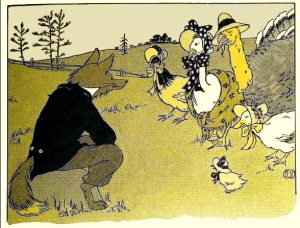 er animals (mostly other fowl) which join it in the quest. After this point, there are many endings. In the most familiar, a fox invites them to its lair and there eats them all.
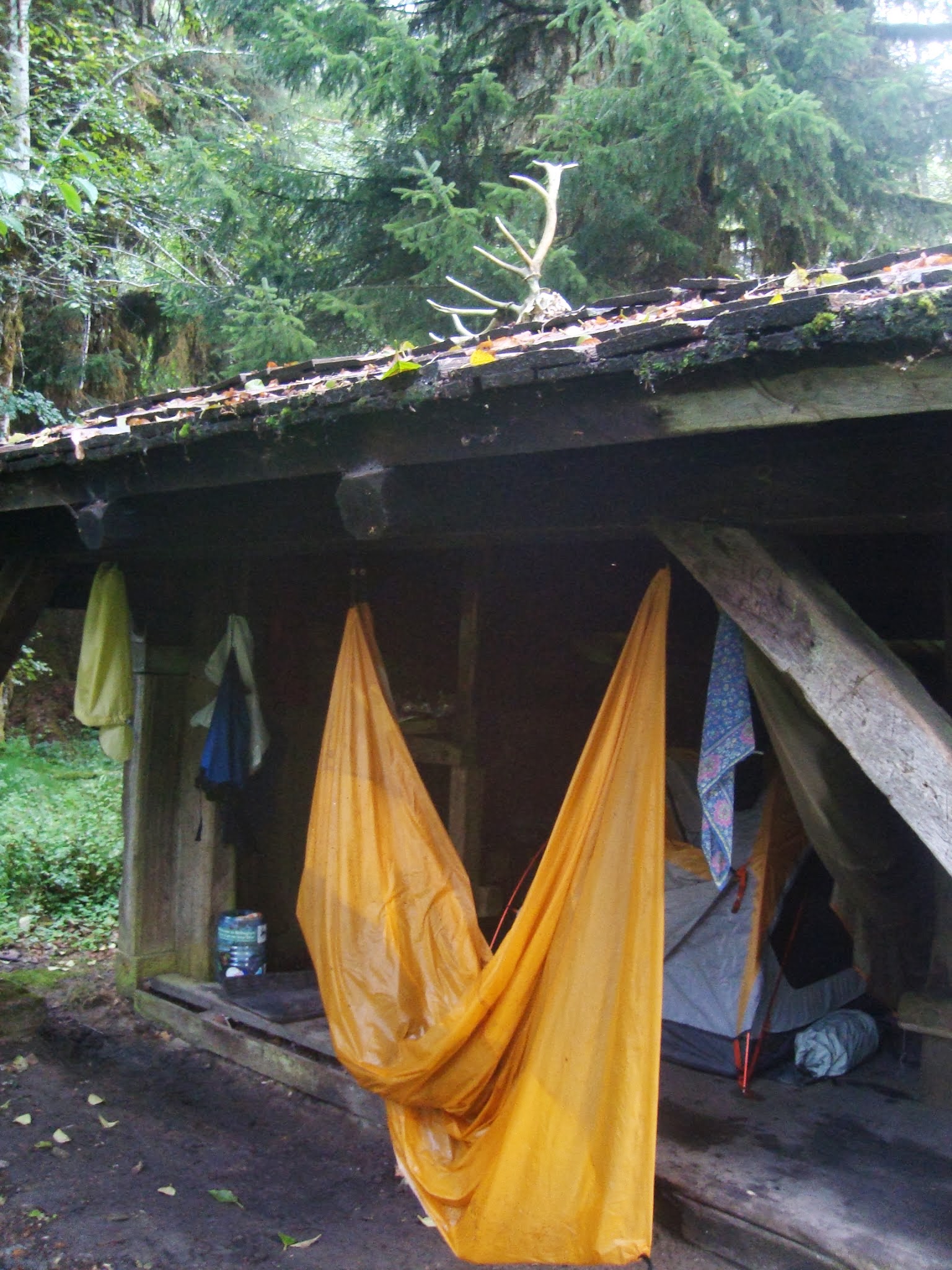


 It made me smile to think that this was already three years ago yet we’re still rhyming and scheming for our next backpacking trip. We might get to do two short trips and one long trip this summer now that my jobby job has chilled out a bit. And this year there are caches on our long hike so we won’t run out of whiskey and chocolate! I won’t have to ration coffee. Hot damn! I just put our application in the mail to hike The Wonderland Trail around Mt. Rainier this summer, so hiking is on my mind. If we don’t get our permits, we’ll head back into the Olympics. The hiking. This book. This book on hiking I want to write is on my mind.
 Spoke & Hub