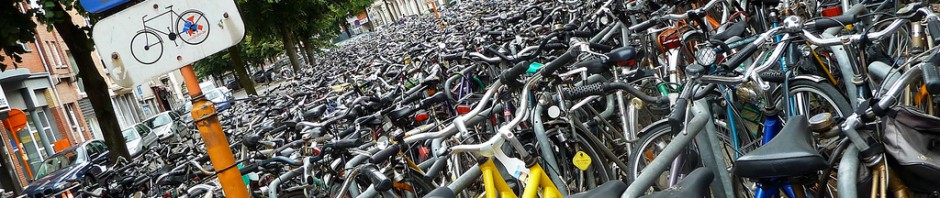
The Forests Still Burn

“None of us expected the future to arrive so soon.” ~Ira Spring, providing the historical perspective about fire lookouts in Washington State.

This post is the first of three that I plan to publish this week. My plan is to describe a parallel I’m seeing with teaching and learning, the history of fire lookouts, and the federated wiki. Ready for this, readers? It’s kind of out there.

Back in February, my friend sent me an email inviting me to go to the Evergreen Mountain Fire Lookout. I read the trail description and agreed that this was a beautiful spot we should check out. When we were first planning on going, I only thought of the view and the elevation gain of the hike. Little did I know how much history I would learn thanks to this trip and it’s now a bit of an obsession with me.

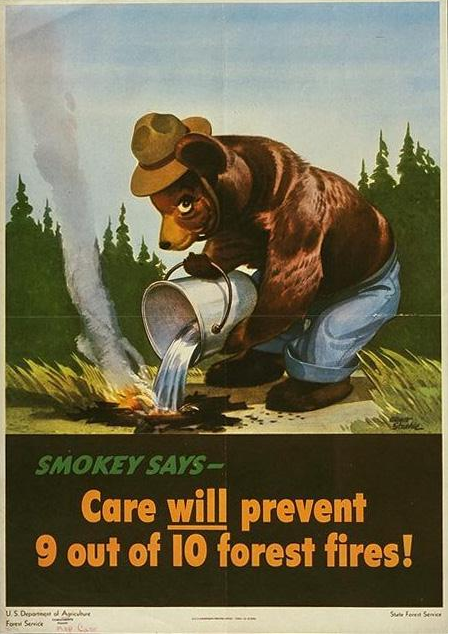
First of all, you need to know that Washington State is currently suffering through a terrible fire season. Forest fires are a natural part of the evolution of forests, and it’s a necessary part of biodiversity. There are trees that will not release their seeds without the heat of fire. Lightning strikes happen or people make mistakes; forests burn. The trouble, of course, is when these fires threaten humans, communities, and our homes. The stories of loss and devastation this summer is almost too much for me to take. Despite all of our technology; Mother Nature is reminding us of how little we can control our environment. My first recollection of learning about forests burning was the 1988 Yellowstone National Park fires.

I remember reading the newspaper and being fascinated by the size of the fire. I had yet to travel to the western United States, so I didn’t have an idea of the scale of the western states. The images haunted me. The helicopters. The devastation. The sad photos of displaced animals. The story of hawks hunting in burning brush. People dying. This was the drought that challenged the park policy of “let it burn.” The flames kept growing in one of our national treasures.

Five years later, I was a park employee hiking through those charred woods and the wildflowers were unlike anything I’d ever seen. It’s was a spooky beautiful landscape that I couldn’t get enough of seeing and exploring. Hikers were warned to stay away from “black ghost trees” that could fall on you should you disturb them. I remember touching the bark of trees and they felt like greasy charcoal. I remember seeing an owl perched high on a branch of a black dead tree. The suburban city girl I was quickly changed her mind that forest fires were not pure evil. They are part of nature, and that is a stance I hold to this day.

What troubles me deeply, of course, is the loss of human and animal life and the destruction of communities when these fires are out of control. This summer in Washington State, the fires have been just that—out of control. Our neighbors to north in Canada and to the south in Oregon and California have also suffered through an unnaturally hot dry summer. I have friends who live in these communities. I love their forests. Their downtowns. Their culture. Their firefighters. Their trees. Their skylines.

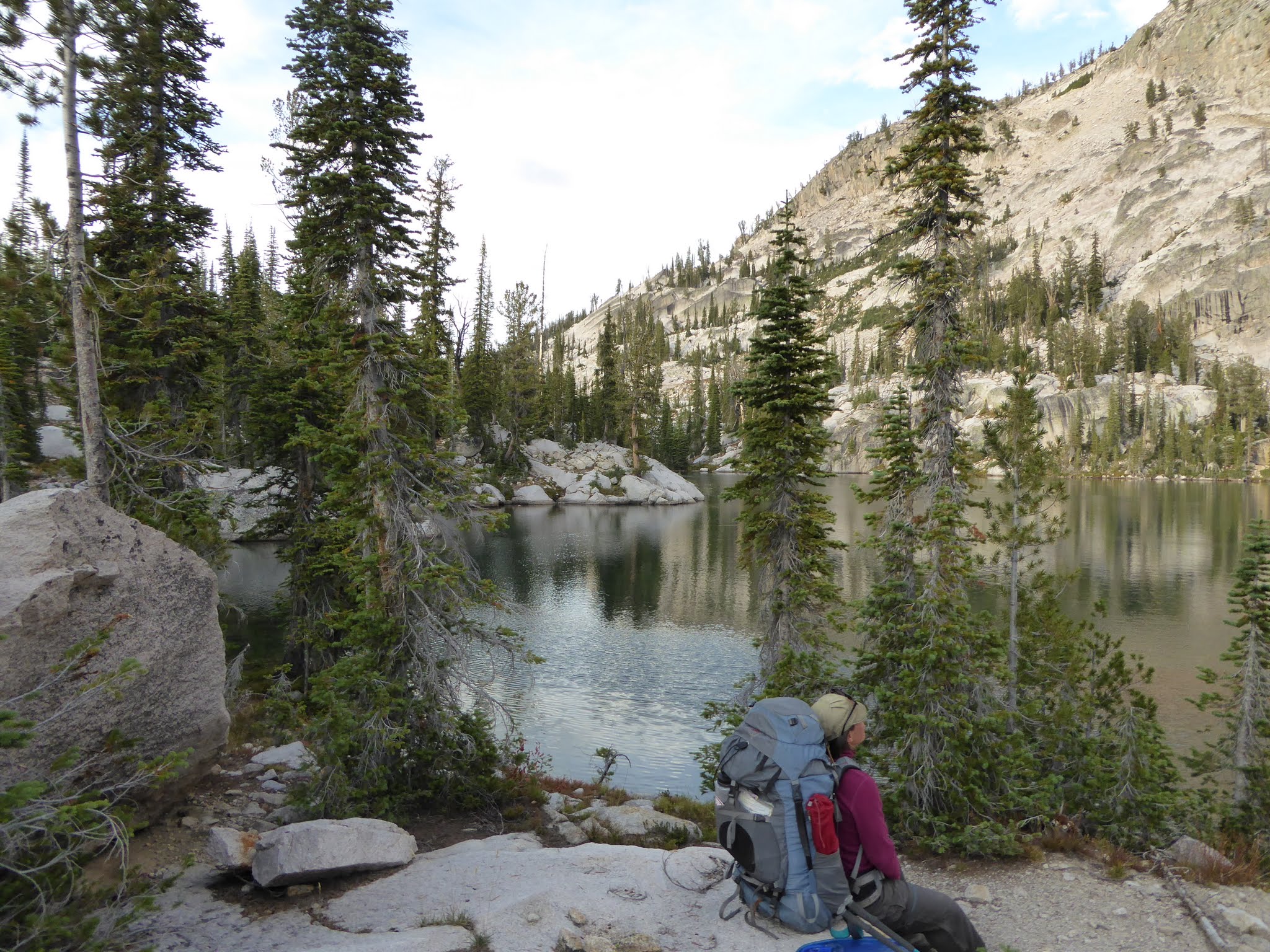
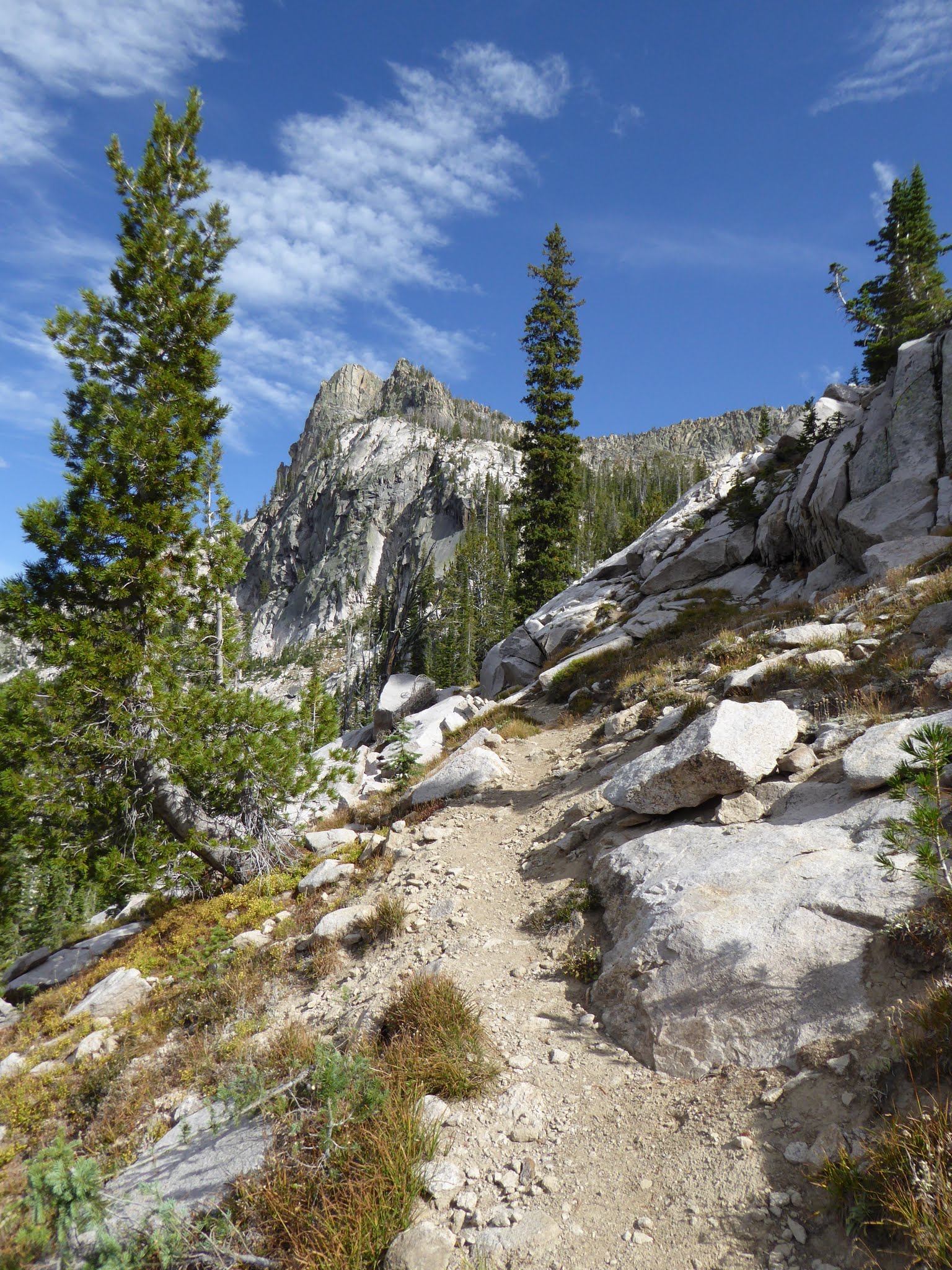
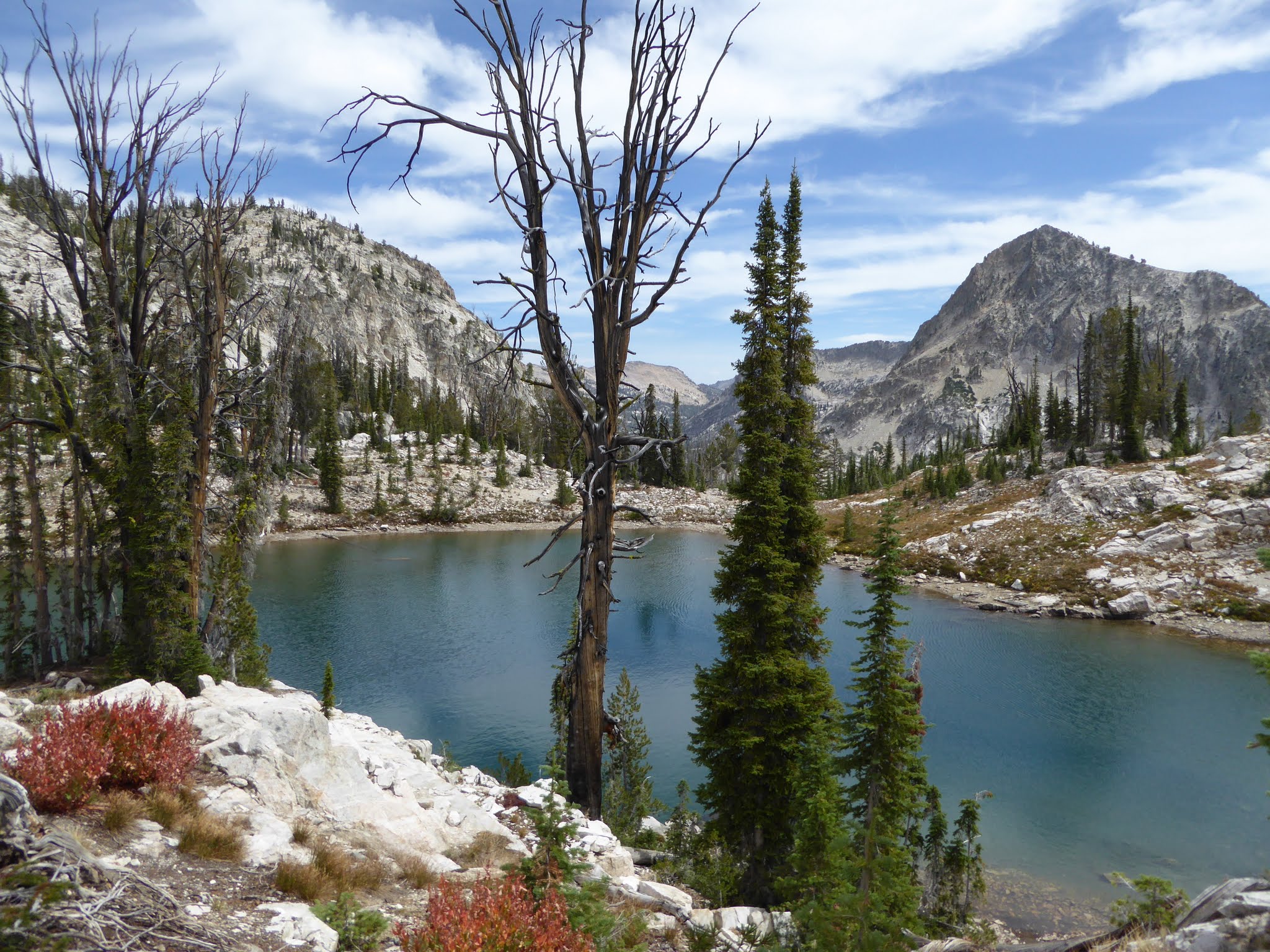
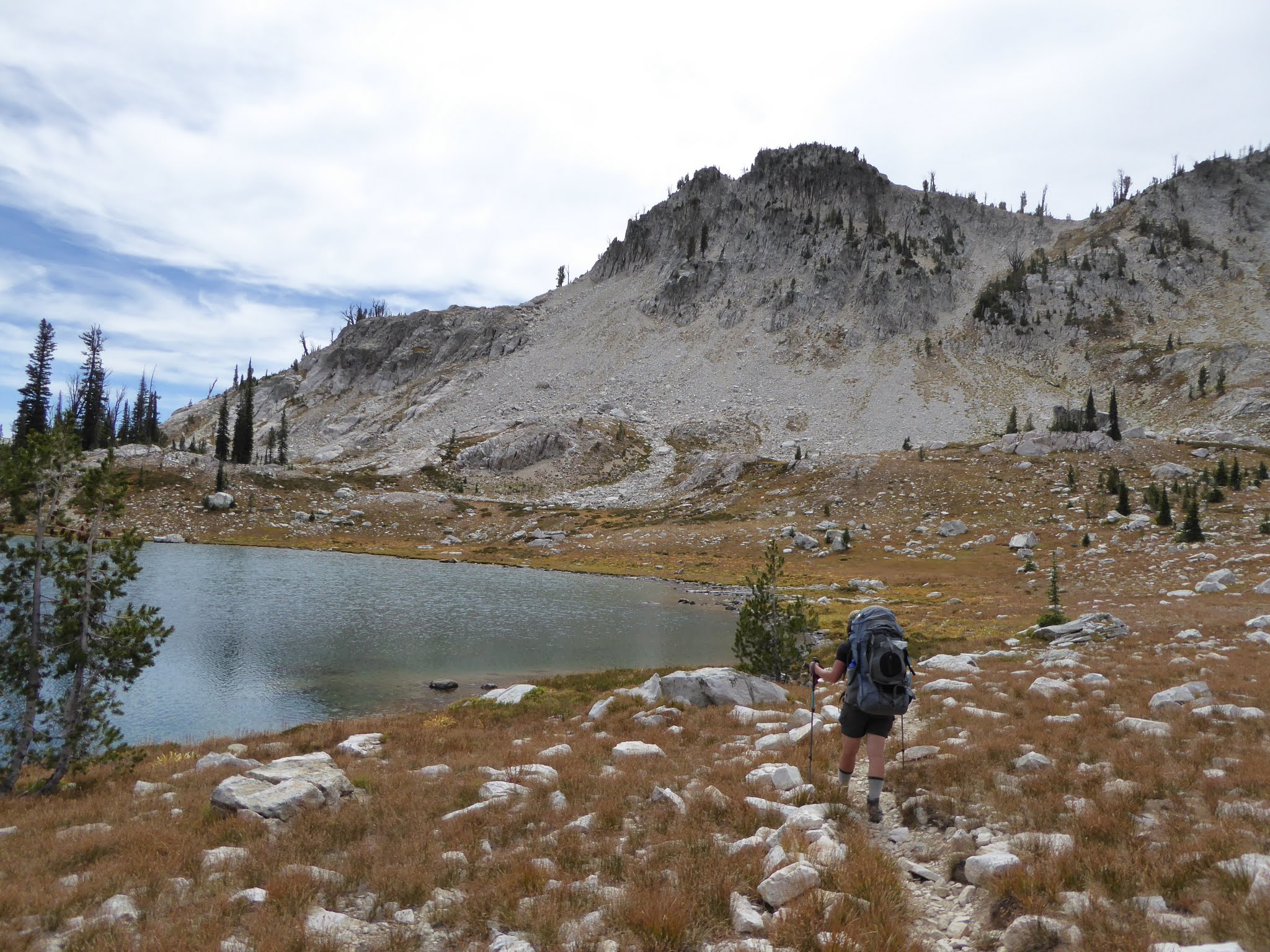
I tell you all of this because I’ve been going down the rabbit hole researching about fire lookouts, how I could teach people to use the federated wiki, and the importance of technology we could use to collaborate to solve problems and/or to learn. I’m currently on holiday until September 8, and I had decided to work on an article about hiking to lookouts. I have plans to write presentations for the fall. I also have some plans to go off the grid backpacking in Olympics after doing some vacationing in my hometown with my bikes–there are no long hikes in the North Cascades right now. It’s too dangerous.

So here I am, I’ve got my whole holiday planned out. Hobby Jobs, here I come! Then I saw a tweet from Mike Caulfield about his educational technology course along with an invite to folks who are using the federated wiki. C’est moi! When I first read, Kathryn Shultz’s “The Really Big One” I was thinking about forest fires and fire lookouts. When the earth shakes, fires will burn, the writer warns us. I have a lot of friends who grew up in this state, and their response to this article was “Meh. I’ve been hearing that my whole life. It’s really well-written and interesting. I haven’t been to Seaside, Oregon since I was a kid…” Meanwhile, I was like, “Holyhell! What?! Wait. What?! You’re reminiscing about a beach town and shit might be going down big time! Aren’t you the least freaked out about this? Didn’t you guys live through the explosion of Mt. St. Helens?”

Didn’t you grow up where they’re are hurricanes and tornadoes? they snarked. Whatevs.

A couple of people tweeted about how cyclists will be better off should the earthquake come. Anyways, the friends I talked to were underwhelmed, but I kept thinking about this article when a couple of books showed up from my blitz order of fire lookout history books from the public library.

Why have so many of the lookouts disappeared? Was it the advance of technology? Did people vandalize them? So I took some notes in the federated wiki thinking maybe I’ve got an idea for a hiking article. It’s been awhile since I’ve done this kind of writing. To hell with the article (for now), I’m going to take another approach. I’m going to try to create a few pages in the federated wiki that may be of interest to Mike’s students and I’m going to continue with my fire lookout article research. But first, I want to add some context on why I’m interested in this course, Mike’s use of the federated wiki in a class, and maybe just maybe how this all connects to the history of lookouts. 

The course that Mike is teaching seems similar to the course I took for my M.Ed. that changed everything for me. I almost dropped out of my program because I heard a lot about this class and I deemed it a waste of my time. I sent an eloquent (I thought) appeal to my advisor about how I didn’t need this course. I substantiated that I already knew everything this teacher was planning on teaching and that I wanted to do an independent study. He never returned my email, so I put that class off to the very end. News came that the teacher retired and they hired a tenure-track professor to teach it. She won a grant to be an early adopter of Canvas and I rejoiced when I looked her up and read about her interests.

I entered the course, however, with a really really really bad attitude. I blogged about this and now that I reread my thinking, I sense my budding frustration with education programs. For the most part, I experienced classes where they made students create hypothetical situations to apply what they’ve learned to a situation that they may face in the future. David Wiley brilliantly summarizes these assignments as ‘disposable assignments’ and I was lucky because I had almost eight years of teaching experience to draw from when I started this program. I watched my new-to-teaching colleagues struggle to make up scenarios. Struggle to reflect on things that may or may not happen. And we were bored out of our minds reflecting on our reflections about our reflective learning. “Renewable assignments” such as what Mike is proposing is exactly what is needed in education programs.

And yes, I can see how you may see these “renewable assignments” as a new buzzword and I’ll be the first to agree those terms in higher education are annoying. But are they harmful? Yes and no. Jeffrey Young, in Buzzwords May Be Stifling Teaching Innovation, lists current buzzwords and the survey responses of Chronicle readers. Here’s the thing, that I thought of when I read this article. Depending on your upper-administration those terms either help us in educational technology or they hurt us. If your upper-administration trusts you to help teachers experiment, then rock on, those terms allow them stay out of your way. They don’t have time to learn what they are, but they know it may be worth while exploring if you advise them.

If your upper-administration micro-manages your every move and doubts your expertise and vision, then those terms are going to hurt you. It’s even worse if they think you’re attracted to ideas because you’re ambitious. Should you work in an environment where you lack support, it’s in your best interest to define these terms before the upper-administration does in the form a grant or an initiative. Let’s have a beer or five and talk about this sometime. 

And really, there are too many problems in higher education to count, but let me tell you something, if there is something we need to burn down to the ground, it’s the way we teach future teachers.

I caught my first glimpse of the problem when I took a course at a local university on the state tuition waiver. They had rejected me from their College of Education PhD program and I wanted to know if I was truly outclassed by the people who got in. Who beat me? What did they have that I didn’t? What can I do to improve? So I showed up for the first night of the course after teaching three composition courses at two different colleges, and as I listened to people introduce themselves. I realized I was the only person in the room with any teaching experience. The rest were students hoping to become high school principals yet none of them, I mean, not a one, had any classroom experience. They were all bilingual and had impressive undergraduate credentials, and I realized that on paper, I could never compete with their applications. As the class progressed, I started to really pay attention to the professor and her teaching assistant. They were working on an article together and our class was an experiment for them. And that’s cool, but I never felt so stifled as a student. They both had to approve my works cited before I could write my paper. When I tried to explain that I tend to write and research as I go, they shut me down with the threat of a bad grade. They needed to give me a stamp of approval for what I would cite. A blog post, for the record, got the red pen. “Not peer reviewed” despite the 20 or so articulate blog responses and tweets from scholars in the field. That not-scholar-enough-blogger was George Siemens [WTF, right? Insert laugh track here]. 

In short, I was in a class of future leaders who had never taught before and the teachers were more invested in their publication than our learning. We didn’t use any technology other than Microsoft Word in that class, and despite all of the great information we could have used from the Internet (it was 2007), we were limited to certain databases and sources. I walked away with a paper that was unpublishable in any peer-reviewed journal because I had to include first-person reflection and I swallowed the acute realization I’ll never get into an R1 school. Oh, and yeah, I got an A.

This story connects to why I’m interested in the federated wiki for three reasons and let me use some educator-speak to explain. 1] I have a lot of formal education experience with certificates and degrees. The curriculum was set by the institution and accredited. All that jazz. 2] I have a lengthy history with non-formal learning with my personal interests. I’ve taken classes on avalanche safety, trail-crew work, sewing, astrology, candle-making, stained glass cutting, and cyclocross racing, to name a few. Every course had a somewhat organized set of outcomes with an expert who changed the curriculum based on the learners in the class. Jazzed up learning! 3] Where the magic and joy happens for me as a learner is when my learning is informal, or what I prefer to call self-directed learning. (If you know this debate, I don’t agree that informal learning is unintentional whereas self-directed learning is a type of informal learning that is purposeful and truer to my pedagogical worldview. In short, it’s semantics and it’s confusing to people to explain the difference between informal and nonformal).

Think of learning in three ways: formal learning helps you get a job (The Man), informal learning helps you grow as a person in your community (The People), and self-directed learning is pure selfish blissful learning for learning’s sake (The Self). Now before you want to tear apart my explanation because I have really simplified these definitions, let me explain. Our goal in higher education, for the best educators, is to have students experience informal and self-directed learning and love our discipline the way we do in the formal setting. We want them to be lifelong learners. Citizens who are interested in improving the world we live in. We want them to find meaningful work. 

But I’ve got to tell you, nothing kills that self-directed spirit more than a set curriculum. Nothing puts out the fire of curiosity like dull formal education. Maybe you’ve been out of college for awhile. Maybe you’ve had some joy with MOOCs. Maybe you’ve just started college. Maybe you’re an administrator. Maybe you’re just starting graduate school. Maybe you’re questioning if I am just too pessimistic. Maybe I’m way off. Here’s what I know.

If I had to think of a song that summarizes how formal education feels to me after years and years of it, I’ve got a song for you. You know that point where Johnny Rotten from The Sex Pistols says “No fun” over and over againI know Iggy Pop sings this song too, but he makes “no fun” sound cool and kind of badass loner-like. Johnny, however, back in his prime, tells the story of gritty, nasty, boredom–a frustrating lack of joy. No fun. No fun. My babe, no fun.

And this lack of fun–No Fun!–really frustrated me when I started to research writing. That class, for most students, is the last English class they will ever have to take. And they hate it. Adjuncts, by and large, are the ones who get stuck teaching it. Students walk into the class with the same bad attitude that I described above about my Ed Tech class. I’ve been researching since fifth grade, they think, and now I’ve got to take this class? I realized early on I was not going to win students over with my love of the written word. Who gives a rat’s ass, lady? English majors are suckers! I want to be a nurse/engineer/chemist/etc. and this class might kill my GPA.

So I took another approach as a teacher. Instead of droning on about the syllabus the first day, I asked them to write for about five minutes about what they liked to learn about using the Internet or magazines on their free time. When you’re not doing homework, what do you like to learn about? I’d then write on the board their responses everything from making homemade baby food to World of WarCraft to hunting to make-up techniques to dirt bike racing. Depending on what I was into, I’d write my hobby job research. I’d then ask them to write the three big questions that they have about their interests and where they would look up information. By then, class would be over and I’d ask them to come back with a list of their sources, their three questions about their personal research, and any questions about the syllabus. Are you going to collect this, they’d ask?

If I collect it, does it change the way you would do it? I’d ask. Silence.

At that point, I’d laugh and give my first “You’re in college now, I want you think for yourself, speech. If you do everything for grades, college is going to be a huge waste of your time.” Most of the students would relax. A few would drop my class the second they could get to a computer. There were always one or two who would stay behind class completely freaked out that I didn’t give them a rubric or written instructions for their homework. These were students, I realized, that had never found the joy in self-directed learning. When I collected their what-do-you-research-for-fun, they listed academic-type research connected to their future profession. Maybe that was fun for them, but I don’t think so.

So how does this connect to my learning about fire lookouts? I’ll return to this in my next post and I’ll link my new pages in the federated wiki. 

photo credit: http://bit.ly/1Jwg3cg

photo credit: http://bit.ly/1Jwg3cg

For now, here’s what I’m thinking: this past weekend, I hiked to Lookout Mountain Lookout and I sat outside reading the log book from visitors that dated back to the mid-90s. There were pages and pages of reflections from strangers who wrote things similar to what I would write. They also wrote things I would never think of and that got me reflecting on my use of the federated wiki and my own education. I forked a couple pages by taking photos of them.

I was having a lot of fun even though the mold in the books made me sneeze every ten minutes. I realized I rarely experienced some of the serendipitously fun learning I’ve had in the last year when I was a student.

The federated wiki works like that log book. You leave your thoughts for others. That history is left for somebody else. It’s a bit of The Self and The People. And imagine, Mike Caulfield’s students are going to get formal credit using the federated wiki. I then stared into space for who knows how long. That’s why I love the backcountry.

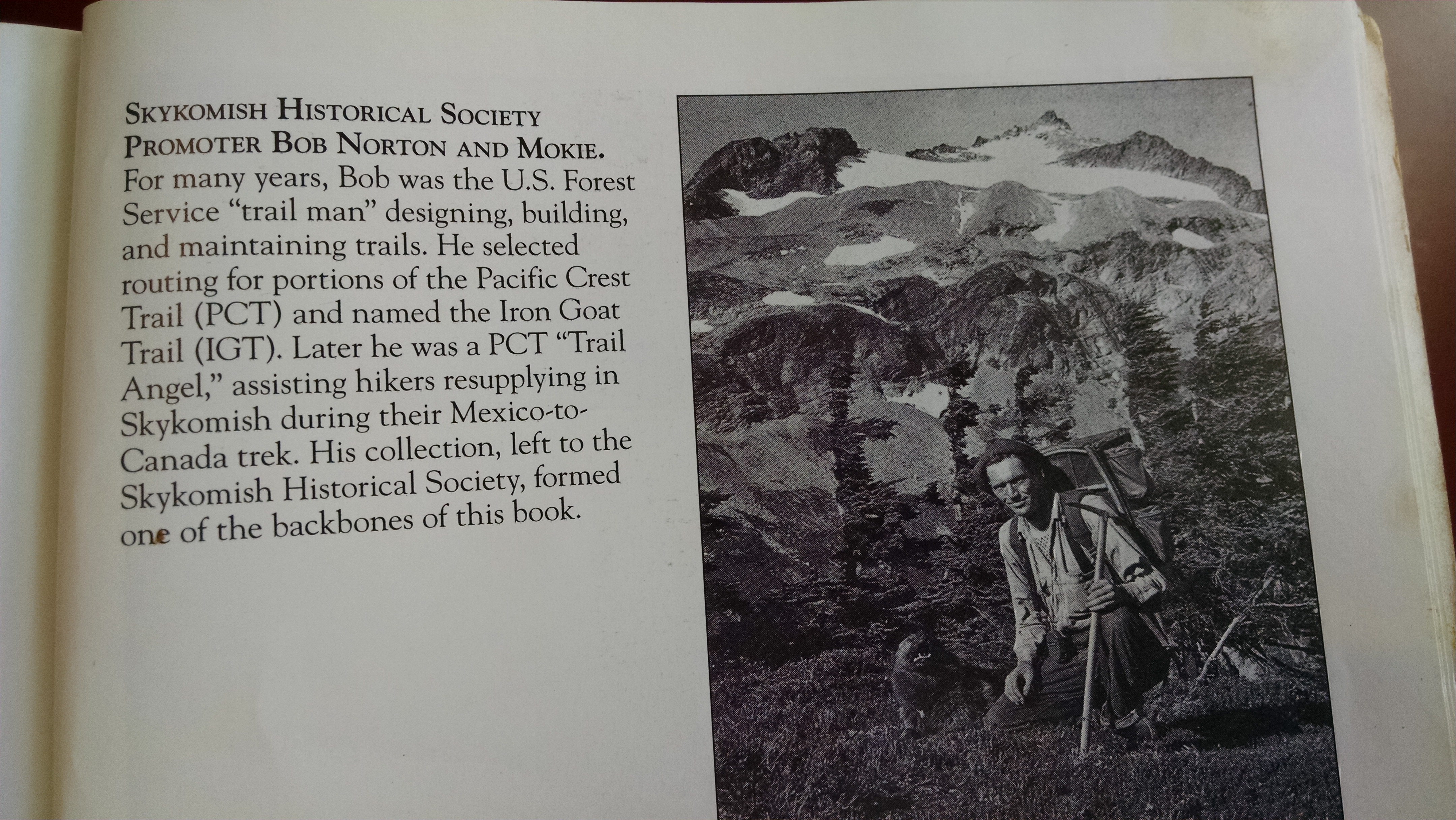
The wind picked up, so I went inside to read Ira Spring’s Lookouts: Firewatchers of the Cascades and the Olympics, the first edition. 

His opening paragraph describes how in the 1930s, the fire lookouts were a cutting edge technological solution to the problem of wildfires in Washington State. He describes how they built a network of lookouts staffed by people who communicated by hiking, horse travel, radio, and mail. They saw themselves as pioneers saving their communities from natural devastation and the destructive forces of wildfires.

Then technological advances such as the helicopter, satellite communication, and other communication tools left no need for the fire lookouts. Many of them have been destroyed or they remain in various states of disrepair. This history has almost been erased, yet there is a great deal we can still learn.

Spring’s tone is full of melancholy as he reflects on this lost history, “None of us expected the future to arrive so soon.”

None of us still expect the future–be it an earthquake or another natural disaster– to arrive so soon. The future arriving soon. Think about that.

We now have technology to help us, right?

And yet the forests still burn. The forests still burn.

Posted in All The Things | Tagged , , , | 1 Comment

Choose Your Own Federated Wiki Adventure

Remember choose your own adventure books? As a kid, I loved those books because they let me decide where the character goes. What happens. Why. I got to choose, and I bet I felt like the writer that I hadn’t figured out I wanted to be as a little girl. Being the gigantic nerdling I was, I read every option. I remember going all book critic by defacing library books and offering advice on the best adventure for the next reader. I’d write, “The wizard turns evil. Choose p. 96, the princess comes back to life.” As an adult, I’m horrified that I defaced public property but I bring this up not to shame my younger self, but as a way to contextualize two ways I think the federated wiki could work for writers, teachers, and students.

First, I’m trying–and I emphasize trying–to write a book using the federated wiki. What if I could play with the form of the novel and give readers the option to read a self-contained story where they choose what to read next? I haven’t figured out how to do this nor is my writing any good. I’m trying to think of an adult version of the choose your own adventure book where the story is embedded in the content and the timeline of the story isn’t as important as trying to encourage readers to read in a different way. What if I could design a reading experience where people take a path that they want? There is no map. No beginning, no ending, or right order.

Here’s my theory: most people read with hyperlinks by either ignoring them altogether or they click on them as they read. This click-as-you-read kills your concentration and you end up with this smattering of open windows and a colossal mess on your computer screen where you can’t remember where you started or what the heck you were even reading. I witnessed this first hand as a teacher and as an instructional designer. Too many links are bad for students who struggle with reading comprehension and critical thinking. They just become blue words and lines that they ignore or worry that they’ll miss something that was hyperlinked on a quiz.

If I could teach people how to read my Fedwiki book by reading all of the page and then choosing the link that interests them, I’d create an open invitation to choose your own adventure with what I hyperlink. Maybe I’ll create a neighborhood of readers and writers who will add to this idea. Why not? But that’s a gigantic sloppy mess for another day mixed with ambition, passion, motivation, despair, and a story that won’t let me go. For some reason, I’m having a lot of fun thinking about this book whereas before it made me feel like a gigantic failure.

At one point, I stopped seeing any new adventures until I started writing the history of my ideas–such as they are–using the federated wiki.

But that’s not where it gets interesting for me.

The intersection of this choose-your-own-adventure-by-changing-the-way-you-read with portfolio potential for teaching and learning bubbles to the surface of my thoughts more often than the novel potential. Because this is what the federated wiki is for, man, it’s for The People! Not just navel gazing selfish writers (a memoir).

So that brings me to the forking of [[Forced Conviviality]] and an idea that I was hoping to work on more before NW eLearn. I’m presenting on the federated wiki, and my title makes it sound like I know what I’m talking about—only I don’t. Here’s my title:

Time in the Federated Wiki: Portfolio Potential From The Happenings

Sounds fancy, right?

I’ve got a hunch that won’t let me go. And this all feels a bit like choosing my own adventure. I’ll be the first to tell you that I really have no idea what I’m talking about and that’s really fun for me. That’s the necessary condition of the hobby job–it’s gotta be fun or I’m out.

Meanwhile back at the jobby job, I’ve been tasked with writing initiatives as they relate to teaching and learning and professional development. In short, what are we going to teach teachers and value as the face of eLearning/educational technology on our campus? I’m not short on ideas or things that we could do. Here’s the link if you’re interested in reading more, but I’m struggling with how to assess that teachers and students will benefit from these projects in order to legitimize funding. How will I know that these ideas will work? How will I know what teachers have learned? How will I know? How will I create data? How will I connect helping teachers to student success? Where is the distillery in the woods that employs yetis to make moonshine? Wait. Sorry, that’s not a question.

This is where I’m struggling because here’s the 411 y’all. It feels impossible–or close to impossible–to measure professional development for teachers as it relates to student success. If you define “student success” in terms of retention and completion, well, I’m not your gal. Let’s talk about learning then I’m your gal. What I think works and what I’ve learned from others is that discipline-specific professional development is easy to measure. Send faculty to a new conference where presenters share the findings of a research project. Faculty incorporate that information into their courses. Students learn about it. Boom! Assessed. Here’s your pile of money.

Teaching people to think differently about the way they teach with technology is not so easy. Purse strings cinch. Eye brows get raised. Teaching people to collaborate with their colleagues is not so easy. Teaching people and then have them change is not so easy. The data is harder to gather. This pressure about retention, completion, and data kills everything that I love about teaching and learning. The Choose Your Own Adventure book becomes a boring spirit killing training manual that nobody wants to read.

And this was my rant to a friend, a fellow teacher, who said, “Just make sure you don’t create situations of forced conviviality. It’s got to be worth people’s time and leave teachers excited to learn more on their own. Forcing people to learn, last I checked, doesn’t work.”

When I got back to work I couldn’t remember if the phrase was enforced or forced, so I used the federated wiki to take notes. I decided to make a short video to explain because my first draft confused me, dear readers, so let me spare you by making you suffer through a video: http://screencast.com/t/3wwX1O8C

In Tools for Conviviality, Ivan Illich reminds us that “Trust in miracle cures obliterated good sense and traditional wisdom on healing and healthcare.”

If I could have forked this page, here’s how I’d revise it: Trust in miracle cures obliterates good sense and traditional wisdom with teaching and learning.

Posted in All The Things | Tagged , , | 2 Comments

You’re The Only One I Can Tell

“You know,” she said, “this is either going to be the best adventure ever or the biggest mistake of my life. What do you think?”

I wish I could say I had some words of wisdom or brave statements full of empowerment for my friend, but I’ll admit it: I totally cracked up.

“If you tell me that’s a great memoir title, I’m going to punch you. Seriously, dude, I need some advice.”

Then I lost it laughing so hard, I almost had to pull the car over. Here I am driving my friend, one of my closest friends ever, to a trail head so we can spend two days in the back-country and she’s pouring her heart to me. Big huge life changes are afoot for her. She’s trying to get a new job, and although I begged her to not check her voicemail before we left, she did. And they offered her the job.

So I told her what I think she should do. Salary, location, and job description are the holy trifecta of employment happiness. If it’s too much of a pay cut, then don’t do it. If you’re not sure you will love the place, maybe you shouldn’t do it. If they don’t tell you specifically what you’re going to be doing, don’t do it. I composed myself and offered a longish lecture on what I’d say. How I’d say it. What I’d ask for. What I’d ask about.

She looked at me. “I need to write that down, and you’re only one I can tell.”

So here’s the thing: when somebody tells you you’re the only one she can talk to about something, it’s a lot of pressure. You need to be a good friend–A fine fellow human being who can help guide somebody you love. Only I have no idea what I’m talking about nor can I say for sure what I would do. Teetering between a giant mistake and a grand adventure, however, is better than being bored out of frickin’ your mind. Trust me. This I know for sure.

We’re making plans this week, and I thought I’d send her a list of songs for the next seven days. I need to spice it up and have some fun. You need some fun on a Monday, right? Right.

Monday will be the same as it ever was:

 Tuesday, I’ll be there:

Wednesday, pack your bags to do this:

Thursday:
Friday-Sunday:
And really, if she busts out a question like that on me as we’re heading into the woods this weekend, I’ll have this song on queue:
Posted in All The Things | Tagged | 2 Comments

Mentoring New-ish Faculty

In my last blog post, I promised I’d continue my thoughts on the horrors of adjunctification/causualisation in higher education, but I’ve got to take step away for a bit. My adjuncts friends are facing an awful reality in the upcoming year, and I’d rather think about practical ways I can help them on my campus.

Before I do, I need to tell y’all about this awesome soul funk band I heard last weekend. For Seattle folks, this band isn’t anything new, but I have never seen Grace Love and The True Loves live. Hot diggity dog they were awesome.

Let me be clear, I dislike jamband funk ala Phish or what I call frat boy funk (sorry, if you dig that music). The real deal is influenced by James Brown, Aretha Franklin, and/or Curtis Mayfield, and if I don’t hear that influence, it’s not my brand of soul funk. And y’all, Grace Love and The True Loves are the real deal. My hip still hurts from dancing in the grass at Bellingham’s Subdued Stringband Jamboree. What a fun party for kids, musicians, and friends. And I like the way Grace Love works it; have a listen:

I’ve fallen off the jobby job horse a bit over the last few weeks; I’ve lost a bit fire, but holy hot damn, I think I’m back in the saddle. For this post, I’d like to write a bit about my work with the eLearning Council and a fun puzzle we’re facing in my department.

First of all, I sometimes can’t believe how lucky I am to have stumbled onto working with such an amazing group of eLearning Directors in Washington State. Not only have they embraced me as a friend and colleague, they elected me chair-elect of our council. Maybe I’m the only one dumb enough to fall on this sword (I’ve been told) or they actually have faith in me. Either way, it’s a huge honor. We had our first meeting this past week, and Chris Soran is our new chair.

Chris and I were interim at the same time, and we bonded over our unknown status of employment when we first met. I also didn’t know what I was doing and he was really generous to help me out. We also worked together on a work group, and we were the only ones who routinely showed. People get busy and such, but Chris was always there when I clicked on our Collaborate link. As our current Chair, he reports to our Instruction Commission (IC), and this is also my destiny in less than two weeks. Our entire system is going through an upgrade and Tacoma Community College is the first to “go-live,” he needs to be at the home institution. I’m going to interrupt my vacation and head to Big Bend Community College to hang out with all of the Vice Presidents of Instruction in Washington State. You know, no pressure.

I could have said no; I’m on vacation. Honestly, I want to be as close as I can to this caldron as they brew up plans for the upcoming year. I presented to the IC back in May 2014. My colleague, Peg Balachowski,  presented virtually while I stood there and watched the group take notes. Or check their email. Or Facebook. What I noticed was all of them looked up when we mentioned funding and data. I closed the presentation, and many of the VPIs had positive feedback.

At the time, we were short on data with our work, and we still are. And now some of our institutions are even shorter on funding. This year is going to be interesting.

Fun drinking game digression: Drink if you hear the word “austere” or “innovative solutions” or “budget uncertainty” or “tough decisions” or “educational technology will save us money” or “the flipped classroom is a new style of teaching” or my personal favorite, “we can do more for less.” Drink!

As a council, we have work groups to help with state-wide initiatives based on the IC work plan. The eLC meets quarterly in person and monthly OL. It’s a fun side project, and I think this year, we’ve got some awesome momentum with three topics: Accessibility, Professional Development, and Open Pedagogy.

Open Pedagogy?! Did I hear that right?! If I could have skipped arm in arm with my mates to meet as a group, I would have. That’s how excited I am for this work. We still need the stamp of approval from the IC, but I think we’ve got a great start. Usually the IC tells us what they want, and this year they’ve asked us to come up with a plan as subject matter experts. Be still my heart. Perhaps it’s the legacy of our eLC Chairs passing the torch to Chris, the leadership at the SBCTC, and/or a changing of the guard at the IC. Whatever it is, it feels a bit like I could see a mermaid swimming by at any minute.

And back at the home institution, we’re using this summer to solve a data collection problem as we reorganize a bit as a department. Back in 2012-2013, we won a Title III grant. At that time, I was hired as a faculty mentor along with three other faculty members. We collaborated together to create our Associate Faculty Academy. This work is near and dear to my heart because it A] benefits adjuncts by paying them to learn about our institutional culture, B] helps them establish a network with other new adjuncts, and C] it was my second gig as an Instructional Designer.

If I may be a bit nostalgic here with a lesson that I learned the hard way, let me just advise, never ever say to three fantastically motivated brilliant teachers: “Send me all of your stuff and I’ll figure out how to organize it.” Oh dear!

At that time, we were transitioning from ANGEL to Canvas, so everything we had was smoldering pile of nonsensical repository information. The mentors have since revised and revamped that original class, and when I was promoted to my current position, I had to let this project go. It was like mourning a lost love to me, but I rejoice every time we share this this idea with another institution. Five institutions in our system have all tailored the course and the process for what works for them culturally and financially. Interested? Contact me and I’ll send you everything we have.

From the get-go, we’ve been talking about proof of cost. How do we pay for this once the grant runs out? How do we institutionalize this? How do we make this work? How do we know this will work? How do we mentor such a broad spectrum of teachers? These are the big questions I love to try and answer.

At that time, I had also published an article on what I thought could work but I had no idea. My main point was to make sure we set up interdisciplinary mentorships. In short, if you want educators to talk about pedagogy, you’ve got to get folks from different disciplines together. It’s also safer adjuncts to network with people who are outside of their departments. Honestly I was pitching what I wished had existed when I was an adjunct by passing this idea off as research. It’s creative non-fiction disguised as research. (Drink!) Somehow it got published and other folks have since embraced this idea.

I still have no data to prove I’m right (a memoir). So I keep reading and researching. Hoping. Listening. Learning. Asking. Wishing. Waiting. Trying.

Today I read 10 Ways To Support New Faculty by Tanya Golash-Boza, and I have to say, it’s nice to see other writers talking about mentoring. Everybody is all a-twitter with talk about Week 0 for students. (Drink!)

And here’s the thing, we need to also talk about Week -1 for teachers. My institution has a good story that we could connect to Golash-Boza and others. We’ve got great anecdotes. Narratives. Quotes. Examples. Ideas. Visions.

Great stories don’t cut it with peer reviewers; they want data. We’re short on data. We can’t say for sure that what we’ve done helps student retention. We can’t say for sure we help make good teachers better. We can’t say for sure that our way is the right way. We can’t say anything for sure. Nothing. For sure.

The more I think about our lack of data, I think I have one idea to generate numbers. But first, I need to give you some historical context.

At the time we transitioned to Canvas in 2012-2013, three major institutional shifts took place. First, we started the Title III Strengthening Institutions Grant establishing the mentors, the Associate Faculty Academy, and a precedent to mentor new faculty. We defined “new faculty” as new-to-our-college. We decided to care about the majority of the teachers who teach our students. We call them adjuncts. (Drink!)

Second, our math department began linking their third party integration publisher materials to Canvas or they started using OER in greater numbers. Students were starting to identify Canvas with their course schedule. If they didn’t see their math class, they called eLearning. Peg made a template that the math department could use guiding the students to whatever the teachers used, WAMAP, MyMathLab, etc. Our phones stopped ringing and help tickets connected to math classes ceased. One simple message to students was all it took.

Third, we also started an academy for full-time tenure track faculty. Peg, who is the mentor/teacher of this academy, uses Canvas for her cohort of new FT teachers. Canvas, unlike the labyrinth of crappy folders we call ANGEL/Blackboard, is easier to use for both students and faculty. I’ve been arguing that Canvas forces good design on teachers for about a year, and I think this is true, BUT I don’t know for sure. I don’t have the data to prove it.

Maybe we don’t get as many tickets and problems through eLearning because teachers are better supported. Is it Canvas or is it our investment in professional development for teachers? Is it both? Is it my Instructional Designer? Our departmental collaboration? The way we communicate to our faculty? Is it the students themselves? Maybe new faculty are more comfortable with technology. Depends on the discipline. We just can’t say for sure.

I have a theory that what we’re doing to support teachers directly impacts students who are using Canvas. I also believe that we can trace student retention if we got smarter about how to use the Canvas analytic functions. We also need to collaborate with Institutional Research, and currently we don’t work with them at all. More importantly, we need to teach teachers about how these analytics and statistics work. Or don’t work. We also need to educate the administration that this data does not reflect what the students are actually learning. This love affair about analytics is dangerous while at the same time potentially useful. We just need to make sure we ask the right questions.

Quick disclaimer: I want to kill all LMSs forever and ever, but we’re so invested as a college and as a system that I have to live with it. I also understand that I overwhelm people with these ideas, and I have to get smarter about the way I explain why this needs to be the future of teaching and learning. I have to learn how to talk about this idea to people who have never heard of a Domain of One’s Own. Worse still, I think I need to take a statistics class again. (Drink!)

Back to what I’d like to investigate:

What if we could track the use of Canvas post-Academies? In other words, what if we ask all of our new and former mentees to connect one outcome to multiple assessments in their courses? Just one. It doesn’t have to be huge. Just one. We could take it one step further and ask teachers to connect that outcome to their course evaluations via the IDEA form. I really dislike this teacher evaluation form, but nobody listens to me. It’s meaningless for teachers and devalues the potential of student feedback. It’s a giant waste of money, but it’s how we do it at my institution. (Drink!)

If we could do this one-outcome-multiple-assessments research during the tenure-track process alone, we’d have three years of data on one outcome per teacher. We could advise our new teachers to join “an innovative pilot” to collaborate with eLearning. (Drink!) This will help them in the dog and pony show we can tenure track process. It doesn’t seem threatening to me, and we’d let them choose the outcome. They can work with my Instructional Designer on that one-outcome-to-multiple-assessment alignment. Maybe, just maybe, they’ll take a sip of our Kool-Aid and join our little club. We’re fun people. We care. We want their students to succeed. We respect them as subject matter experts.

This is just a nascent idea, but I’m trying to think of how we can generate data to show that teachers improve when they A] use Canvas, B] understand alignment, and C] value continuous improvement in their courses post the academies. I’m willing to bet they have better retention numbers. Better classes. Happier students who enjoy learning. Teachers who love working with us. Happier people who enjoy learning together.

The pieces are there; we just need to figure out how to bring them together. Maybe I need a mentor to help me stitch these pieces of quilt together. Maybe I need to get smarter with statistics. Maybe the answer is right in front of me, but I can’t see it.

Here’s the heart-breaking reality of this work of mentoring new-ish faculty, many of them say that this experience is the first time somebody welcomed them to an institution beyond showing them how to make copies or how to call security. They report that they feel cared about and it’s nice to have a network. I’ve walked by some of them on campus and they light up because they know somebody. I don’t always remember their names or their disciplines but I say hello and smile. I have no data to prove this, but I think we’re making teaching a less lonely profession.

“I don’t feel so all alone for the first time ever as a teacher,” said one faculty who had almost 14 years of adjunct teaching experience.

Posted in All The Things | Tagged , , , | 2 Comments

Abandoning The Broken Peloton

Three things make my heart beat faster with anticipation: News from the cycling world, brilliantly useful critiques about higher education, and compositional artistry from scholars I respect. And leave it to the fabulous Kate Bowles to bring all three together for me after four days off the grid. My bloated inbox, job applications/inquiries, reports, and mounting list of reading all be damned! I must respond.

First of all, you need to read Service as Service, her post from August 2, 2015 since this post is the beginning of a longer response.

I’ve been thinking a lot about the word “abandoned” since I watched Fabian Cancellera and Tejay van Garderen “abandon” the tour. They are not the only riders who had to leave via the broom wagon, but they are the ones whose absence haunted me the most this year during Le Tour de France. Cancellera saddened me because he’s such a classy skilled rider and his 2010 wins of Paris Roubaix  and the Tour of Flanders were exciting and beautiful watch. I was especially impressed with how he handled accusations about his victories. Rumor had it that he had a special bike with a motor to increase his speed. It was the technology not his ability that got the rumor mill spinning. He tested negative for doping, so his bike must be dirty.

At the time, it seemed like a nice way to divert the negative press about doping. Allegations were rampant, denials were cocky, and everyone was suspicious of a rider who takes off at the front. In short, if you were winning, you must be cheating.

VeloNation Press  in 2010 quotes Cancellera and gives some context to how he felt about the accusations:

The Swiss rider said that the story is laughable. Almost. “In fact, it’s pretty funny but it is such a big story that it’s no longer the case. It’s a sad story and really outrageous. Don’t worry, my accomplishments are the result of hard work,” said Cancellara.

Whether the motor was his legs or some ingenious hidden motor in his bike frame has been debated ad nauseum by fans and the press. Every bike mechanic I know laughed at the accusations and I agree with them. We need Fabian’s Magic Bike and we’ll win, we joked. But really, it’s his hard work that gives him the fitness and grace to ride a bike that way. He’s an interesting rider because he has not enjoyed the team support that some of his rivals have yet he’s incredibly popular with fans. I’ve been a huge fan ever since I started watching cycling news regularly, so I was devastated to see his name listed as an “abandoned rider.”

This also made me question why they use the word “abandoned” and I have not looked up the history of this term in cycling. If you know it, I’d love to learn. When I looked up the term abandoned, in the dictionary, they give us three definitions:

: to leave and never return to (someone who needs protection or help)

: to leave and never return to (something)

: to leave (a place) because of danger

If we take a look at video as posted on Kate’s blog, we get 47 seconds of sadness from van Garderen. Watching somebody abandon his dreams while he was in a position to compete for a podium position was/is awful to witness. During the live broadcast, they showed the entire scene from him getting off the bike to him getting into the car. It was a moment of voyeurism mixed with horror that made me get up from the television. I couldn’t watch. They almost had to tear the bike off of him and you could tell he was crying. It was too much for me to watch. To witness.

As an American cycling fan, I see van Garderen as a post-Lance Armstrong era potential hero. Watching a broadcast of the tour and only hearing Armstrong’s name three times is shocking and sad for the sport of cycling in the US. Doping is not a cycling-specific phenomenon but Armstrong’s denials then confessions has not helped the sport progress in recent years. The moment he sat down in Oprah Winfrey’s chair, sponsors fled from cycling en mass. This has been most tragic for privateers, women, and young racers.

Unlike Cancellera, van Garderen is young. Check out his list of accomplishments on Wikipedia; it’s impressive. He can still come back and have a few years of competing. His career is on the rise; he’s a kid with promise. Cancellera, however, is long in the tooth, and his best years may be behind him. He may or not retire in 2016, and that’s why his abandonment was so heartbreaking. As a fan, you just want to see him win or be in the yellow jersey one more time. You want to see him time trial one more time. And that may not happen, and as a fan, you have to accept that one more time may not happen. That’s sport.

And these things haunt me. I think about how that abandonment must feel, what it’s like to see the Tour from a bed as you recover. Just bring up Joseba Beloki in my presence and I feel ill. His career ending crash is so awful for him and his team. Here you have a team who works together for an entire year just for three weeks, one crack of melting pavement and it’s over. One injury and there is no one more time. No time.

For non-cycling fans, let me explain a bit. Every team has a Grand Classification (GC) rider, or somebody who can compete to win the major tours. Teams are split up by members who have certain roles in the race. Some sprint, some time trial, but most are assistants to the potential winner, the GC. Everyone sacrifices for the GC. Should that GC person get injured or abandon the race, they’re taking on the weight and the disappointment of their entire team, nation, family, sponsors, and community. It’s especially hard for the domestiques who will never see individual glory, kiss a podium girl on the top step, or wear a jersey. They do a lot of the hard work during the race yet they never get much, if any, credit. The GC gets the spotlight and the domestiques helped him to get to that top step.

In a team competition that looks very much like an individual sport, the abandonment revises the entire job of everyone on the team.  All of the domestiques who have trained to protect Cancellera should he get the yellow jersey after the time trial. All of the domestiques who trained to help block the wind as van Garderen climbed up mountains. They too abandon the race in a sense because their GC teammate is gone. They continue on, but the peloton is different for them now.

Any racer worth a salt always congratulates the work of the team, especially the domestiques (note this is a French word for “servant”). Only one winner wears the jersey but the whole team wins or loses. They all have their role in the peloton as being part of the team. From the servants to the stars, everyone who is good enough to make it to that level has a role in the peloton. Teams work with other teams and there is a lot of trust and brotherhood in the peloton. You get the sense, as a spectator, that everyone is looking out for one another even in the most brutal races. You’re part of something. A peloton.

The commentators speak of the peloton almost as a person (at least in English). It’s a beautiful entity to see when it works together, and it’s a major part of teamwork in cycling. The finish line is a small part of the actual race.

What I enjoy witnessing is how fierce competitors will say, “Chapeau” to the person that won. To the person that challenged them to their limits. Inspired them. Pushed their limits. Crushed their team.

According to the BBC Magazine “Chapeau” is :

…frequently used by cyclists to indicate respect for another’s achievements. By saying “chapeau”, which literally means “hat”, the rider is doffing his cap to a colleague for a good day’s riding.

That’s why the use of “a broken peloton” when talking about labor in higher education is brilliant.

Chapeau, Kate, what a wonderful image to blend time, respect, and labor:

We need to recognise that service time that isn’t costed is human time that isn’t valued. So until we properly cost all the services that universities have committed us to delivering, we’re going to be sprinting over the mountains in a broken peloton, endlessly trying to prove ourselves against those nearest to us.

Let’s keep thinking together about what it will take to slow this down. Even professional cycling costs the labour of the domestique.

Yes, and I think that’s the honest truth of it. We’re a broken peloton.

Before I can take on adjunct labor, higher education’s broken peloton, and the wonderful reading that Kate and others have proposed, I have to write about Nicole Cooke. Of all the stories in cycling, Cooke’s story is inspiring and pretty awful. While reading Kate’s post, I thought of Cooke.

On the one hand, what is written about her attitude chaps me as sexism. (She’s a bossy competitive woman, and the like). While on the other hand, I find her rage quite productive and honest. Um, hello, you don’t win a gold medal and world championship by being soft and kinda whimpy.

Nicole Cooke’s “Great Haul of China” in 2008 with her gold medal in Beijing is not as impressive as her stance on doping. When she retired, she said some brilliant critiques about how some cheaters were now profiting off of their stories in the form of memoirs. Here’s what she said about Lance Armstrong: 

And when Lance Armstrong ‘cries’ on Oprah later this week and she passes him the tissue, spare a thought for all those genuine people who walked away with no rewards – just shattered dreams,” she added. “Each one of them is worth a thousand Lances.”

And this from the same link about Tyler Hamilton’s memoir:

Please don’t reward people like Hamilton with money. That is the last thing he needs. Donate his literary prize and earnings to charity. There are many places infinitely more deserving than the filthy hands of Hamilton.

Ouch, but double-damn, she’s spot on. In essence, the cheaters are winning again by selling their stories. Cooke is the only cyclist I’ve seen tell like it is from a woman’s perspective:

I have been robbed by drugs cheats, but am fortunate, I am here with more in my basket and more jerseys than I dreamed off as a 12-year-old girl. But for many people who do ride clean, some are going through horrific financial turmoil.

And there’s a connection here that I promise I will try to bring together about adjunct labor, to companies trying to profit off of students, and the maddening role that educational technology is playing in destroying anything that even looks like a peloton.

Here’s the thing. For now. Here’s the thing:

I thought about the word abandon in another context a bit last week as I finished applying for several jobs. I have one file marked “Snowball In Hell” (these are jobs I know I won’t get), one stack is “Morals Be Damned” (think money not happiness for at least three-five years), and the other file is “Beach Boys” (as in Wouldn’t It Be Nice). These file names make me feel better, but really all of it just made me so completely sick of writing about myself, my accomplishments, and all that jazz.

I shared my exhaustion-and-I’m -glad-I’m-not-an-adjunct sigh over dinner with my friends. I was asked, “Why don’t you abandon a career in higher education and do something else?”

You know, like it’s that easy. I honestly didn’t know what to say other than, “I can’t see myself anywhere else. I love teachers, students, and learning.”

Kate writes again about the peloton, and I’ve edited this section:

When work itself becomes scarce, when whole professions vanish into the sinkholes of technology and automation, then the power to limit expectations of service shift decisively…

…because there is no guiding intelligence holding back the whole academic peleton from hurtling forwards at a pace that only a very few can sustain.

And that section was an answer for me that I didn’t have over dinner. I suppose I don’t abandon a career in higher education because I’m concerned about those sinkholes, automation, labor, and the pace that Kate has brought to our attention. Cycling, after all is a tour and a destination, and the clock causes the wins and losses.

And maybe I am so naive and stupidly optimistic, but I think these three questions below help me see why I can’t abandon the peloton.

How can we make things better? Why does it have to be this way? What can I do to help?

So I’ll take these questions, do some reading, think a bit, and then I’ll write some more. And then I’m going to ride my bike and think. This is by no means a full fledged blog post with a main point. It’s just my way saying Chapeau to Kate. And others who write about this issue. Who care. Who care to see a different peloton where the GC is on par with the domestique. A different time.

For now, I’ll leave you with a favorite quote of mine from the great French cyclist, Jacques Anquetil, on his feelings about winning a race by twelve sections.

He replied: It was eleven more than necessary. 

Posted in All The Things | Tagged | 5 Comments

Who We Are OL

This weekend I’m going backpacking with a guy who works in river conservation, a woman is a social justice librarian who regularly advocates for the poor, and a woman who used to work as a pro-choice lobbyist. I cannot wait to go into the backcountry with these people. They are interesting, smart, and they like to party in the woods. A trifecta of happiness for me, really. I’ve seen Mr. River and Ms. Librarian quite a bit in the last year, but I haven’t seen Ms. Pro-Choice in quite a while. The last time she and I hung out a lot, I was a complete and utter coward. I plan to express my remorse this weekend, and I thought I’d draft it here because this confession/apology is connected a bit to something I recently posted to the interwebs.

Alan Levine, or Mr. CogDog, as I call him in my head, put out a call for True Stories of Open Sharing. This weekend I was going through the digital file cabinet, so to speak, trying to see what kind of digital portfolio I could create to enhance my chances in the jobby job seeking. LinkedIn seems to just bring me spam emails from folks who want to sell me products as Director. My blog isn’t always “professional” and I don’t have a website. What’s the best thing to create if you’re on the job hunt in EdTech? Clearly, I don’t know. I mean, really, if somebody wants to know about me they can put my name in their search engine of choice and go from there.

This is a waste of time…if my CV doesn’t do it…maybe I should make a website…whatever, I gave up. I thought, what the heck, I’ll tell my story to Mr. CogDog and at least help him with his future preso. I didn’t follow his instructions (he wanted 2-3 minutes); I was a total wind bag. When I set up for my video, my dog dug his claws into my thighs and tried to escape so I didn’t say the introduction he wanted. Chalk it up to my regular MO as a student who gets excited about the start of an assignment so I don’t read the whole thing. I just jump in without thinking. There’s a larger metaphor for how I live my life here, but I want to stay on the topic of what I’ll say to Ms. Pro-Choice.

First, I want to thank her for teaching me to say Anti-Choice instead of Pro-Life. That small semantic shift is important to their cause. We want to point out that we are for life–we just also believe that a woman’s choice to terminate  or prevent a pregnancy is her decision. Pro-lifers, she taught me, see themselves as having the moral ground and that’s not true. We’re mainly supporting low-income women who don’t have health insurance, which is really most of what Planned Parenthood does.

Second, she asked me to be a part of a lawsuit and I turned her down. I agonized over this because I believe in the cause. This was the ill-fated Bush era of teaching abstinence in schools and there were numerous attacks on Planned Parenthood and other abortion providers. My reason for turning her down was plain and simple cowardice. I was scared of judgmental people. Back then, I was very intimidated by people who had strong negative opinions about this new-ish thing gaining ground called social media.

I overheard one powerful faculty member admit that she would not hire somebody who did not share her politics. That was me, but she had no idea, and I’d listen to her rant. I thought she was a right-wing hawk who was more of sexist pig than any card carrying NRA member with a penis. She liked me, and she could have decided my fate, so I was patient. Years of working in restaurants taught me to listen before you speak. I took pride in people not being able to guess my politics. And nothing, my friends, divides people more than abortion.

I went to fundraisers, 5k runs/walks, and talks all to support her organization, NARAL. Right-wing warriors would spit on the ground when we walked by, they had bullhorns to yell their hate, and some guy got in my face and yelled.

He told me that, and I quote, “love fucking more than my soul.” I didn’t say a word because we had been told to not engage with them. They had a right to protest. And let me tell you, it was an awesome inside joke between me and my friends for years. (Down with my soul, let’s get it on! I’m sorry, I wasn’t praying, I was thinking about what you look like without any clothes on. Is that a sin?–it devolves from here, so I’ll stop). That guy’s hatred, however, made me think about the real danger of one’s feminist political views. I rarely spend time with men who would be called “anti-feminist” or “woman hater” but I’ve never forgotten that guy.

Out of all the women that day, he chose my face to express his hatred for women.

He yelled after me as I walked away, “You have sex with the Devil, woman!”

How astute! I’ve been keeping the Devil for my friend for as far back as I can remember.

Ms. Librarian, who grew up Mormon with parents who still practice the faith (she does not), joined the lawsuit, and for that, I love her dearly. Back then, I was an adjunct who was absorbing all of the advice–good and bad–on how to survive and make it in academia.

According to popular media, academics were/are a hive of liberalism and left-wing fascists trained to indoctrinate the youth. During the Bush years, this was particular fun fodder for those of us who were ashamed of our our country’s policies. Somehow my use of Susan Sontag’s work in my English Composition courses was a conspiracy to turn your daughters into man-haters who would grow up to vote for policies to take away your guns. I had meetings with deans at least twice a year to defend my choice of reading material for students. Luckily, I had administrators who supported my academic freedom. But it made me suspicious about what was in my file, what was said about me in hiring committees, and who had which political views and why. I kept quiet on and off line.

So when I was asked to join this lawsuit, I declined because I was fearful about the exposure on the web. How it would affect my chances for a job. My career. My family. My friends. My spouse. My presence OL.

I used to use Elroy Strongjaws, my dog’s unofficial full-name, as my “identity” on the Internet. Doing that video for Mr. CogDog made me remember that I used to not use my name on the web. I totally forgot I used to do that, and now it seems so ridiculous. What was I thinking? Why was I so intimidated?

Had I chance to do it all over again, I’d give those depositions for NARAL. Those interviews. My time. My story as it connects to others. I’d put it out there on the Internet that I support birth control and woman’s right to choose. I missed an opportunity.

And that I regret. And I’m so honored that she asked me. Told me I was perfect for this cause. Begged me to say yes. And I regret saying no.

Because now I know, it doesn’t matter. People will think what they want, do what they want, and label you with or without a carefully curated “personae” online. Other people have written extensively about this idea, and I think it’s interesting. And I really didn’t think too much about an “online presence” outside of teaching until I attended a conference workshop on Twitter circa 2010.

I sauntered into the session because everything else during that hour bored me. Turns out, I was attending a preso for people who tweet on behalf of others. Folks, for instance, who have been hired to tweet on behalf of college presidents or other leaders at their institutions. Wow, I thought, is this for real? How to describe my utter shock that people got paid to do this–I was still pretty naive about the evils of the Internet at that time–maybe I still am. Maybe I should think more about my soul and less about hopping into the sack with Beelzebub).

When students would give me their email addresses, for instance, I used to help DopeSmokah247@yahooooey.calm understand that’s not the best email handle for scholarships and college applications. Oh, but that’s a joke, the student would say. Think about the message you’re sending with that handle, young grasshopper. But I haven’t smoked weed in long time, Ms. Indrunas, the student said blushing. Who cares, I said, that’s not the point.

Years later, I’m now wondering about that point between professionalism and who we really are. Most of us spend hours on the clock being somebody we’re not. We call this professionalism sometimes. Sometimes that’s cool. Sometimes it’s not. What is the point to honor this divide? Why? How does this divide affect people’s perception of themselves as leaders? Workers? Citizens? Part of a network?

It can be very scary to be who you really are at work, and this is nothing compared to a friend of mine who hides her sexuality at work. During the day, she’s this amazingly feminine make-up wearing professional. One the weekend, she’s this tomboyish lesbian sans make-up who slips out of her high-heels and suit for a pair of Vans and cargo shorts. Just like that. She clocks out and she’s herself. It’s her “work drag” as I recently learned to call it (Thanks, Tom Gibbons). How we look on the job versus how we dress off the clock.

For her, she works among homophobic folks so it’s easier to wear lipstick and high heels and “look straight” than it is to teach them about micro-aggressions about same sex couples. For some of us, how we look at work versus how we dress off the clock is akin to this online/offline personality. Who we are OL is like an outfit we can change. Or is it?

For some folks, it’s one and the same. For others, it’s not. And I worry for women the most, especially young women who are trying to please so many people’s visions for their future. I’ve been writing more for the Shrink It & Pink It idea, but I need to let it rest. Some ideas aren’t worth exploring when you’re too close to the moment. Back when Ms. Pro-Choice asked me to be a part of that lawsuit, I was too close to the conversation. Things could get ugly for us online, they told us. People could write things. Say things. Suggest things. I thought about the guy who got into my face, and I knew I could be teaching his daughters or sons that fall. I cared a great deal then about what students thought of me, my colleagues, and future employers. So much so, that I silenced my beliefs by not championing a cause I believe–and I regret that.

This is, in part, why I’ve never claimed these “tweets are my own” or any other separation of my soul–as damned as it may be–as an employee, scholar, writer, thinker, or as a person. At least I hope I’m smarter now.

The Devil, so to speak, is all in the details if you search hard enough.

Posted in All The Things | Tagged , | 9 Comments

The Life of An #Adjunct

Yesterday a lovely art teacher and I chatted about our current woes with the workplace. She has that enviable ability to be both a skilled teacher and a fabulous artist. “You’re always going to a teacher,” she said, “you know that.”

No, I’m not, I admitted. I’m a presenter, a trainer, instructional designer, and/or an administrator. I haven’t written a syllabus or graded anybody’s work in almost two years. Maybe I’ll pick up an adjunct gig in the future, but teacher is an identity that I know I’ll never own again.

I wrote in my last post about being interviewed about my life as an adjunct, and I’d like to post the entire interview here for two reasons. 1] I have two presentations where I’m planning to discuss my ideas on how to improve professional development for adjuncts, and 2] I was going to save these ideas for another project, and today I realized that’s all silliness. I have no idea where things will be in six months, and these ideas are very much on my mind.

There are many, many writers who are taking on this topic of teacher labor, and I can’t say that I have anything new to add. I have no substantial ideas for organizing, political action, nor can I offer any solace to adjuncts. As I’ve read the news about “our historic reduction in tuition,” I’ve been troubled by the lack–if not downright omission–about the working conditions for teachers.

So, here’s what it was like for me. I’ve changed a few bits to protect the identity of the interviewer, and I don’t want to steal the thunder away from the article if/when it’s published. I also know that 1,000 of these words below will never make it to ink on the page. Here it is in the bloggity blog blog form.

1) The life of an adjunct (let’s not call ourselves associates; it’s a white-wash. Don’t you think?) is a life driven by past student debt, a poor and inequitable labor market, and minimal economic compensation. It is, in other words, unsustainable. To what degree did these forces effect your decision to leave teaching?

Yes, using other words like “associate” is akin to saying feces when it’s really shit. Sorry, you can’t print that–too crude. I agree, using other names for PT faculty gets away from their actual contingent nature. Adjuncts are, by their very title, not a permanent part of the institution. Using priority hiring by rank doesn’t address their actual need for consistent work. When I entered into the job market in 2003, I knew that things were not good for English composition instructors. I was advised, however, that there would be retirements and positions would open up. That just didn’t happen, and the recession made things worse. Having racked up significant debt made it really hard to constantly manage not getting paid for close to four months out of the year. It just seemed hopeless that I was ever going to get a job that was consistent, and it was for pure financial reasons that I went into administration. I can’t say that this was a path I saw for myself, but getting a consistent paycheck year-round has relaxed my shoulders a bit. I miss teaching and I probably always will.

2) Here is a follow up to question one. As a teacher, the combination of poor pay and lack of job security has always clashed with the message we are sending our students. One the one hand, we are teaching the under-advantaged and our promise is that education will pull them out wage-slavery and give them a better life—i.e., a livable wage.  And yet on the other hand, there we are, essentially being exploited by the same neoliberal economic system that has disenfranchised them, and will, in all likelihood, continue to do so after they graduate.  What are your thoughts here?

I found myself in a position where I had promising students who reminded me of my younger self and I could not in good faith give them advice on how to follow in my footsteps. Unlike my own professors who gave me tips and strategies on how to succeed in higher education, I found myself telling students to look for other options. One of my decisions to go back to school to change my career had to do with my dissatisfaction with not being able to mentor future teachers. How could I look a first-year first-generation student in the face and say that this was a good career path when I was paying for my own rent and groceries with a credit card? Since I am the first person in my family to graduate from college, much less go to graduate school, I feel a responsibility to help students who share a similar class background with me. Becoming a teacher is not a safe bet for anyone who was not born into the middle class. It bothered me that I couldn’t share the same advice that I received from my professors who believed in me and encouraged me.

For example, I worked for one college who hired me for fall quarter and they told me point blank they had no classes for me winter and spring. I took the job because I thought it was a foot in the door to work for them in the future. My blue collar parents taught me that hard work would eventually pay off, and as adjunct, that’s just not true. Nobody cares.

When students asked me what classes I was going teach next quarter, I had to explain to them that I wouldn’t be back until possibly next year. Maybe. One student stayed after class and apologized for not working harder because she wanted me to work there next quarter. She had tears in her eyes as she apologized for “the slackers in the class who made me not like teaching there.” This was an adult student who had learned how to read in her 30s. She loved John Grisham, and although I loathe that genre of novels, I read The Firm so we could talk about it. She was a gem. I had to explain to her that I wasn’t being hired back; I loved teaching them. It was a painful conversation. How do you explain to students what it means to be an adjunct?

3) What have you learned about the role adjuncts play in the college eco-sphere now that you are sitting at the table with the real power players—the VPs and Deans who are tasked with running the college?

On one hand, I’m really a middle middle manager, and I don’t get to sit at the table at all with the upper-administration. I’m invited to Deans Council once a year, and I report to a dean who is an advocate for online education. The major decisions about eLearning are made way above me. Faculty, departments, and divisions have more power than I do when it comes to the direction of eLearning. I’m really just glorified tech support.

On the other hand, I get to network with the eLearning Council and the state board. That work is important and we have one of the healthiest consortium collaborations that I know of in eLearning. That work has been rewarding, and I get to represent the college by advocating for teaching and learning with like-minded colleagues from around the state. The title of Director has given me many opportunities and I’m really passionate about learning more about policy at the state board level; that’s where broad sweeping change can happen for the better or for the worse. I’d wager that some of the power-players, as you call them, have no idea what I do for the college.

4) What do you think of the emphasis on vocational and professional training? Prof Tech has always been part of the junior college mission. Are things any different now? Or, to phrase the question another way, to what degree does corporate funding for Prof. Tech impact pedagogy and curriculum?

The emphasis on Prof. Tech is industry-driven in this area. If it wasn’t for Boeing, nobody outside of Washington would know of Seattle (prior to Microsoft, of course). The community college mission is to serve the local community, yet there is a fair investment from private industry. That being said, private industry is invested in training not education. There’s a difference. When the emphasis is on job skills, the liberal arts suffer. The open door policy from the Truman Commission assumed state support, and as the public investment in education deteriorates, the college has to look for other investors.

5) Do you have any thoughts on FT hiring practices? Many FT hires have come from outside the college. This is standard practice, of course, at four-years. But in the past, community colleges often hired from within.  Is this change an institutional change or just the luck of the applicant draw? Also, you spoke in a previous email about priority hiring. Forgive my ignorance, but what does that term mean, and why did you say that it was, in your view, unsustainable?

I have very little insight to the FT hiring practices, but I think you are hurting your chances as an adjunct by trying to jockey for a future position. I once was given the advice, “Keep your mouth shut until you get tenure.” Unfortunately, I think that’s sound advice. You are burning a bridge at any time with FT colleagues who may or may not like your politics, curriculum, or personality. I’ve even heard FT faculty say that s/he wouldn’t want to hire an innovative PT faculty member because he or she may make them look bad. Getting a FT job is like joining the mafia; you really don’t know how it works until you’ve been made. I was never made.

Priority hiring is the practice of scheduling adjuncts based on rank or date of hire. A more evil practice is based on course load and benefits. Some colleges will hire what is called a 2-1-2. You’re hired for two classes one quarter, one the next, and two the next. That way you’re never eligible for benefits because you have to work two consecutive quarters to qualify. The 2-1-2, albeit never truly written as policy anywhere, is a common practice to make sure adjuncts do not get benefits. The ACA is really challenging this practice, so we’ll see what happens.

6) Finally, any last thoughts? If you could tell the readers anything about the adjunct crisis in America, what would you tell them?

I would tell them that the adjunctification of teaching labor was never meant to be a career track. Yes, some working professionals teach on the side to make extra money. Yes, some retirees take on adjunct work to supplement their income and share their expertise. Yes, some people like the flexibility of being an adjunct. But really, most adjuncts want better working conditions and they care a great deal about students, their disciplines, and their careers.

Every day I was an adjunct was better than when I was a waitress, but sadly I made more hourly by asking what type of tequila people wanted in their margaritas than I ever did as a educator.

I stuck with teaching because I loved it. Most educators do not go into this profession thinking they will get rich. They do, however, think they will be able to earn a modest income to support themselves. The time they devote towards trying to make ends meet directly influences the time they should be putting towards teaching. The administration likes to focus on student success quite a bit these days but you can’t have successful students without adequate support for teachers.

Right now, we have teachers wasting their time and energy jumping hoops to apply for unemployment when they could be researching, writing, and collaborating to improve their courses for the fall.

Tuition, after all, will be lower.

Posted in All The Things | Tagged , | 9 Comments

The Free Bin

I got the most delightful email from somebody I barely know this week. Apparently she found a magazine with one of my published articles in a “free bin” at the library, and when she opened it up to read it, she recognized my mug on the author bio page. She emailed me to tell me she liked the article and hoped I was still writing. FWIW, she said.

It’s worth a lot. Thank you for sending me that random inquiry. Having somebody find my work in the Free Bin at the public library brings tears to my eyes. Damn, I love the Free Bin! A kindred spirit, indeed. Honestly, it’s the only way I can tolerate reading right wing propaganda and various magazines I would never buy. Part of me knows I should leave the magazines for people who are less fortunate than me, but I’m a Free Bin hound. When I’m done with my reading, I return them on the sly.

But no, lovely emailer who found me in the Free Bin, I’m not doing that kind of writing anymore.

For about two years, I had a side freelance writing gig. I collaborated with the editors. Listened to the sage advice of fellow writers that I respect. Learned a lot about the publishing process. Got giddy when the magazine would hit the stands. Mailed copies to my parents. A few times random strangers would tell me they loved my article on So and So, and it was really cool to hear their stories when they told them to me. It was a cool way to network with people who liked to hike or ride bikes.

Then the magazine got sold and the new editor was not so thrilled with my work. I started to send my work to other magazines, and after about six months, I got a boat load of rejections. No this. Not that. Why this. Why that. Then one particularly mean-spirited vicious attack on my writing ability came into my mailbox. And so I hung it up. Said so-long. Let it go, I told myself. I watched my aspirations to be a writer float into the sky like a red balloon. Or all 99 of them.

I was a busy adjunct at the time trying to make ends meet while studying up to change my career. Not the best time to focus for a writer, really. It was maddening. I spent all day teaching people who hated to write yet I had no time to write myself. (High-five, Comp Teachers). When I did outdoorsy kinds of stuff, friends would say, “You should write about this.”

Meh. Change the subject.

Now I’m starting to rethink that outdoorsy-writer thing. I’m finally in a place where I can focus on some ideas that are really fun and exciting to me professionally, so maybe I can squeeze some time in for the personal writing. Some time.

A couple of weeks back, I spent some time emailing back and forth with a writer who is researching about adjunct labor and thought I might be able to help him. He’s a friend/colleague so I agreed. He offered to keep my quotes anonymous, but that makes me feel like a coward. Like I’m ashamed to critique the very system of exploitation that turns my stomach. Like I have anything to hide. What’s the point of telling the truth if you’re going to hide behind anonymity? You’re on the job market, he said, so you may not want to claim these ideas.

True. I suppose. Maybe I’ll regret being interviewed for that magazine someday. Maybe not. I can’t wait to read it, honestly. I read a couple of lines to my adjunct friends and they laughed, smiled, and said a couple “Fuck yeahs.” Even if those quotes aren’t published, I had a darn fine time sharing my ideas with my friends.

Maybe long after that magazine is published, somebody will eventually find it in a Free Bin at the library.

Our email exchange got me thinking about when I did the outdoorsy article writing. When I was an adjunct. Before I was a blogger. Before I tweeted. Before I did a lot of what I do today.

So guess what? And this is totally going to surprise you if you read this blog regularly. You guessed it. Yep. The federated wiki. So predictable, I know. But damn, it’s working for me. Or it feels like it’s working. Whatever. I can’t explain it. I’ll bumble through something intellectually stimulating in the fall at conferences. That is, if I don’t stun myself into a total panic that I am planning on presenting on these ideas at conferences. But that’s in the future. Holycats, I have some big projects to complete before the fall. Holyhotdamn I can’t believe what I’ve got myself into this autumn. Write a title and blurb. See what happens.

[I stared at the wall here for like 15 minutes. I’ll write about all that later, I thought. I stared at the wall some more.]

Where was I? The Free Bin and the Federated Wiki. Right.

So let’s see how an outdoorsy article writer works with the federated wiki. Two weeks or so ago, I started by writing a little something titled Stars & Evergreen Fire Lookout. My friends and I rented a fire lookout in the central North Cascades Mountains. A little mid-week vacation in a beautiful place and I volunteered to do some research. I gathered all I could find on the Internet. I checked out books from the library. I read. And read. Took some notes. And the next thing I know, I kind of really liked my page.

I can see how all of the little bits could become an article. How the history of fire lookouts mirror changes in technology. Changes in human behavior. Changes in priorities. Changes that I think I could write about. Maybe somebody else would fork it. Read it. Maybe not.

I read late into the night, and when I stumbled upon “star gazing” being listed as an activity at the lookout, I took that as a sign I wasn’t going to find anything better.

Gazing at stars as an activity. Yes. Then I found this beauty the next morning.

If you look closely, you can see Bob Norton and Mokie, the happiest dog ever. Mr. Norton, it turns out, was a “trail man” and his life sounds kind of dreamy to me. It sort of looks like he’s holding a flask. Hope it was whiskey.

This got me thinking about the people who did long distance trekking back before GPS, titanium light fancy-ass gear, and other modern recreational equipment. Look at Bob rocking the external frame pack. Old school. Bob stayed at our fire lookout back in the day. Helped build the trails to get there. What a guy, that Bob.

When I got to the lookout, there was a handout with directions on how to use the stove, and such. On the handout was a short story about two fire lookout employees who fell in love via walky talky. Networking by technological means, be still my heart.

I started to imagine what their conversations must have been like. Batteries were most likely scarce and necessary for their jobs. No long conversations. No letters. No phone. How did they fall in love? Maybe they did a quick flirt from afar by sending signals.

Here’s how I imagine an early conversation after the second date–which was like three months apart because they couldn’t leave their stations until they needed supplies. They had a job to do, man.

Him: Low on salt pork and peanut butter. You?

Her: I still have some jerky. Soup cans galore. (Pause) Light your lantern if you’ve thought about me more than once today.

Him: Lights lantern. Holds it up to the window. Sees her lantern light. Gives a mountain yowl he knows she can’t hear. 

Her: Turn it off if you think you’ll dream about me.

Him: Stumbles, almost trips, almost breaks the lantern to turn if off as fast as possible. Darkness. 

Her: Sweet dreams. Over and out. Darkness.

Totally silly, this imagination of mine, right? But they were married for thirty years after “courting” via the lookouts and walky talkies. Something totally hot happened that must have been exhilarating yet really lonely. I’ve sketched all kinds of ideas of where I could take this history lesson to possibly a hiking article or creative nonfiction.

I’ve got a start in the federated wiki which is a bit like that Free Bin at the library for me lately when I have time for it. This is a new idea I’ve been thinking about, and I haven’t quite tuned into the frequency on how to explain Federated Wiki as Free Bin idea.

Maybe it will come to me while I’m staring at a wall or at the stars. Until then, I’ll leave you with words of John Muir:

When we try to pick out anything by itself, we find it hitched to everything else in the universe.

Posted in All The Things | Tagged , , | 2 Comments

This is an all y’all thing

For love of cats, it’s not that big of a deal. All y’all need to chill. First of all, for those of you unfamiliar with the use of “all y’all” in the southern American dialect, let me explain. It’s a highly praised expression among those with advanced English literature degrees. Shows that you’re cultured, indeed. You may want to extend your pinky finger as you sip from your tea cup. People will know you’re classy if you use “all y’all” outside of the south.

Actually, it’s quite the opposite. Nothing says, “I’m a rube!” like using “all y’all” in the presence of non-southerners. When I get angry or very drunk, my southern accent takes over a bit. I lived in the south for my teenage years, and I find that there are certain expressions that I can’t kick because they just work so well. Recently I was asked: What’s the difference between “y’all” and “all y’all” because aren’t they both plural? Yes, but one has a certain emphasis that feels SO good when you’re a bit frustrated.

You can say “Y’all” to mean more than one person. Imagine you have two friends you need to explain something to and they aren’t listening.

You can say, “Y’all need to listen to me. I’m about to drop some wisdom. But before I do, y’all need another beer? I’m going to the kitchen.”

Now take those same two friends and add them to a population of people. Imagine as many people as you can. Like say, everyone in higher education who is wigging out about Accessibility, Universal Design, and lawsuits. Wigging.

You can say, “All y’all need to chill the fuck out because it ain’t that hard. It’s something we can do together. This is not just another eLearning thing. This is not just a faculty thing. This is not just a student services thing. This is an ALL Y’ALL thing. Chill out. All y’all. This is good for everyone. As in, ALL Y’ALL.”

See, I already feel better.

So this all got me thinking about two questions and I jotted some notes into the federated wiki:

1] What makes people panic so much and why is eLearning/EdTech/OL learning a target for rage benders? and 2] What can I do to teach people about accessibility in a way that’s humorous yet respectful to people with disabilities?

One question is easier for me to answer than the other. So I’ll start with the hard question. I have no evidence to substantiate this claim beyond my own experience but the EdTech rage target for faculty frustration is very real. We are an easy target for frustrated faculty. And I get it. I work in a union environment, I’m pro-labor, so I’m on the side of the teachers.

Administrators, on the other hand, are not unionized. I’ve stepped away from the efforts to unionize administrators because I think we have a much bigger problem with adjunct labor. This has not been a popular stance. Until there are organizing efforts for adjuncts, I told the union folks, I’m just not interested. When I was promoted, they had several reps come to my office within the first month. I’m pretty sure I scared the guy with my rage-filled rant about how the union ignores adjunct issues but they are happy to deduct their dues from their paychecks. How the adjunct dues help the union perpetuate a broken system that only benefits the few with the exploitation of many. How his brothers and sisters should be ashamed to say that they represent adjuncts. He didn’t even give me his card.

The union environment for higher education faculty in America is shrinking. I heard some eyelash curling stories from my like-minded colleagues in the American south recently. The administrators scared me more with their “solutions using technology.” Top-down mandates using certain technologies will just make everything better, they said. Easier. Faster. More efficient. Less costly.

Um. No. It won’t. The faculty–none of whom are in a union–do not have a choice. They say jump; they have to ask how high if they want a job that they love. All y’all have to do this. All y’all. Like it or not.

And let’s face it. Teachers love teaching. The truly good ones, that is. So they do what they are told to do. They want to do a good job. They care. They like feeling supported. Appreciated. Praised. Taught. Respected. Valued.

And when they don’t feel that way, it’s one giant shit storm for all y’all in EdTech. All y’all. The rage is palpable in every help ticket. Every phone call for help. Every email seeking advice. Every bitch session about technology. Sometimes it’s like trying to rationalize with an ill behaved dog or a toddler. You either let them have their way or you listen to the crying and whining that it’s all y’all’s fault. All. Y’all.

I have not  answered my first question,  but it felt good to tell that to all y’all. So let’s move on to question two:

What can I do to teach people about accessibility while being respectful to people with disabilities?

First of all, the Americans with Disability Act is not new. The panic level among faculty and administrators is very new. And let me do some full disclosure here. My grandmother was in a wheel chair for over ten years as a stroke survivor. She lost the ability to move half of her body and half of her brain function died minutes after her stroke. I’ve been on a blind date with a deaf guy who could lip read while suffering through my awful finger spelling. I’ve taught so many students who need accommodations that I’ve lost count.

Having ASL interpreters in my classes made a better, more patient teacher. I’ve been friends with ASL interpreters who introduced me to their deaf friends. One of my good friends uses a wheelchair. Maybe I have more experience with people with visible disabilities. Maybe not.

It’s the invisible disabilities that gets everyone’s heart racing. Welcome to Panic Town, friends, we’re being faced with something we’ve never truly been forced to care about despite the law until now. We have to think about all learners. Color blindness falls under this category. Not being able to see size 6 font falls under this category. Loss of hearing falls under this category. So many things fall under this category. Now ALL Y’ALL need to pay attention. And it’s a good thing. It is.

Accessibility at our local institutions was celebrated in a newspaper article recently, and I was so disappointed to see the colleges taking credit for something that Canvas, the LMS by Instructure, has accomplished. Not us. It’s not the colleges investing in accessibility; it’s the way Canvas forces better course design on teachers who may or may not know about accessibility as a course design concept.

But that’s not a good story for the public. And I don’t want to diss on my beloved system because we’re doing good work. We’re trying. We’ve got some amazing folks really trying to make things better for teachers and students.

We even have a helpful handout you can give your teachers when they are shopping for software or textbooks created by my colleague, Jess Thompson. I’m not a fan of making handouts but I made sure every single faculty got a copy of this handout during winter quarter when they are all being courted by Big Publisher. When they got frustrated, I was able to ask them, “Are you familiar with open education resources?”

Lately I’ve been thinking a lot about folks who are new to what I’ve been doing for the last four years. What I wished had existed for me. So I did some research.

Today I read Nuts and Bolts: It’s Not Just About “Compliance”: Accessibility in eLearning by Jane Bozarth on the Twitter machine. Magic.

Here are her two best quotes if you are very familiar with the accessibility. Tell it, sister:

We’re talking about a lot of people who would appreciate a larger font or the ability to turn the volume up.

I can’t cover the details of all this in 1,000 words, so if I’ve piqued your interest I’ll try to boil it down: Don’t think of it as making eLearning “accessible” for special people. Think about making it usable for everyone.

If you are new to eLearning or EdTech, you need to read this article.

Then read about the lawsuits. Look very carefully at the products mentioned in the lawsuit. Make a note of those companies. The problem lies in the people who are buying the products that aren’t accessible from those companies. All y’all.

I’m in that group. I was part of a pilot project looking a lecture capture software and captioning a video wasn’t even a criteria in our considerations. It was brought up several times, but it wasn’t one of our deciding factors. We were looking at ways to ease faculty frustration in the transition from one software to the next, and that’s important. Had those lawsuits hit the mainstream media at the time of our pilot, our criteria would be different today.

Let me repeat that:

Our criteria would be different today.

And that’s where we are with UDL. We’re figuring out the necessary criteria. And that’s a good thing. We recognized we made a mistake and we’re not going to do it again. Check out the amazing use of captions as a learning tool in this video series. Brilliant! We have some new ways of thinking about teaching and learning with technology. Hot damn!

So how can I teach people about a very sensitive topic while maybe making them laugh? Thanks to my brilliant history teacher friend Shelli and her summer project of watching Little House on The Prairie with her kids. Thanks to her sense of humor and quick wit. I think I have an idea.

For those of you that are unfamiliar with the television show, there is also a great little series of books which detail life on the prairie grasslands of pioneer era America. It’s cheesy down-home writing that was really quite influential to me as a young lass. The television series was one of my kid era favorites up there only with The Incredible Hulk.

Quick digression for Incredible Hunk fans: We recently watched all of the Incredible Hulk TV series and we got such a kick about the angsty existential questions that Dr. David Banner was struggling with in his amazing clothes. Somehow, we decided, all of life’s major questions are answered while hitchhiking in southern California. How did we not see that? As a kid, we didn’t think about those big questions about life. As adults, we were like “That’s straight up Kierkegaard” or “Holyhell, he’s dropping some wicked Freud.” I highly recommend revisiting this series, especially if you’re into tapping into the potential that all humans have. With a beer or two and your favorite snark buddy, of course.

Where was I? Okay, back to the point of this post.

On Little House on the Prairie, Laura, the main character, faces many challenges and we grow with her as viewers. One issue she faces is that her big sister, Mary, became blind. I remember being so freaked out for weeks that I was going to lose my eyesight like Mary. I cried during those first episodes if Mary’s blindness. I convinced several of my Barbies to become blind in solidarity with Mary. She was SO pretty and her blue eyes are perfect, I told them. And now she can’t use them to see! Cruel world. OMG y’all. We need to support her. It was a major plot line for a very popular character and my Barbie dolls.

And here’s the thing.

Everybody dealt with it. She was still Mary, she just couldn’t see. Shit happens to good people. Laura and Pa were the first screen reader I ever encountered. They had to read to her until she learned braille. They made sure not to move furniture so she could feel her way around their log cabin. Mary went to college. She snagged herself a hottie lawyer. She fell in love without knowing what he looked like.

WHOA, thought my little brain. He’s smart. She likes his voice. They are in love without knowing what they look like. Barbie can’t see Ken. Yet they are in love like “normal” people. WHOA, thought my little brain.

Suddenly, life was pretty good for Mary once everyone considered her needs and helped her when she needed it. Most importantly, she was autonomous and lived her life the way she wanted.

For my generation, we encountered people with disabilities, for the most part, via television. Unless, of course, you knew somebody in your community or your family.

Things are different now.

Our criteria is different now.

We still have a lot of work to do.

And we can get better. Me and you. It’s not that hard. Yes, some of it’s hard. There just has to be a WE. Not just the teacher. Not just student services. Not just the families of these people. Not just IT. Not just eLearning. Not the state board. Not the private sector. Not with fancy software. Not just the teachers. Not just the teachers. Not just the teachers.

All y’all.

photo credit Little House on the Prairie Wiki

Posted in All The Things | Tagged | Leave a comment

People Get So Hung Up on Specifics

“The more you drive, the less intelligent you are.” ~Miller, noted philosopher, Repo Man

As of today, I’m officially done with several year-long projects. Reports, summaries, and a book chapter all in the can. And I tell you what, little readers, this kitten is spent. Cooked. Done. Exhausted. Finished. Burned out. Clocking out. Over and out with the jobby job. I desperately need to think about other things. Other interests.

It’s summer in this hemisphere and all I can think about is riding my bike, my vacation plans, writing, and random stupid thoughts. Clocking Out: A Memoir

Since I have a blog descriptor to write about books and bikes, it’s time I take up the bike again. It’s been awhile since I’ve written about that two-wheeled wonder machine that I love so much. I’ve been doing solo rides mainly because my horrid jobby job commute puts me on different/nonexistent workout schedule than most folks I play in the woods with.

My main riding partner is also training for running race that I am also doing, but I can’t bring myself to train for it yet. It’s in two weeks, so you know, I’m really taking the mature route. Whatever, it’s a suffer fest on a Saturday and I know for a fact that I won’t beat my time from last year. If I do, then, pleasant surprise; let’s go drink beer.

If I don’t, I’ll still have run a half-marathon this summer. Let’s go drink beer.

I just can’t give up my time on the bike, and because I’m all by myself, I’m finding that my thoughts and pattern of thinking is taking me to bizarre connections. Hold onto your helmets, readers, I’m going to tease out some ideas that I hope to improve into something meaningful. Bring on the dancing the horses! Bring on the blather!

I’ve been working on this idea of connecting a pedagogical theory–mastery learning–with my experience learning how to mountain bike.

Before you accuse me of hoping on the bus with the personalized learning craze, let me clarify, I have the distinct of honor of being involved with two super and amazingly cool projects with a very lovely company. This is one part of my jobby job that I truly love. This also puts me in a position to explain A] why they are different than other businesses in higher education, B] why I trust them, and C] how their values align with mine as an educator/administrator/citizen of the world.

This is not always easy because people–specifically academics–get so hung up on specifics.

I need a way to explain how these two projects are moving in a better direction for student learning, and because I’m so burned out on the educator-speak, I’m going to take on mountain biker mastery learning.

Riders ready? Watch the gate. Beep-beep-beep.

First, let’s hang out with Miller. He’s dropping some serious knowledge about the universe. Take note of the book he is burning. Take note of what he says about people getting so hung up on specifics. Take note on what he says about the point of looking for answers.

And he ends his mind-blowing lecture with my epigraph above, and let me tell all y’all, that’s the truth. The more I drive the dumber I feel, and for somebody who commutes over 12 hours a week, that’s quite the confession right? My commute is making me dumber and I hope to change that within the next year come hell or high water. Either that or you’ll find me hanging out with Miller. Or working as a repo woman. Something.

Let’s say on a good week, I get to spend 3-5 hours on the bike (and that sucks, btw).  Those hours on two wheels are more productive for my brain and body than those hours behind the wheel of a car.

One pays the bills, and well, the other does not. So I drive. But when I get to click-click into my bike pedals, magic happens. Joy abounds. My brain starts working. The gears in my mind start to move. For some reason the more I suffer pedaling uphill, the more my mind clears.

But it wasn’t always this way. Learning how to mountain bike on some of the sweetest terrain in North America was not easy. It’s still not easy.  When I started, I was always stressed out so there was no room for thinking or even much joy. Roots, tricky switch backs, exposed rocks, steep descents, hard ascents, and ever changing conditions made learning how to pedal a bike in the woods very difficult. Very. Very. Difficult.

It took me years to figure out how to pedal, steer, brake, and balance my bike on dirt trails. Until I could figure out how to do all four at once, I rode slowly. Carefully. Painfully slow. Sometimes I was brave. Sometimes I wasn’t. But I kept trying. Again and again. It was my choice to learn and I really wanted to master–so to speak–the skill and grace of mountain biking. I wanted that feeling of being a mountain biker. That feeling.

Every time I crashed, I made a note of the spot in the trail. Every scar on my legs and arms was like a note of what I did wrong. Every time I had to get off my bike because I couldn’t ride something, I made a note. Next time, I thought. Next time.

I asked better riders than me how they do it. I asked them to demonstrate so I could watch. I watched videos. Read magazines. Blogs. Books. You name it, I tried to improve by reading. Trying. Failing. Getting feedback. Improving. Practicing. Thinking. Reflecting.

And let me be honest, I’m not that great.

I’ll never be a serious competitor. I’ll never be nationally ranked. I’ll never be anything to anyone anywhere as a mountain biker. I’ll never be the mountain biker I wish I was.

And I don’t care. It’s just plain old fun. And my motivation to improve is supported by my learning and my accomplishments at my own pace. My own individual goals. 

Recently I road this one trail that I’ve never been able to ride without getting off my bike. There is this ridiculously hard stretch where there are “baby heads,” or bowling ball sized half buried rocks that bounce your front wheel. It’s really hard to steer and pedal uphill at the same time. My wheel gets bounced between two baby heads (a memoir) and the next thing you know, I’m crashing. Every time. And it hurts. Damn you, little boulders. Damn.

So I gave up. For years, I’ve gotten off my bike because I know I can’t ride this section. I don’t have the upper body strength and the skill to navigate it. So I walk it.

Then I rode with a rider who showed me a line I’ve never seen in the baby heads. He got out of the saddle, pedaled quickly a few times, and rode diagonal whereas I had been trying to go straight. Suddenly I saw it! Holy Duh! He showed me a line that I could not teach myself to see.

I was like those people that Miller is talking about. I got so hung up on the specifics (the baby heads), I didn’t see the big picture (the line in the trail through the baby heads). Maybe I was too busy thinking about a plate. Or a plate of shrimp.

This past weekend, I rode the entire trail. I gave a woohoo to the forest! In the parlance of the mountain biker: I was fully stoked, brah.

And here’s the thing.

If you saw me ride that section, you may have thought I’ve been doing it for years. Like it was easy for me. Like I mastered it a long time ago. No big deal. Pedal pedal. Easily mastered.

But I failed a lot before I got it. And that’s a good thing. I can now teach somebody else because I understand what I didn’t know. It just took me time.

And man, it felt so great. Like a major accomplishment. Got a PR, baby. Felt like a QoM. Like I moved up a level. Got a badge. Like I mastered that trail. Finally. I mastered how to ride through the baby heads. You don’t ride over them. You find line through them. 

While I was on that same ride, I started thinking about Repo Man. Miller’s words of wisdom about cosmic consciousness came into my mind, and I laughed. I thought about how some people look at me like the way Otto looks at Miller in the scene above when I talk about some of my ideas about education. The way we teach. The way we learn. The way.

But you know, Miller might do his best thinking on the bus. I do mine on the bike.

Posted in All The Things | Tagged , | 2 Comments