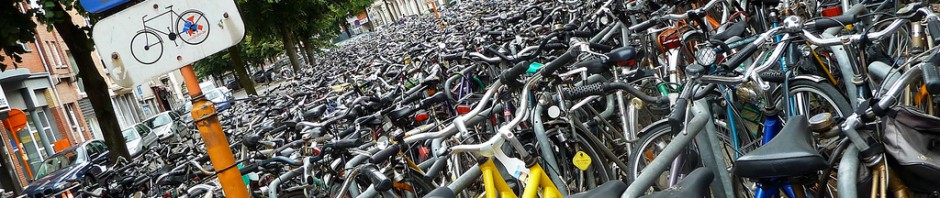
I am late with submitting a draft to my writing group, so I’m going to also publish it here and pedal out some rage on my cyclocross bike. For some reason, clicking “Publish” here helps me revise and move on to the next Thing. I clicked over the 50k mark for “Words Revised” and 10 billion in draft form. Bless my heart. When I feel despair about this process, I am comforted by a quote by James Baldwin:
Sometimes it comes very quickly. Seems almost to come from the top of my head. But in fact, it’s been gestating for a long, long time. Most of the time it’s not like that. Usually it’s a matter of writing, recognizing it ain’t right or it won’t move. You tear it up and do it again and again. And then one day something happens—it works.
What you are about to waste your life reading may not work, but I wrote something new this week in the early mornings and I almost made a writerly deadline. Victory! Here is what may or may not become the conclusion of this book.
And here’s an advertisement below that popped into my mind when somebody asked me how to prepare for the robots coming for our jobs, and I said, “When haven’t they been coming for people like us? When they hallucinate, do you think it’s more like being on LSD or mushrooms?” And thus, killing all speculative conversation about the horrors of the future while making people laugh. Victory!
Thank all the gods and labor activists for the week-end. And I had so much fun trying to find this advertisement. Note how her shoes matches her typewriter which is pure magic.
Here goes, delightful people who read this blatherly bloggy blog. Time to ride my bike.

The poet Ross Gay, in his book, The Book of (More) Delights, writes short reflections what he calls “poemesssaysomethings” about his daily observations. On my last backpacking trip of the 2023 season, I read his musings about a year in his life over a four day period of walking in the woods with a dear friend. Hiking a book into the backcountry can be risky because if you don’t like the book, you’re stuck with it and you have to balance out the resentment that you carried the book with the disappointment you feel that you did not select another book. However, in the era of the Kindle, I can carry multiple books so I give myself a bit of selection. I trade choice and selection for the possibility of running out of battery power. Choosing airplane mode and keeping it out of the sun has worked so far for trips less than five days.
Gay’s book was a safe choice for this trip because I had read his other books, and I laughed out loud many times as he told the stories about observations of everyday life that delight him. For example, one of his delights was a person telling him that he looked like somebody who made his own deodorant. Reading his words helps me see the joy in life’s simple observations and the way that we can relate to others by reading their stories. Seeing the world through another person’s eyes as they focus on what brings them joy. His books give me hope because I love a teacher-writer who influences readers and students to see beauty in our world. Gay writes about human beings doing joyful things for other human beings. A precious delightful thing.
Each “delight” in his book takes a look at a seemingly everyday life like a conversation, a plant growing in a community garden, or the way a photographer sees light. When I would pause to turn the page, I thought about what delighted me as a backpacker, and my mind also drifted back to memories of my teaching career. His work prompted me to make lists in my journal and I thought about memories as I hiked in the North Cascades. When I got back home, I decided I needed to look up the word delight because I realized it’s a word that can be a noun and a verb, a thing or state of being or an action. The Merriam-Webster app also informed me that “delight,” as in “to take delight” is an intransitive verb.
A fond memory, a delight, bubbled to the surface about my time as a teacher. As I wrapped up this last backpacking trip as summer turned to fall and the days got shorter and the nights got longer, I started to feel that old grief of not having a class to prepare for. Because I am no longer a teacher, I think my mind drifts to memories about working with students this time of year because I loved the feeling of starting a new school year. It always felt like a new beginning, a delightful new start.
On this trip, as I was also thinking about concluding this book, and seeing the phrase “intransive verb” brought me back to one of my most challenging classes when I first started teaching. Because I struggled so much to teach a course I was not trained for (but I needed the money), I learned so much about myself. I decided to follow Gay’s advice about writing about delight to help me remember the joys of that part of my career. He describes his writing practice with
“a handful of rules: write a delight every day for a year; begin and end on my birthday, August 1; draft them quickly; and write them by hand. The rules made it a discipline for me. A practice. Spend time thinking and writing about delight every day.”
The first delight I wrote about in the backcountry while it was still dark before dawn and way too cold to get out of my sleeping bag to make coffee, I scribbled a story about teaching students who were enrolled in a course called “English As A Second Language.”
A few weeks into the course, I realized that many of the students spoke three or four other languages, but they still had not mastered enough English to pass college-level courses in the United States. We now call these students “English Language Learners” thankfully. The only students who were really learning English as a second language were the students who had become literate as adults. One student in this class was 32 years old when she learned how to read. Another student often broke into Creole while talking which I always pointed out was English I wish I understood.
When I was teaching these students, I tried to relate to them by pointing out that my ability to speak French did not match how I could express myself in English, and I would say a few sentences until my French speakers would struggle to not laugh. They tried their best to be respectful, but my accent was most likely painful to listen to as their teacher butchered words. I had admitted I grew up saying “Ver-Sales” instead of “Versailles” and many of them laughed until they had tears in their eyes.
Many of these students knew the words of grammar in other languages like Arabic, Spanish, French, Japanese, or Chinese, but English was baffling at times. I was really not trained to teach at this level, so I was oftentimes studying myself because the curriculum required students to diagram sentences on a final exam. Something I had never had to do in a writing class since third grade, and I had made it through college just fine. The chair of that department had a doctorate in linguistics, so the curriculum was full of ridiculous deep dives about language that didn’t really help students (in my opinion). I was a lowly adjunct looking to make a paycheck so I adjusted to what needed to be done, but I tried to teach in a way that would help them pass the arcane placement test while also helping them get to college-level writing. Something I knew that only a third of them would likely accomplish based on the statistics from the departmental reports.
I tried to get these students to understand English by using a layperson’s description of language or to think about words from a child’s perspective, much like when I spoke French like a sixth grader. I tried to build their confidence by having them read Ernest Hemingway, a great American writer, to build their confidence. I loved that it made them feel good, and I chose Hemingway because he was a craftsman of simple sentences free of jargon and complex words.
One night I was teaching students about different types of verbs to help them prepare for the ridiculous exam looming in their futures. I explained to them that verbs are words that help describe doing or being something, and instead of making them memorize the linguistic jargon I knew they would never use, I tried to make up stories to help them understand English better while using what they knew from the language they spoke in their minds and to their families. Instead of having them memorize what an “intransitive verb” was, I said this was a word that helped people be or do something but there was no direct object receiving the doing or the being. We read through a few examples in the textbook, and a few students took turns reading aloud examples. I could tell they were a bit confused, but they were trying.
“Would somebody like to try to explain what an intransitive’s verb job is in a sentence? How would you define an intransitive verb? What would you say it is like?” I said while looking everyone in the eye one-by-one. I often asked the same question two or three times to help them process what I meant while I was also convincing myself I knew the answer.
One man who spoke French beautifully and often wrote about his war-torn country in Africa raised his hand. I was elated that he had an answer so quickly so I called on him.
He said, “Like God.”
This was not an example that had come to mind when I was preparing my lessons. I stammered inside a bit, but hid my anxiety of what to say next.
So, like all good teachers who are unprepared for the way a lesson plan may go, I said, “Would you please explain more?”
He said, “Yes, Miss Indrunas, God is a Being and God is an action that we cannot see–there is no objet we can see receiving these acts, but God knows.” He pointed a finger to the sky.
He noticed he said “objet” the way we would in French, so he said the sentence over again in English with the hard consonants: “OB-jeckt.” He looked very proud that he caught his mistake. I had encouraged students to speak slowly and correct themselves so we could practice together. There was no shame in mispronouncing words after my “Ver-Sales” story.
When this student explained his God-As-Intransive-Verb definition again students all over the classroom nodded, a few genuflected, and others put their hands together in prayer. Others scribbled notes. Some closed their eyes as if to pray.
I swallowed back tears and resisted the urge to get down on my knees and thank his version of an Intransive Verb for this gorgeous description. This man had lost most of family members in a war that spanned generations and he came to the United States to make a better life for his son. He worked all day as a dishwasher before coming to class, and I noticed that he struggled to stay awake some nights in class because of the physical exhaustion of his job. I remember saying that this was a very poetic way of thinking about verbs, and really, now that I think back on this memory, it delighted me.
Students like him were why I loved teaching. Something I miss terribly every autumn, and although I still work in a space that is adjacent to higher education, it is not the same. A part of me still feels the need to plan for the upcoming year and think about course outlines and assignments. A part of me misses the feeling of starting a new every academic year and having the ability to plan even if those plans go astray like that Intransitive Verb class. So I have realized that this time of year, I need to go to the mountains and process this grief for the part of my career that has ended, and as I concluded this delightful memory in my backpacking journal, I awoke to the sound of geese flying south. Their geese honkings delighted me, and I felt gratitude for that teaching experience and all the delights that I carry within me.
Thanks to Ross Gay, as I backpacked one last time before the summer gave way to autumn, I thought about the definition of a word and a memory I had not thought about in a very long time. According to Merriam-Webster the word “delight” as a noun is a synonym for joy or something that makes one feel “extreme satisfaction” and as I conclude this book of stories about my time in the backcountry, I feel an extreme satisfaction that a conclusion is near.
Because I wrote about this memory of my adjunct days, I am able to connect that backpacking and being a teacher has taught me the value of preparing, but also accepting that you really have no control over what may happen in life. I could have spent days preparing for ways to teach about verbs and I never would have imagined that student’s response. Exploring these memories of who I was a backpacker as I was also learning to become a teacher has helped me understand a bit more of who I am today. A delightful introspection.
Throughout this book, I’ve tried to describe my delight in things I have learned about backpacking to help explain why I think the Ten Essentials are important beyond just walking in the woods, and how you may need to create your own list of essentials if you are a backpacker. If you are not a backpacker, then perhaps you can read between the lines about finding The Thing that saves you and nourishes your soul or helps you praise your own version of an Intransitive Verb.
Because I took Ross Gay’s advice, I wrote my last entry of this season’s backpacking journal not with sadness that I am no longer a teacher or barely an instructional designer these days, but rather I took delight in creating a poem using the Ten Essentials as framework. And I thought of those students learning our impossibly hard language as my audience and I wrote as a form of prayer for days ahead and trails yet chosen as I put one foot in front of the other living day by day. I wrote using simple words that I know a student learning English as a fourth language could read without looking up words in Merriam-Webster’s dictionary perhaps while he’s on a break at a restaurant gig dreaming of a different future he cannot yet see.
The Ten Essentials in Bold
Navigation is knowing where your trip takes you using a map and compass
Sun Protection may be the shade of a tree that will outlive you or your favorite hat
Insulation is another word for staying warm and cozy
First Aid are things that may help save you or another person in this wild precious life
Fire can destroy forests and help cook your food and warm your tea
Repair Kits will make your gear last longer and fix things weakened and worn by time
Nutrition is what feeds your mind and body
Hydration is clean water best sipped with those that climb mountains with you
Emergency Supplies are what may save you and those you love
Illumination is what helps you see when you have no light or moon at night, rise with the sun and sleep with the darkness

 Spoke & Hub